

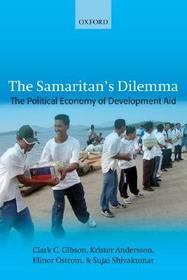
The Samaritan's Dilemma
The Political Economy of Development Aid
-
10% KEDVEZMÉNY?
- A kedvezmény csak az 'Értesítés a kedvenc témákról' hírlevelünk címzettjeinek rendeléseire érvényes.
- Kiadói listaár GBP 195.00
-
88 042 Ft (83 850 Ft + 5% áfa)
Az ár azért becsült, mert a rendelés pillanatában nem lehet pontosan tudni, hogy a beérkezéskor milyen lesz a forint árfolyama az adott termék eredeti devizájához képest. Ha a forint romlana, kissé többet, ha javulna, kissé kevesebbet kell majd fizetnie.
- Kedvezmény(ek) 10% (kb. 8 804 Ft)
- Kedvezményes ár 79 238 Ft (75 465 Ft + 5% áfa)
Iratkozzon fel most és részesüljön kedvezőbb árainkból!
Feliratkozom
88 042 Ft

Beszerezhetőség
Megrendelésre a kiadó utánnyomja a könyvet. Rendelhető, de a szokásosnál kicsit lassabban érkezik meg.
Why don't you give exact delivery time?
A beszerzés időigényét az eddigi tapasztalatokra alapozva adjuk meg. Azért becsült, mert a terméket külföldről hozzuk be, így a kiadó kiszolgálásának pillanatnyi gyorsaságától is függ. A megadottnál gyorsabb és lassabb szállítás is elképzelhető, de mindent megteszünk, hogy Ön a lehető leghamarabb jusson hozzá a termékhez.
A termék adatai:
- Kiadó OUP Oxford
- Megjelenés dátuma 2005. szeptember 15.
- ISBN 9780199278848
- Kötéstípus Keménykötés
- Terjedelem288 oldal
- Méret 241x162x21 mm
- Súly 588 g
- Nyelv angol
- Illusztrációk Tables and line drawings 0
Kategóriák
Rövid leírás:
The authors argue that much of foreign aid's failure is related to the institutions that structure its delivery. They explore the workings of Sida and find that Sida's institutions lead to perverse incentives and poor outcomes in the field. The authors offer concrete suggestions about how to improve aid's effectiveness.
TöbbHosszú leírás:
What's wrong with foreign aid? Many policymakers, aid practitioners, and scholars have called into question its ability to increase economic growth, alleviate poverty, or promote social development. At the macro level, only tenuous links between development aid and improved living conditions have been found. At the micro level, only a few programs outlast donor support and even fewer appear to achieve lasting improvements.
The authors of this book argue that much of aid's failure is related to the institutions that structure its delivery. These institutions govern the complex relationships between the main actors in the aid delivery system and often generate a series of perverse incentives that promote inefficient and unsustainable outcomes. In their analysis, the authors apply the theoretical insights of the new institutional economics to several settings. First, they investigate the institutions of Sida, the Swedish aid agency, to analyze how that aid agency's institutions can produce incentives inimical to desired outcomes, contrary to the desires of its own staff. Second, the authors use cases from India, a country with low aid dependence, and Zambia, a country with high aid dependence, to explore how institutions on the ground in recipient countries also mediate the effectiveness of aid.
Throughout the book, the authors offer suggestions about how to improve aid's effectiveness. These suggestions include how to structure evaluations in order to improve outcomes, how to employ agency staff to gain from their on-the-ground experience, and how to engage stakeholders as "owners" in the design, resource mobilization, learning, and evaluation processes of development assistance programs.
As an increasing portion of the development community now recognizes, sending oodles of money to poor countries does not make them rich and may even make them poorer. This important book explains why. The authors' discussion is clear, straightforward, and easy to understand
Tartalomjegyzék:
Introduction
What's wrong with development aid?
Theoretical Foundations
Laying the theoretical foundations for the study of development aid
Better development through better policy? Development aid's challenges at the collective-choice level
Sorting out the tangle: Incentives across action situations
A formal analysis of incentives in strategic interactions involving an international development cooperation agency
All aid is not the same: The incentives of different types of aid
Case studies
Applying the IAD framework: The incentives inside a development agency
Incentives for contractors in aid-supported activities
Sida aid in electricity and natural resource projects in India
Sida aid in electricity and natural resource projects in Zambia
Conclusion
What have we learned about aid?

