

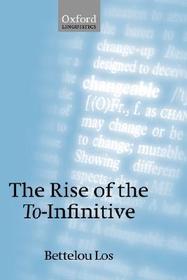
The Rise of the To-Infinitive
Sorozatcím: Oxford Linguistics;
-
10% KEDVEZMÉNY?
- A kedvezmény csak az 'Értesítés a kedvenc témákról' hírlevelünk címzettjeinek rendeléseire érvényes.
- Kiadói listaár GBP 200.00
-
90 300 Ft (86 000 Ft + 5% áfa)
Az ár azért becsült, mert a rendelés pillanatában nem lehet pontosan tudni, hogy a beérkezéskor milyen lesz a forint árfolyama az adott termék eredeti devizájához képest. Ha a forint romlana, kissé többet, ha javulna, kissé kevesebbet kell majd fizetnie.
- Kedvezmény(ek) 10% (cc. 9 030 Ft off)
- Kedvezményes ár 81 270 Ft (77 400 Ft + 5% áfa)
Iratkozzon fel most és részesüljön kedvezőbb árainkból!
Feliratkozom
90 300 Ft

Beszerezhetőség
Megrendelésre a kiadó utánnyomja a könyvet. Rendelhető, de a szokásosnál kicsit lassabban érkezik meg.
Why don't you give exact delivery time?
A beszerzés időigényét az eddigi tapasztalatokra alapozva adjuk meg. Azért becsült, mert a terméket külföldről hozzuk be, így a kiadó kiszolgálásának pillanatnyi gyorsaságától is függ. A megadottnál gyorsabb és lassabb szállítás is elképzelhető, de mindent megteszünk, hogy Ön a lehető leghamarabb jusson hozzá a termékhez.
A termék adatai:
- Kiadó OUP Oxford
- Megjelenés dátuma 2005. január 20.
- ISBN 9780199274765
- Kötéstípus Keménykötés
- Terjedelem360 oldal
- Méret 241x164x23 mm
- Súly 667 g
- Nyelv angol 0
Kategóriák
Rövid leírás:
This book describes the historical emergence and spread of the to-infinitive in English. The exposition is clear and does not assume an up-to-date knowledge of generative theory. The book will appeal to the wide spectrum of scholars interested in the transformation of Old to Middle English as well as to those studying the processes and causes of syntactic change more generally.
TöbbHosszú leírás:
This book describes the historical emergence and spread of the to-infinitive in English. It shows that to + infinitive emerged from a reanalysis of the preposition to plus a deverbal nominalization, which spread first to purpose clauses, then to other nonfinite environments. The book challenges the traditional reasoning that infinitives must have been nouns in Old English because they inflected for dative case and can follow prepositions. Dr Los shows that as early as Old English the to-infinitive was established in most of the environments in which it is found today. She argues that its spread was largely due to competition with subjunctive that-clauses, which it gradually replaced.
Later chapters consider Middle English developments. The author provides a measured evaluation of the evidence that to undergoes a period of degrammaticalization. She concludes that the extent to which to gains syntactic freedom in Middle English is due to the fact that speakers began to equate it with the modal verbs and therefore to treat it syntactically as a modal verb.
The exposition is clear and does not assume an up-to-date knowledge of generative theory. The book will appeal to the wide spectrum of scholars interested in the transformation of Old to Middle English as well as those studying the processes and causes of syntactic change more generally.
...clear and exhaustive...[a] valuable contribution.
Tartalomjegyzék:
Part I: Introduction
Introduction
Part II: The to-infinitive as GOAL
The Expression of Purpose in Old English
The to-infinitive as GOAL-argument
Part III: The to-infinitive as THEME
Intention
Commanding and Permitting
Commissives
Part IV: Syntactic Status
Introduction
The Changing Status of Infinitival to
Part V: Changes in Middle English
The Rise of to-infinitival ECM
Innocent Bystander: The Loss of the Indefinite Pronoun man
Part VI: Summary and Conclusions
Summary and Conclusions
Appendix
References
Index

