

-
10% KEDVEZMÉNY?
- A kedvezmény csak az 'Értesítés a kedvenc témákról' hírlevelünk címzettjeinek rendeléseire érvényes.
- Kiadói listaár GBP 105.00
-
50 163 Ft (47 775 Ft + 5% áfa)
Az ár azért becsült, mert a rendelés pillanatában nem lehet pontosan tudni, hogy a beérkezéskor milyen lesz a forint árfolyama az adott termék eredeti devizájához képest. Ha a forint romlana, kissé többet, ha javulna, kissé kevesebbet kell majd fizetnie.
- Kedvezmény(ek) 10% (cc. 5 016 Ft off)
- Kedvezményes ár 45 147 Ft (42 998 Ft + 5% áfa)
Iratkozzon fel most és részesüljön kedvezőbb árainkból!
Feliratkozom
50 163 Ft

Beszerezhetőség
Megrendelésre a kiadó utánnyomja a könyvet. Rendelhető, de a szokásosnál kicsit lassabban érkezik meg.
Why don't you give exact delivery time?
A beszerzés időigényét az eddigi tapasztalatokra alapozva adjuk meg. Azért becsült, mert a terméket külföldről hozzuk be, így a kiadó kiszolgálásának pillanatnyi gyorsaságától is függ. A megadottnál gyorsabb és lassabb szállítás is elképzelhető, de mindent megteszünk, hogy Ön a lehető leghamarabb jusson hozzá a termékhez.
A termék adatai:
- Kiadó OUP USA
- Megjelenés dátuma 2019. április 11.
- ISBN 9780199928958
- Kötéstípus Keménykötés
- Terjedelem552 oldal
- Méret 168x239x45 mm
- Súly 865 g
- Nyelv angol 0
Kategóriák
Rövid leírás:
A comprehensive re-examination of the Qur'an's emergence and relationship to the cultural traditions of Late Antiquity.
TöbbHosszú leírás:
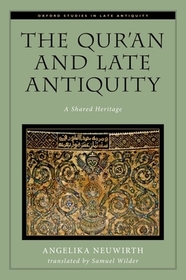
In this book, Angelika Neuwirth provides a new approach to understanding the founding text of Islam. Typical exegesis of the Qur'an treats the text teleologically, as a fait accompli finished text, or as a replica or summary of the Bible in Arabic. Instead Neuwirth approaches the Qur'an as the product of a specific community in the Late Antique Arabian peninsula, one which was exposed to the wider worlds of the Byzantine and Sasanian empires, and to the rich intellectual traditions of rabbinic Judaism, early Christianity, and Gnosticism. A central goal of the book is to eliminate the notion of the Qur'an as being a-historical. She argues that it is, in fact, highly aware of its place in late antiquity and is capable of yielding valuable historical information.
By emphasizing the liturgical function of the Qur'an, Neuwirth allows readers to see the text as an evolving oral tradition within the community before it became collected and codified as a book. This analysis sheds much needed light on the development of the Qur'an's historical, theological, and political outlook. The book's final chapters analyze the relationship of the Qur'an to the Bible, to Arabic poetic traditions, and, more generally, to late antique culture and rhetorical forms. By providing a new introduction to the Qur'an, one that uniquely challenges current ideas about its emergence and development, The Qur'an and Late Antiquity bridges the gap between Eastern and Western approaches to this sacred text.
...a crowning achievement of Angelika Neuwirth's distinguished career...Neuwirth's groundbreaking work aims to bridge the exegetical polarity between East and West and argues for a new approach to the Qur'an as a product of late antiquity...This hefty and complex tome is a powerful plaidoyer for (re)integrating early Islam into late antiquity.
Tartalomjegyzék:
I. How the Qur'an Has Been Read So Far: A Sketch of Research
II. The Qur'an and Scripture
III. The Qur'an and History
IV. Redaction and the History of the Text
V. Sura Structures and Chronology
VI. The Liturgical Qur'an: On the Development of Cult at the Time of the Preaching
VII. Stages of Communal Formation in the Early Meccan Period
VIII. Stages of Communal Formation in the Middle and Late Meccan Periods
IX. Stages of Communal Formation in Medina
X. Qur'an and Bible
XI. Biblical- Qur'anic Figures
XII. The Qur'an and Poetry
XIII. The Rhetorical Qur'an

