

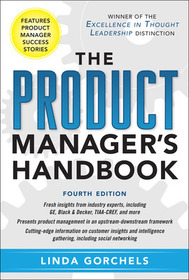
The Product Manager's Handbook 4/E
14 Product Manager Success Stories
Sorozatcím: GENERAL FINANCE & INVESTING;
-
10% KEDVEZMÉNY?
- A kedvezmény csak az 'Értesítés a kedvenc témákról' hírlevelünk címzettjeinek rendeléseire érvényes.
- Kiadói listaár GBP 71.99
-
32 503 Ft (30 955 Ft + 5% áfa)
Az ár azért becsült, mert a rendelés pillanatában nem lehet pontosan tudni, hogy a beérkezéskor milyen lesz a forint árfolyama az adott termék eredeti devizájához képest. Ha a forint romlana, kissé többet, ha javulna, kissé kevesebbet kell majd fizetnie.
- Kedvezmény(ek) 10% (cc. 3 250 Ft off)
- Kedvezményes ár 29 252 Ft (27 860 Ft + 5% áfa)
Iratkozzon fel most és részesüljön kedvezőbb árainkból!
Feliratkozom
32 503 Ft

Beszerezhetőség
Megrendelésre a kiadó utánnyomja a könyvet. Rendelhető, de a szokásosnál kicsit lassabban érkezik meg.
Why don't you give exact delivery time?
A beszerzés időigényét az eddigi tapasztalatokra alapozva adjuk meg. Azért becsült, mert a terméket külföldről hozzuk be, így a kiadó kiszolgálásának pillanatnyi gyorsaságától is függ. A megadottnál gyorsabb és lassabb szállítás is elképzelhető, de mindent megteszünk, hogy Ön a lehető leghamarabb jusson hozzá a termékhez.
A termék adatai:
- Kiadás sorszáma 4
- Kiadó McGraw Hill
- Megjelenés dátuma 2011. szeptember 16.
- ISBN 9780071772983
- Kötéstípus Keménykötés
- Terjedelem400 oldal
- Méret 236x162x30 mm
- Súly 703 g
- Nyelv angol 0
Kategóriák
Rövid leírás:
The go-to guide for creating and managing a fully integrated product lifecycle updated with critical information about innovative new tools and evolving customer perceptions
TöbbHosszú leírás:
The essential guide to seamless product management for today’s fluid, unpredictable business world
Long considered the most useful and insightful guide of its kind, The Product Manager’s Handbook has been fully revised and updated to give you the edge in today’s challenging business landscape. It features expanded coverage of product development processes, intelligence-gathering techniques (including social media), and a greater emphasis on international issues.
This indispensable resource proves that the techniques and tools product managers use are similar—regardless of what industry they work in and what kind of products they manage. Simply put, this book has everything you need for superior job performance—whether you manage consumer or business-to-business products created by an organization that is hierarchical or horizontal.
The Product Manager’s Handbook shows you how to integrate your organization’s disparate segments into a cooperative, results-focused unit that produces satisfying products—from initial design through the postpurchase experience. If your job is to create and commercialize products, it provides the information you need to:
- Balance breakthroughs and line extensions
- Create business cases—including competitive assessment, market requirements, and risk reduction
- Conduct gate reviews and beta testing and manage scope creep
- Get everything in order for a smooth product launch
For those who manage existing lines, this guide provides:
- Specific tips for each of the 4Rs of product life-cycle management
- Brand guidelines
- Approaches to customer message management
- Advice on working with sales and the channel
Clear, easy-to-read charts show you how to manage each crucial step from conception to completion, and practical checklists help you evaluate progress at every stage. Interviews with seasoned product management consultants and top-performing product managers provide you with dynamic, proven strategies for addressing potential problems in marketing, production, cross-cultural communication, and more.
The Product Manager’s Handbook examines current market-leading companies, the latest research findings, and evolving customer perceptions to provide you with the tools you need to design, produce, and market winning products—and beat the competition at every turn.
The essential guide to seamless product management for today’s fluid, unpredictable business world
Long considered the most useful and insightful guide of its kind, The Product Manager’s Handbook has been fully revised and updated to give you the edge in today’s challenging business landscape. It features expanded coverage of product development processes, intelligence-gathering techniques (including social media), and a greater emphasis on international issues.
This indispensable resource proves that the techniques and tools product managers use are similar—regardless of what industry they work in and what kind of products they manage. Simply put, this book has everything you need for superior job performance—whether you manage consumer or business-to-business products created by an organization that is hierarchical or horizontal.
The Product Manager’s Handbook shows you how to integrate your organization’s disparate segments into a cooperative, results-focused unit that produces satisfying products—from initial design through the postpurchase experience. If your job is to create and commercialize products, it provides the information you need to:
- Balance breakthroughs and line extensions
- Create business cases—including competitive assessment, market requirements, and risk reduction
- Conduct gate reviews and beta testing and manage scope creep
- Get everything in order for a smooth product launch
For those who manage existing lines, this guide provides:
- Specific tips for each of the 4Rs of product life-cycle management
- Brand guidelines
- Approaches to customer message management
- Advice on working with sales and the channel
Clear, easy-to-read charts show you how to manage each crucial step from conception to completion, and practical checklists help you evaluate progress at every stage. Interviews with seasoned product management consultants and top-performing product managers provide you with dynamic, proven strategies for addressing potential problems in marketing, production, cross-cultural communication, and more.
The Product Manager’s Handbook examines current market-leading companies, the latest research findings, and evolving customer perceptions to provide you with the tools you need to design, produce, and market winning products—and beat the competition at every turn.
TöbbTartalomjegyzék:
Section One: Bedrock Concepts
Chapter 1. The multi-faceted nature of product management jobs and structure
a. Your job is unique – but you’re not alone
b. Product management can work for services, too!
Chapter 2. Leadership and management competencies
a. Change management
b. Surviving matrix structures and cross-functional teams
c. Tips to improve decision making
Chapter 3. Business competencies
a. Basic financial concepts
b. Assembling forecasts
c. Running a “virtual” business
Chapter 4. Market knowledge competencies: fact capturing
a. Trend-spotting, research and customer segmentation
b. Describing the customer purchase process, personas and value chain
c. Competitive intelligence briefings
d. Technology assessment and design thinking
Chapter 5. Planning frameworks
a. The product manager continuum: from upstream to downstream
b. Introduction to portfolios
c. Innovation, revitalization, protection and sunsetting
Section Two: Upstream product management: Strategic new products & initiatives
Chapter 6. Roadmaps, strategic plans and innovation directives
a. Visualizing the future: three time horizons
b. Time management of the pipeline
c. Making buy, build or partner decisions
Chapter 7. Managing the fuzzy front end of new product processes
a. Balancing breakthroughs and incremental changes
b. Defining current and future customer need-drivers
c. Generic NPD processes and stage-gates
Chapter 8. Creating – and getting approval for – business cases
a. Understanding the importance of the business case
b. Estimating and validating demand
c. Requirements planning, management and clarification of feasibility
d. Framing and justifying the investment
e. The provisional marketing plan
Chapter 9. Overseeing new product projects
a. Attributes and responsibilities of core teams
b. Team decisions and processes
c. Managing scope creep
d. Guiding gate reviews and readiness to move to each level
e. Improving beta programs
Chapter 10. Formulating and executing launch plans
a. The major components of the launch document & process
b. Incorporating belief builders
c. Building in early tracking measures
d. Preparing red alert strategies
e. The final analysis: project and process reviews
Section Three: Downstream product management: Marketing and ongoing support
Chapter 11. Generating brand equity
a. Cultivating brands and positioning from the outside in
b. Brand elements, structure and strategy
Chapter 12. Lifecycle management and marketing
a. Categorizing products for streamlined efforts
b. Defensive and offensive considerations
c. Revitalization programs: product versioning
d. Revitalization programs: refocused marketing schema
e. Right-pricing your products
Chapter 13. Supporting sales and channel efforts
a. Lead generation, referrals, and collateral
b. Call support, demos and presentations
c. Converting product marketing plans into sales calls
Chapter 14. Marketing communications, SEO and social networking
a. Who should write the copy and what should it say
b. From broadcast to narrowcast approaches
c. Make the message resonate with the right customers
d. Manage the sales funnel
Chapter 15. Sunsetting
a. Defining kill criteria: the "Cockroach" problem
b. Evaluating alternative approaches for product elimination
Section Four: Fine-tuning
Chapter 16. Establishing a global mindset
a. Global versus multi-local products: decision points
c. Working with cross-cultural co-workers on project teams
d. Communicating across borders and cultures
Chapter 17. Goal and performance alignment
a. Linking goals, directives and initiatives
b. Defining appropriate product manager performance measures
c. Coaching toward proficiency

