

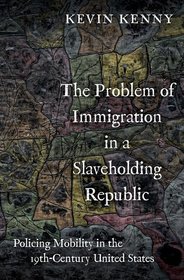
The Problem of Immigration in a Slaveholding Republic
Policing Mobility in the Nineteenth-Century United States
-
10% KEDVEZMÉNY?
- A kedvezmény csak az 'Értesítés a kedvenc témákról' hírlevelünk címzettjeinek rendeléseire érvényes.
- Kiadói listaár GBP 23.99
-
11 461 Ft (10 915 Ft + 5% áfa)
Az ár azért becsült, mert a rendelés pillanatában nem lehet pontosan tudni, hogy a beérkezéskor milyen lesz a forint árfolyama az adott termék eredeti devizájához képest. Ha a forint romlana, kissé többet, ha javulna, kissé kevesebbet kell majd fizetnie.
- Kedvezmény(ek) 10% (cc. 1 146 Ft off)
- Kedvezményes ár 10 315 Ft (9 824 Ft + 5% áfa)
Iratkozzon fel most és részesüljön kedvezőbb árainkból!
Feliratkozom
11 461 Ft

Beszerezhetőség
Becsült beszerzési idő: A Prosperónál jelenleg nincsen raktáron, de a kiadónál igen. Beszerzés kb. 3-5 hét..
A Prosperónál jelenleg nincsen raktáron.
Why don't you give exact delivery time?
A beszerzés időigényét az eddigi tapasztalatokra alapozva adjuk meg. Azért becsült, mert a terméket külföldről hozzuk be, így a kiadó kiszolgálásának pillanatnyi gyorsaságától is függ. A megadottnál gyorsabb és lassabb szállítás is elképzelhető, de mindent megteszünk, hogy Ön a lehető leghamarabb jusson hozzá a termékhez.
A termék adatai:
- Kiadó OUP USA
- Megjelenés dátuma 2023. július 25.
- ISBN 9780197580080
- Kötéstípus Keménykötés
- Terjedelem344 oldal
- Méret 165x236x29 mm
- Súly 612 g
- Nyelv angol
- Illusztrációk 25 black and white illustrations 431
Kategóriák
Rövid leírás:
A sweeping history of nineteenth-century America, this book shows how slavery shaped immigration policy in the United States during the years when states controlled mobility within and across their borders. Only after the abolition of slavery did Congress begin to implement a national immigration policy, applying the policies of border control and deportation to different racial groups that continue to generate tensions between state and federal authority to the present day.
TöbbHosszú leírás:
A powerful analysis of how regulation of the movement of enslaved and free black people produced a national immigration policy in the period between the American Revolution and the end of Reconstruction.
Today the United States considers immigration a federal matter. Yet, despite America's reputation as a "nation of immigrants," the Constitution is silent on the admission, exclusion, and expulsion of foreigners. Before the Civil War, the federal government played virtually no role in regulating immigration, and states set their own terms for regulating the movement of immigrants, free blacks, and enslaved people. Insisting that it was their right and their obligation to protect the public health and safety, states passed their own laws prohibiting the arrival of foreign convicts, requiring shipmasters to post bonds or pay taxes for passengers who might become public charges, ordering the deportation of immigrant paupers, quarantining passengers who carried contagious diseases, excluding or expelling free blacks, and imprisoning black sailors. To the extent that these laws affected foreigners, they comprised the immigration policy of the United States.
Offering an original interpretation of nineteenth-century America, The Problem of Immigration in a Slaveholding Republic argues that the existence, abolition, and legacies of slavery were central to the emergence of a national immigration policy. In the century after the American Revolution, states controlled mobility within and across their borders and set their own rules for community membership. Throughout the antebellum era, defenders of slavery feared that, if Congress gained control over immigration, it could also regulate the movement of free black people and the interstate slave trade. The Civil War and the abolition of slavery removed the political and constitutional obstacles to a national immigration policy, which was first directed at Chinese immigrants. Admission remained the norm for Europeans, but Chinese laborers were excluded through techniques of registration, punishment, and deportation first used against free black people in the antebellum South. To justify these measures, the Supreme Court ruled that immigration authority was inherent in national sovereignty and required no constitutional justification. The federal government continues to control admissions and exclusions today, while some states monitor and punish immigrants, and others offer sanctuary and refuse to act as agents of federal law enforcement.
By revealing the tangled origins of border control, incarceration, and deportation, distinguished historian Kevin Kenny sheds light on the history of race and belonging in America, as well as the ongoing tensions between state and federal authority over immigration.
Kenny brings a fresh and insightful look at changing 19th-century immigration law in this crisp legal history... Based on a close reading of key immigration law cases and other primary sources, this erudite study sheds light on the long and complicated history of immigration law.
Tartalomjegyzék:
Acknowledgments
Introduction
Part One: Sovereign States
Chapter 1: Foundations
Chapter 2: Police Power and Commerce Power
Chapter 3: The Threat to Slavery
Chapter 4: The Boundaries of Political Community
Part Two: Immigration in the Age of Emancipation
Chapter 5: The Antislavery Origins of Immigration Policy
Chapter 6: Reconstruction
Chapter 7: Immigration and National Sovereignty
Epilogue
Chronology
Notes
Bibliography
Index

