

The Planetary Clock
Antipodean Time and Spherical Postmodern Fictions
-
10% KEDVEZMÉNY?
- A kedvezmény csak az 'Értesítés a kedvenc témákról' hírlevelünk címzettjeinek rendeléseire érvényes.
- Kiadói listaár GBP 127.50
-
60 913 Ft (58 012 Ft + 5% áfa)
Az ár azért becsült, mert a rendelés pillanatában nem lehet pontosan tudni, hogy a beérkezéskor milyen lesz a forint árfolyama az adott termék eredeti devizájához képest. Ha a forint romlana, kissé többet, ha javulna, kissé kevesebbet kell majd fizetnie.
- Kedvezmény(ek) 10% (cc. 6 091 Ft off)
- Kedvezményes ár 54 821 Ft (52 211 Ft + 5% áfa)
Iratkozzon fel most és részesüljön kedvezőbb árainkból!
Feliratkozom
60 913 Ft

Beszerezhetőség
Megrendelésre a kiadó utánnyomja a könyvet. Rendelhető, de a szokásosnál kicsit lassabban érkezik meg.
Why don't you give exact delivery time?
A beszerzés időigényét az eddigi tapasztalatokra alapozva adjuk meg. Azért becsült, mert a terméket külföldről hozzuk be, így a kiadó kiszolgálásának pillanatnyi gyorsaságától is függ. A megadottnál gyorsabb és lassabb szállítás is elképzelhető, de mindent megteszünk, hogy Ön a lehető leghamarabb jusson hozzá a termékhez.
A termék adatai:
- Kiadó OUP Oxford
- Megjelenés dátuma 2021. február 23.
- ISBN 9780198857723
- Kötéstípus Keménykötés
- Terjedelem436 oldal
- Méret 26x164x241 mm
- Súly 882 g
- Nyelv angol
- Illusztrációk 22 colour and 16 black and white Illustrations 90
Kategóriák
Rövid leírás:
Ranging over various aesthetic forms (literature, film, music) in the period since 1960, this volume brings an antipodean perspective into conversation with the art and culture of the Northern Hemisphere, to reformulate postmodernism as a properly global phenomenon.
TöbbHosszú leírás:
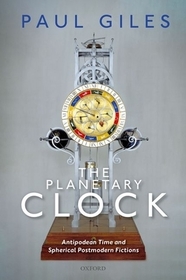
The theme of The Planetary Clock is the representation of time in postmodern culture and the way temporality as a global phenomenon manifests itself differently across an antipodean axis. To trace postmodernism in an expansive spatial and temporal arc, from its formal experimentation in the 1960s to environmental concerns in the twenty-first century, is to describe a richer and more complex version of this cultural phenomenon. Exploring different scales of time from a Southern Hemisphere perspective, with a special emphasis on issues of Indigeneity and the Anthropocene, The Planetary Clock offers a wide-ranging, revisionist account of postmodernism, reinterpreting literature, film, music, and visual art of the post-1960 period within a planetary framework.
By bringing the culture of Australia and New Zealand into dialogue with other Western narratives, it suggests how an antipodean impulse, involving the transposition of the world into different spatial and temporal dimensions, has long been an integral (if generally occluded) aspect of postmodernism. Taking its title from a Florentine clock designed in 1510 to measure worldly time alongside the rotation of the planets, The Planetary Clock ranges across well-known American postmodernists (John Barth, Toni Morrison) to more recent science fiction writers (Octavia Butler, Richard Powers), while bringing the US tradition into juxtaposition with both its English (Philip Larkin, Ian McEwan) and Australian (Les Murray, Alexis Wright) counterparts. By aligning cultural postmodernism with music (Messiaen, Ligeti, Birtwistle), the visual arts (Hockney, Blackman, Fiona Hall), and cinema (Rohmer, Haneke, Tarantino), this volume enlarges our understanding of global postmodernism for the twenty-first century.
Always challenging conventional wisdom and armed with an impressively vast archive of primary source material, Giles's work consistently expands the scope and scale of contemporary cultural analysis...The threads of reciprocal relation that Giles weaves together provocatively reframe both postmodernism and the antipodean in insightful and innovative ways...In illuminating the antipodean imaginary that runs through postmodernism, The Planetary Clock makes an important and innovative contribution to our understanding of that historical moment.
Tartalomjegyzék:
Introduction: Antipodean Time and the Anthropocenic Imaginary
Répétition Planétaire: Upside Down Postmodernism
Antipodean Alice: Cold War Fetishism and Frozen Time
Queer Poetic Time: Crosstemporal Parataxis and Disjunctions of Scale
"Reverse-Thinking": Metahistorical Arts and Fictions
Two-way Time Travel: Recursive Science and "Backward-Flowing" Fiction
Postmodern Slave Narratives: Anachronism and Disorientation
Reorchestrating the Past: Long Songs and Antipodean Relations
Conclusion: The Long Postmodernism

