
• Kapcsolat

  • Hírlevél

  • Rólunk

  • Szállítási lehetőségek

  • Prospero könyvpiaci podcast

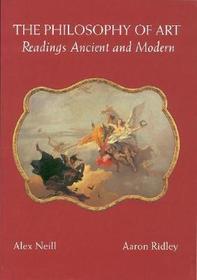
  • The Philosophy of Art: Readings Ancient and Modern

    The Philosophy of Art: Readings Ancient and Modern by Neill, Alex; Ridley, Aaron;

      • 10% KEDVEZMÉNY?

      • A kedvezmény csak az 'Értesítés a kedvenc témákról' hírlevelünk címzettjeinek rendeléseire érvényes.
      • Kiadói listaár GBP 72.99
      • Az ár azért becsült, mert a rendelés pillanatában nem lehet pontosan tudni, hogy a beérkezéskor milyen lesz a forint árfolyama az adott termék eredeti devizájához képest. Ha a forint romlana, kissé többet, ha javulna, kissé kevesebbet kell majd fizetnie.

        32 954 Ft (31 385 Ft + 5% áfa)
      • Kedvezmény(ek) 10% (kb. 3 295 Ft)
      • Kedvezményes ár 29 659 Ft (28 247 Ft + 5% áfa)

    32 954 Ft

    Beszerezhetőség

    Bizonytalan a beszerezhetőség. Érdemes még egyszer keresni szerzővel és címmel. Ha nem talál másik, kapható kiadást, forduljon ügyfélszolgálatunkhoz!

    Why don't you give exact delivery time?

    A beszerzés időigényét az eddigi tapasztalatokra alapozva adjuk meg. Azért becsült, mert a terméket külföldről hozzuk be, így a kiadó kiszolgálásának pillanatnyi gyorsaságától is függ. A megadottnál gyorsabb és lassabb szállítás is elképzelhető, de mindent megteszünk, hogy Ön a lehető leghamarabb jusson hozzá a termékhez.

    A termék adatai:

    • Kiadó McGraw-Hill Higher Education
    • Megjelenés dátuma 1995. január 1.

    • ISBN 9780070461925
    • Kötéstípus Puhakötés
    • Terjedelem592 oldal
    • Méret 231x160x22 mm
    • Súly 735 g
    • Nyelv angol
    • 0

    Kategóriák

    Hosszú leírás:

    This anthology is intended as a core text for courses in aesthetics or philosophy of art. It contains a wealth of readings from both classic and contemporary sources, and aims to present substantial selections from those texts rather than mere "snippets." Readings are organized historically within four broad themes so that students can see how concepts of art have evolved and been debated. Each reading is introduced by the authors, who suggest connections between the reading and others in the anthology. Unlike other anthologies on the market, The Philosophy of Art is both comprehensive and affordable, making it the ideal book for course use.

    This anthology is intended as a core text for courses in aesthetics or philosophy of art. It contains a wealth of readings from both classic and contemporary sources, and aims to present substantial selections from those texts rather than mere "snippets." Readings are organized historically within four broad themes so that students can see how concepts of art have evolved and been debated. Each reading is introduced by the authors, who suggest connections between the reading and others in the anthology. Unlike other anthologies on the market, The Philosophy of Art is both comprehensive and affordable, making it the ideal book for course use.

    Több

    Tartalomjegyzék:

    ONE: ARTISTS: CONCEPTS OF CREATIVITY.

    Plato: The Ion (Woodruff translation).

    Wordsworth: Preface to the 1800 edition of Lyrical Ballads.

    Nietzsche: "Attempt at a Self-Criticism," and extensive excerpts from sections 1-15 of The Birth

    of Tragedy (Kaufmann translation).

    Freud: "Creative Writers and Day-dreaming" (Grant Duff translation).

    Eliot: "Tradition and the Individual Talent."

    Beardsley: "On the Creation of Art."

    John Dewey: "Having an Experience."

    Hans-Georg Gadamer: "The Play of Art," from The Relevance of the Beautiful.

    Christine Battersby: "The Male Gift" and "The Great +I AM'," Chapters 4 and 5 of Gender and Genius.

    TWO: ARTWORKS.

    Form and Content.

    Clive Bell: "The Aesthetic Hypothesis," from Art.

    Clement Greenberg: "Modernist Painting."

    R. G. Collingwood: Excerpts from the Introduction and Book I, "Art and Not Art," of The Principles of Art.

    R. K. Elliott: "Aesthetic Theory and the Experience of Art."

    The Project of Definition

    Morris Weitz: "The Role of Theory in Aesthetics."

    Maurice Mandelbaum: "Family Resemblances and Generalizations Concerning the Arts."

    Arthur C. Danto: "The Artworld."

    George Dickie: "The New Institutional Theory of Art."

    Jerrold Levinson: "Defining Art Historically."

    Richard Eldridge: "Form and Content: An Aesthetic Theory of Art."

    THREE: AUDIENCES.

    The Logic of Taste.

    David Hume: "Of the Standard of Taste."

    Immanuel Kant: "Analytic of the Beautiful."

    Edward Bullough, "Psychical Distance."

    Frank Sibley, "Aesthetic Concepts.

    Kendall Walton: "Categories of Art."

    Stanley Cavell: "Aesthetic Judgment and a Philosophical Claim."

    Arnold Isenberg: "Critical Communication."

    Intention and Interpretation.

    Dewey: "Having an Experience," from Art as Experience.

    Wimsatt & Beardsley: "The Intentional Fallacy."

    Roland Barthes: "The Death of the Author," from Image-Music-Text.

    E. D. Hirsch: "In Defense of the Author" (Chapter 1 of Validity in Interpretation).

    Richard Wollheim: "Criticism as Retrieval."

    Michael Baxandall: "Intentional Visual Interest" from Chapter 2 of Patterns of Intention.

    Jenefer Robinson: "Style and Personality in the Literary Work."

    Beardsley: "The Testability of an Interpretation."

    Stanley Fish: "Is There a Text in this Class?"

    Susan Sontag: "Against Interpretation."

    FOUR: ART: PURPOSES AND PERILS.

    Plato: Republic, Excerpts from Book III (386-398b), and Book X (595-608b) (Lee translation).

    Aristotle: Poetics, Chapters 1-15, first half of 17, 23-26 (Halliwell translation).

    Leo Tolstoy: Excerpts from What is Art?

    John Dewey: "Art and Civilization," from Art as Experience.

    Theodor Adorno: "On the Fetish Character in Music and the Regression of Listening," from The Culture Industry.

    Monroe C. Beardsley: "The Arts in the Life of Man," from Aesthetics: Problems in the Philosophy of Criticism.

    Linda Nochlin: "Why Have There Been No Great Women Artists?"

    Több

    0