

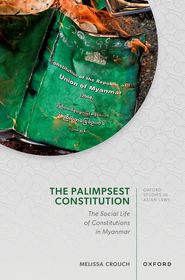
The Palimpsest Constitution
The Social Life of Constitutions in Myanmar
Sorozatcím: Oxford Studies in Asian Laws;
-
10% KEDVEZMÉNY?
- A kedvezmény csak az 'Értesítés a kedvenc témákról' hírlevelünk címzettjeinek rendeléseire érvényes.
- Kiadói listaár GBP 100.00
-
47 775 Ft (45 500 Ft + 5% áfa)
Az ár azért becsült, mert a rendelés pillanatában nem lehet pontosan tudni, hogy a beérkezéskor milyen lesz a forint árfolyama az adott termék eredeti devizájához képest. Ha a forint romlana, kissé többet, ha javulna, kissé kevesebbet kell majd fizetnie.
- Kedvezmény(ek) 10% (cc. 4 778 Ft off)
- Kedvezményes ár 42 998 Ft (40 950 Ft + 5% áfa)
Iratkozzon fel most és részesüljön kedvezőbb árainkból!
Feliratkozom
47 775 Ft

Beszerezhetőség
Becsült beszerzési idő: A Prosperónál jelenleg nincsen raktáron, de a kiadónál igen. Beszerzés kb. 3-5 hét..
A Prosperónál jelenleg nincsen raktáron.
Why don't you give exact delivery time?
A beszerzés időigényét az eddigi tapasztalatokra alapozva adjuk meg. Azért becsült, mert a terméket külföldről hozzuk be, így a kiadó kiszolgálásának pillanatnyi gyorsaságától is függ. A megadottnál gyorsabb és lassabb szállítás is elképzelhető, de mindent megteszünk, hogy Ön a lehető leghamarabb jusson hozzá a termékhez.
A termék adatai:
- Kiadó OUP Oxford
- Megjelenés dátuma 2025. október 23.
- ISBN 9780198956884
- Kötéstípus Keménykötés
- Terjedelem336 oldal
- Méret 270x160x20 mm
- Súly 717 g
- Nyelv angol 656
Kategóriák
Rövid leírás:
This book explores the significance of past constitutions in Myanmar through constitutional ethnography and archival research. By tracing Myanmar's modern constitutional history, it demonstrates how people draw upon constitutional legacies from the late colonial era to the postcolonial, socialist, and military constitutional regimes.
TöbbHosszú leírás:
Since the mid-20th century, many postcolonial states have engaged in multiple constitution-making exercises, with the turnover in written constitutions often due to coups or internal conflict. Conversely, people have resisted authoritarian rule through alternative constitution-making. The reality that most countries have had numerous official and unofficial constitutional texts begs the question: How do past constitutions matter in the present?
This volume explores the social life of constitutional legacies, or how past constitutions matter. Using the case of Myanmar, Professor Crouch demonstrates that constitutions are a palimpsest of past texts, ideas, and practices, an accumulation of contested legacies. Through constitutional ethnography, it traces Burma/Myanmar's modern constitutional history from the late colonial era through its postcolonial, socialist, and military regimes.
The Palimpsest Constitution captures the idea that contemporary debates about constitutional reform are informed by the contested legacies of the past. In Myanmar, the military insists on the endurance of its 2008 Constitution while pro-civilian actors resist military rule through alternative constitution-making endeavours. Offering a sociological view of constitutional endurance, the book demonstrates how the social life of constitutions is central to the struggle for constitutional democracy and civilian rule in Myanmar.
In this persuasive and timely assessment of the fragility and endurance of constitutions, Crouch writes with clarity and passion about the social life of constitutions in Burma/Myanmar. Her sweeping history exposes the continuities of power and violence across colonial, democratic, and authoritarian regimes, successfully placing the Global South at the center of broad debates about constitutional politics.
Tartalomjegyzék:
Introduction
Part I. The Palimpsest Constitution under Colonial Rule
Laying the Foundations of Constitutional Legacies: War, Occupation, and Law
Resisting the Legacies of Imposed Constitution-making: Codification, Martial Law, and Executive Safeguards
Part II. The Palimpsest Constitution in the Post-colony
Subverting Colonial Constitutional Legacies: Independence, Social Democracy, and a Coup
Contesting the Postcolonial Constitution: Religion, Federalism, and Anti-constitutional Crimes
Rejecting the Postcolonial Constitution: Socialist Legality, the Party, and People's Duties
Scripting New Constitutional Legacies: Military Constitution-makers, Resistance, and Reform
Part III. The Palimpsest Constitution between the Military and the Courts
Coopting the Legacy of the Writs: The Supreme Court, Rights, and Judicial Independence
Repurposing Legacies of Judicial Review: The Constitutional Tribunal, the Military, and the Coup
Conclusion
Constitutional Ethnography
List of Characters

