

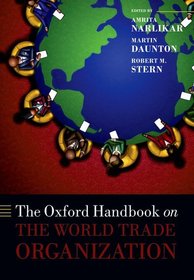
The Oxford Handbook on The World Trade Organization
Sorozatcím: Oxford Handbooks;
-
10% KEDVEZMÉNY?
- A kedvezmény csak az 'Értesítés a kedvenc témákról' hírlevelünk címzettjeinek rendeléseire érvényes.
- Kiadói listaár GBP 36.99
-
16 700 Ft (15 905 Ft + 5% áfa)
Az ár azért becsült, mert a rendelés pillanatában nem lehet pontosan tudni, hogy a beérkezéskor milyen lesz a forint árfolyama az adott termék eredeti devizájához képest. Ha a forint romlana, kissé többet, ha javulna, kissé kevesebbet kell majd fizetnie.
- Kedvezmény(ek) 10% (kb. 1 670 Ft)
- Kedvezményes ár 15 030 Ft (14 315 Ft + 5% áfa)
Iratkozzon fel most és részesüljön kedvezőbb árainkból!
Feliratkozom
16 700 Ft

Beszerezhetőség
Megrendelésre a kiadó utánnyomja a könyvet. Rendelhető, de a szokásosnál kicsit lassabban érkezik meg.
Why don't you give exact delivery time?
A beszerzés időigényét az eddigi tapasztalatokra alapozva adjuk meg. Azért becsült, mert a terméket külföldről hozzuk be, így a kiadó kiszolgálásának pillanatnyi gyorsaságától is függ. A megadottnál gyorsabb és lassabb szállítás is elképzelhető, de mindent megteszünk, hogy Ön a lehető leghamarabb jusson hozzá a termékhez.
A termék adatai:
- Kiadó OUP Oxford
- Megjelenés dátuma 2014. augusztus 7.
- ISBN 9780198714774
- Kötéstípus Puhakötés
- Terjedelem880 oldal
- Méret 245x171x44 mm
- Súly 1512 g
- Nyelv angol 0
Kategóriák
Rövid leírás:
The Oxford Handbook on the World Trade Organization provides an authoritative and cutting-edge account of the World Trade Organization - what it does, how it goes about fulfilling its tasks, its achievements and problems, and how it might contend with some critical challenges.
TöbbHosszú leírás:
The Oxford Handbook on the World Trade Organization provides an authoritative and cutting-edge account of the World Trade Organization. Its purpose is to provide a holistic understanding of what the WTO does, how it goes about fulfilling its tasks, its achievements and problems, and how it might contend with some critical challenges. The Handbook benefits from an interdisciplinary approach. The editorial team comprises a transatlantic partnership between a political scientist, a historian, and an economist. The distinguished and international team of contributors to the volume includes leading political scientists, historians, economists, lawyers, and practitioners working in the area of multilateral trade. All the chapters present original and state-of-the-art research material. They critically engage with existing academic and policy debates, and also contribute to the evolution of the field by setting the agenda for current and future WTO studies.The Handbook is aimed at research institutions, university academics, post-graduate students, and final-year undergraduates working in the areas of international organization, trade policy and negotiations, global economic governance, and economic diplomacy. As such, it should find an enthusiastic readership amongst students and scholars in History, Economics, Political Science, International Relations, Public Policy, and Law. Equally important, the book should have direct relevance for diplomats, international bureaucrats, government officials, and other policy-makers and practitioners in the area of trade and economic governance.
...this Handbook should be regarded as a feat of great editorship, which is especially remarkable given the pluralistic array of contributors-both in disciplinary and geographic terms.
Tartalomjegyzék:
Introduction
Part I: Theory of Multilateral Trade Liberalization
The Case for a Multilateral Trade Organization
The Inconsistent Quartet: Free Trade Versus Competing Goals
Trade Liberalization and Domestic Politics
Part II: Institutional Evolution: Building up the World Trade Organization
International Trade Organization
The expanding mandate of the GATT: The First Seven Rounds
Uruguay Round Negotiations and the Creation of the WTO
Part III: The Process Behind the Workings of the WTO
The Role of the Director-General and the Secretariat
Defining the Borders of the WTO Agenda
Collective Agency, Systemic Consequences: Bargaining Coalitions in the WTO
Part IV: Agency in the WTO
The Influence of the EU in the World Trade System
The Role of the US : A Multi-level explanation for Decreased Support over Time
The Role of the B(R)ICS: System supporters or Change agents in the WTO?
Least Developed Countries: Growing Voice
Awkward Partners: NGOs and Social Movements in the WTO
What happened to the Influence of Bussines? Corporations and Organised Labour in the WTO
Part V: The Substance of the Agreements
Trade in Manufactures and Agricultural Products: The Dangerous Link? (Helen Coskeran, Dan Kim, Amrita Narlikar)
Trade in Services in the WTO: From Marrakech (1994) to Doha (2001) to...
Trade Related Intellectual Property Rights (TRIPs)
Rules: Anti-dumping, Countervailing Duties, and Safeguards
Regulatory Measures: SPS, TBT, Customs Valuation
Part VI: Implementation and Enforcement
Trade Policy Review Mechanism
Dispute Settlement Mechanism - Analysis and Problems
DSM - The Appellate Body - Assessment and Problems
Interpretation and Institutional Choice at the WTO
The DSM: Ensuring Compliance?
Part VII: Challenges to the System
Persistent Deadlock at Doha
The Role of Domestic Courts in the Implementation of WTO Law: The Political Economy of Separation of Powers and Checks and Balances
Preferential Trading Arrangements
New Issues in Food, Agriculture, and Natural Resources
Part VIII: Ethical Issues
Fairness in the WTO Trading System
Labour Standards and Human Rights
Trade and the Environment
Part IX: Reform of the WTO and Global Economic Governance
Proposals for Reform: A Synthesis and Assessment
The WTO and Institutional (In)Coherence
Introduction
Part I: Theory of Multilateral Trade Liberalization
The Case for a Multilateral Trade Organization
The Inconsistent Quartet: Free Trade Versus Competing Goals
Trade Liberalization and Domestic Politics
Part II: Institutional Evolution: Building up the World Trade Organization
International Trade Organization
The expanding mandate of the GATT: The First Seven Rounds
Uruguay Round Negotiations and the Creation of the WTO
Part III: The Process Behind the Workings of the WTO
The Role of the Director-General and the Secretariat
Defining the Borders of the WTO Agenda
Collective Agency, Systemic Consequences: Bargaining Coalitions in the WTO
Part IV: Agency in the WTO
The Influence of the EU in the World Trade System
The Role of the US : A Multi-level explanation for Decreased Support over Time
The Role of the B(R)ICS: System supporters or Change agents in the WTO?
Least Developed Countries: Growing Voice
Awkward Partners: NGOs and Social Movements in the WTO
What happened to the Influence of Bussines? Corporations and Organised Labour in the WTO
Part V: The Substance of the Agreements
Trade in Manufactures and Agricultural Products: The Dangerous Link? (Helen Coskeran, Dan Kim, Amrita Narlikar)
Trade in Services in the WTO: From Marrakech (1994) to Doha (2001) to...
Trade Related Intellectual Property Rights (TRIPs)
Rules: Anti-dumping, Countervailing Duties, and Safeguards
Regulatory Measures: SPS, TBT, Customs Valuation
Part VI: Implementation and Enforcement
Trade Policy Review Mechanism
Dispute Settlement Mechanism - Analysis and Problems
DSM - The Appellate Body - Assessment and Problems
Interpretation and Institutional Choice at the WTO
The DSM: Ensuring Compliance?
Part VII: Challenges to the System
Persistent Deadlock at Doha
The Role of Domestic Courts in the Implementation of WTO Law: The Political Economy of Separation of Powers and Checks and Balances
Preferential Trading Arrangements
New Issues in Food, Agriculture, and Natural Resources
Part VIII: Ethical Issues
Fairness in the WTO Trading System
Labour Standards and Human Rights
Trade and the Environment
Part IX: Reform of the WTO and Global Economic Governance
Proposals for Reform: A Synthesis and Assessment
The WTO and Institutional (In)Coherence

