

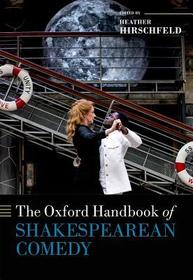
The Oxford Handbook of Shakespearean Comedy
Sorozatcím: Oxford Handbooks;
-
10% KEDVEZMÉNY?
- A kedvezmény csak az 'Értesítés a kedvenc témákról' hírlevelünk címzettjeinek rendeléseire érvényes.
- Kiadói listaár GBP 157.50
-
71 111 Ft (67 725 Ft + 5% áfa)
Az ár azért becsült, mert a rendelés pillanatában nem lehet pontosan tudni, hogy a beérkezéskor milyen lesz a forint árfolyama az adott termék eredeti devizájához képest. Ha a forint romlana, kissé többet, ha javulna, kissé kevesebbet kell majd fizetnie.
- Kedvezmény(ek) 10% (kb. 7 111 Ft)
- Kedvezményes ár 64 000 Ft (60 953 Ft + 5% áfa)
Iratkozzon fel most és részesüljön kedvezőbb árainkból!
Feliratkozom
71 111 Ft

Beszerezhetőség
Megrendelésre a kiadó utánnyomja a könyvet. Rendelhető, de a szokásosnál kicsit lassabban érkezik meg.
Why don't you give exact delivery time?
A beszerzés időigényét az eddigi tapasztalatokra alapozva adjuk meg. Azért becsült, mert a terméket külföldről hozzuk be, így a kiadó kiszolgálásának pillanatnyi gyorsaságától is függ. A megadottnál gyorsabb és lassabb szállítás is elképzelhető, de mindent megteszünk, hogy Ön a lehető leghamarabb jusson hozzá a termékhez.
A termék adatai:
- Kiadó OUP Oxford
- Megjelenés dátuma 2018. szeptember 20.
- ISBN 9780198727682
- Kötéstípus Keménykötés
- Terjedelem594 oldal
- Méret 254x179x38 mm
- Súly 1194 g
- Nyelv angol
- Illusztrációk 12 Illustrations 0
Kategóriák
Rövid leírás:
The Oxford Handbook of Shakespearean Comedy features a wide range of essays by leading scholars on key aspects of Shakespeare's comedies with contributions on classical and medieval sources, the literary and theatrical environment of early modern London, as well as chapters on religion, animals, music, sexual desire, architecture, and race.
TöbbHosszú leírás:
The Oxford Handbook of Shakespearean Comedy offers critical and contemporary resources for studying Shakespeare's comic enterprises. It engages with perennial, yet still urgent questions raised by the comedies and looks at them from a range of new perspectives that represent the most recent methodological approaches to Shakespeare, genre, and early modern drama.
Several chapters take up firmly established topics of inquiry such Shakespeare's source materials, gender and sexuality, hetero- and homoerotic desire, race, and religion, and they reformulate these topics in the materialist, formalist, phenomenological, or revisionist terms of current scholarship and critical debate. Others explore subjects that have only relatively recently become pressing concerns for sustained scholarly interrogation, such as ecology, cross-species interaction, and humoral theory. Some contributions, informed by increasingly sophisticated approaches to the material conditions and embodied experience of theatrical practice, speak to a resurgence of interest in performance, from Shakespeare's period through the first decades of the twenty-first century. Others still investigate distinct sets of plays from unexpected and often polemical angles, noting connections between the comedies under inventive, unpredicted banners such as the theology of adultery, early modern pedagogy, global exploration, or monarchical rule. The Handbook situates these approaches against the long history of criticism and provides a valuable overview of the most up-to-date work in the field.
Hirschfeld offers an elegant and urgent rationale for the concept in her introduction, doing much more than preparing readers for the essays that follow. ...The most exciting essays in the collection are those that work with the organizing concept. These are diverse in topic and come from all the sections. ...These articles unlock Shakespearean comedy from generic calcification, explanations of comedy that often serve to limit meaning and understanding of dramatic trajectories, contradictions, displacements, and inconsistencies.
Tartalomjegyzék:
Introduction: Encountering Shakespearean Comedy
Part I: Settings, Sources, Influences
Encountering the Elizabethan Stage
Encountering the Past I: Shakespeare's Reception of Classical Comedy
Encountering the Past II: Shakespearean Comedy, Chaucer, and Medievalism
Encountering the Present I: Shakespeare's Early Urban Comedies and the Lure of True Crime and Satire
Encountering the Present II: Shakespearean Comedy and Elizabethan Drama
Part II: Themes and Conventions
Shakespearean Comedy and Early Modern Religious Culture
Shakespearean Comedy and the Early Modern Marketplace: Sympathetic Economies
Shakespearean Comedy and the Early Modern Domestic Sphere
Place and Being in Shakespearean Comedy
Shakespearean Comedy and the Question of Race
Farce and Force: Shakespearean Comedy, Militarism, and Violence
Water Memory and the Art of Preserving: Shakespearean Comedy and Early Modern Cultures of Remembrance
The Humors in Humor: Shakespeare and Early Modern Psychology
Shakespearean Comedy and the Senses
Green Comedy: Shakespeare and Ecology
The Laws of Comedy: Shakespeare and Early Modern Legal Culture
Comedy and Eros: Sexualities on Shakespeare's Stage
Queer Comedy
The Music of Shakespearean Comedy
Gender and Genre: Shakespeare's Comic Women
The Architecture of Shakespearean Comedy: Domesticity, Performance, and the Empty Room
Poor Things, Vile Things: Shakespeare's Comedy of Kinds
Part III: Conditions and Performance
Stage Props and Shakespeare's Comedies: Keeping Safe Nerissa's Ring
Shakespearean Comedy and the Discourses of Print
Imagining Shakespeare's Audience
Comedy on the Boards: Shakespeare's Use of Playhouse Space
Adapting Shakespeare's Comedies
Brexit Dreams: Comedy, Nostalgia, and Critique in Much Ado About Nothing and A Midsummer Night's Dream
Shakespearean Comedy on Screen
Part IV: Plays
Holy Adultery: Marriage in The Comedy of Errors, The Merchant of Venice, and The Merry Wives of Windsor
Comedies of Tough Love: Two Gentlemen of Verona, Love's Labour's Lost, The Taming of the Shrew, and Much Ado About Nothing
Comedies of the Green World: A Midsummer Night's Dream, As You Like It, and Twelfth Night
Problem Comedies: Troilus and Cressida, Measure for Measure, and All's Well That Ends Well

