

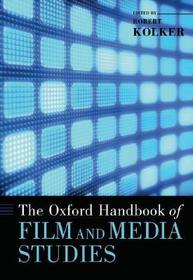
The Oxford Handbook of Film and Media Studies
Sorozatcím: Oxford Handbooks;
-
10% KEDVEZMÉNY?
- A kedvezmény csak az 'Értesítés a kedvenc témákról' hírlevelünk címzettjeinek rendeléseire érvényes.
- Kiadói listaár GBP 170.00
-
76 755 Ft (73 100 Ft + 5% áfa)
Az ár azért becsült, mert a rendelés pillanatában nem lehet pontosan tudni, hogy a beérkezéskor milyen lesz a forint árfolyama az adott termék eredeti devizájához képest. Ha a forint romlana, kissé többet, ha javulna, kissé kevesebbet kell majd fizetnie.
- Kedvezmény(ek) 10% (kb. 7 676 Ft)
- Kedvezményes ár 69 080 Ft (65 790 Ft + 5% áfa)
Iratkozzon fel most és részesüljön kedvezőbb árainkból!
Feliratkozom
76 755 Ft

Beszerezhetőség
Megrendelésre a kiadó utánnyomja a könyvet. Rendelhető, de a szokásosnál kicsit lassabban érkezik meg.
Why don't you give exact delivery time?
A beszerzés időigényét az eddigi tapasztalatokra alapozva adjuk meg. Azért becsült, mert a terméket külföldről hozzuk be, így a kiadó kiszolgálásának pillanatnyi gyorsaságától is függ. A megadottnál gyorsabb és lassabb szállítás is elképzelhető, de mindent megteszünk, hogy Ön a lehető leghamarabb jusson hozzá a termékhez.
A termék adatai:
- Kiadó OUP USA
- Megjelenés dátuma 2008. szeptember 11.
- ISBN 9780195175967
- Kötéstípus Keménykötés
- Terjedelem640 oldal
- Méret 168x249x50 mm
- Súly 1227 g
- Nyelv angol
- Illusztrációk 32 halftones 0
Kategóriák
Hosszú leírás:
The Oxford Handbook of Film and Media Studies is a major new reference work that provides the best single-volume source of original scholarship on the intersection of film and media studies. Comprised of twenty chapters written by experts in their fields, this work presents an authoritative, in-depth, and up-to-date assessment of film and media in the early twenty-first century in the U.S. and abroad. Some essays survey particular issues, such as the changing concept of 'realism' in film. Others look at current media practices, with special attention to new media. There are contributions by industry professionals, presenting an inside look at film and media today. The Handbook deals with issues as wide ranging and pertinent as copyright, globalization, television programming, video game genres, the ideologies of media, and movie going in India. As with other Oxford Handbooks, the contributors cover the field in a comprehensive yet accessible way that is suitable for those wishing to gain a good working knowledge of an area of study and where it's headed.
TöbbTartalomjegyzék:
Introduction
Jay David Bolter, Digital Media and the Future of Filmic Narrative
Brian Price, The Last Laoco:on
Devin Orgeron, Visual Media and the Tyranny of the Real
Francis Guerin, Radical Aspirations Historicized: The European Commitment to Political Documentary
Jeannene M. Przyblyski, Loss of Light: The Long Shadow of Photography in the Digital Age
Marsha Orgeron, Media Celebrity in the Age of the Image
Paul Young, Film Genre Theory and Contemporary Media: Description, Interpretation, Intermediality
Toby Miller and Mariana Johnson, The Who, What, When, Where, And How-Gilda Says Textual Analysis Needs To Learn From Political Economy And Ethnography
William Uricchio, Television's First 75 Years: The Interpretive Flexibility Of A Medium In Transition
Tara McPherson, "The end of TV as we know it": Convergence, Anxiety, Generic Innovation, and the Case of 24
John Caldwell, Screen Practice and Conglomeration: How Reflexivity and Conglomeration Fuel Each Other
Evans Chan, The Chinese Action Image and Postmodernity
Joseph Schaub, When Cute Becomes Scary: The Young Female in Japanese Horror Cinema
Gina Marchetti, Asian Film and Digital Culture
Manjunath Pendakur, Popular Cinema and "New" Media in India
Cristina Venegas, Dreaming With Open Eyes: Latin American Media in the Digital Age
Andrew Flibbert, The Globalization of Filmmaking in Latin America and the Middle East
David Golumbia, Computers and Cultural Studies
Warren Buckland, Film and Media Studies Pedagogy
Peter Jaszi, Copyright, Fair Use, and Motion Pictures
Appendix I. Tom Bernard, Evolution of Modern Day Independent Film Making
Appendix II. Lee Berger & Richard Hollander, The Digital Revolution

