

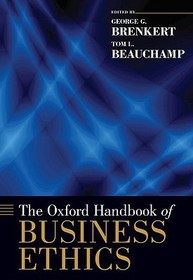
The Oxford Handbook of Business Ethics
Sorozatcím: Oxford Handbooks;
-
10% KEDVEZMÉNY?
- A kedvezmény csak az 'Értesítés a kedvenc témákról' hírlevelünk címzettjeinek rendeléseire érvényes.
- Kiadói listaár GBP 162.50
-
77 634 Ft (73 937 Ft + 5% áfa)
Az ár azért becsült, mert a rendelés pillanatában nem lehet pontosan tudni, hogy a beérkezéskor milyen lesz a forint árfolyama az adott termék eredeti devizájához képest. Ha a forint romlana, kissé többet, ha javulna, kissé kevesebbet kell majd fizetnie.
- Kedvezmény(ek) 10% (cc. 7 763 Ft off)
- Kedvezményes ár 69 870 Ft (66 543 Ft + 5% áfa)
Iratkozzon fel most és részesüljön kedvezőbb árainkból!
Feliratkozom
77 634 Ft

Beszerezhetőség
Megrendelésre a kiadó utánnyomja a könyvet. Rendelhető, de a szokásosnál kicsit lassabban érkezik meg.
Why don't you give exact delivery time?
A beszerzés időigényét az eddigi tapasztalatokra alapozva adjuk meg. Azért becsült, mert a terméket külföldről hozzuk be, így a kiadó kiszolgálásának pillanatnyi gyorsaságától is függ. A megadottnál gyorsabb és lassabb szállítás is elképzelhető, de mindent megteszünk, hogy Ön a lehető leghamarabb jusson hozzá a termékhez.
A termék adatai:
- Kiadó OUP USA
- Megjelenés dátuma 2009. december 17.
- ISBN 9780195307955
- Kötéstípus Keménykötés
- Terjedelem816 oldal
- Méret 173x249x53 mm
- Súly 1599 g
- Nyelv angol 0
Kategóriák
Rövid leírás:
The Oxford Handbook of Business Ethics is a comprehensive treatment of business ethics from a philosophical approach. Each chapter is written by an accomplished philosopher who surveys a major ethical issue in business, offers his or her own contribution to the issues that define that topic, and provides a bibliography that identifies key works in the field.
TöbbHosszú leírás:
Business ethics raises many important philosophical issues. A first set of issues concerns the methodology of business ethics. What is the role of ethical theory in business ethics? To what extent, if at all, can thinking in business ethics be enhanced by philosophy, so as to provide real moral guidance? Another set of issues involves questions regarding markets, capitalism, and economic justice. There are related concerns about the nature of business organizations and the responsibilities they have to their members, owners, and society.
The Oxford Handbook of Business Ethics is a comprehensive treatment of the field of business ethics as seen from a philosophical approach. The volume consists of 24 essays that survey the field of business ethics in a broad and accessible manner, covering all major topics about the relationship between ethical theory and business ethics. The chapters are written by accomplished philosophers who offer a systematic interpretation of their topics and discuss various moral controversies and dilemmas that plague business relationships and government-business relationships. Readers are thus presented with the major views that define the topic of the essay with critical discussions of those views, as well as topical bibliographies that identify key works in the field. In addition to philosophers who work in this area, the volume will be of interest to those in business and society seeking an up-to-date resource on this vital field.
This hefty volume is indexed and thoroughly referenced and will be a valuable reference resource for any academic library that supports programs in philosophy, leadership, or business. Highly recommended.
Tartalomjegyzék:
Contributors
Preface
Introduction
PART I BASIC PHILOSOPHICAL ISSUES
The Methods of Business Ethics - Ronald M. Green and Aine Donovan;The Place of Ethical Theory in Business Ethics - Robert Audi
PART II COMPETITIVE MARKETS AND CORPORATE RESPONSIBILITY
The Ideal and Ideal of Capitalism - Gerald Gaus;
. The Public Authority of the Managers of Private Organizations - Christopher McMahon;
Corporate Responsibility and its Constituents - Kenneth E. Goodpaster
PART III ECONOMIC JUSTICE AND CONSUMER RIGHTS
Executive Compensation: Unjust or Just Right? - John R. Boatright;
Just Access to Health Care and Pharmaceuticals - Paul T. Menzel
PART IV UNIVERSAL NORMS AND THE RELATIVITY OF MORAL JUDGMENTS
Relativism, Multiculturalism, and Universal Norms: Their Role in Business Ethics - Tom L. Beauchamp;
Business and Human Rights: A Principle and Value-Based Analysis - Wesley Cragg;
Moral Issues in Globalization - Carol C. Gould
PART V THE USE AND PROTECTION OF INFORMATION
Deception and Information Disclosure in Business and Professional Ethics - Thomas L. Carson;
Informational Privacy - Richard A. Spinello;
The Moral Problem in Insider Trading - Alan Strudler;
Intellectual Property Rights - Richard T. De George
PART VI INCENTIVES AND INFLUENCE
Conflict of Interest - Wayne Norman and Chris MacDonald;
Corruption and Bribery - Manuel Velasquez;
Business in Politics: Lobbying and Corporate Campaign Contributions - Andrew Stark
PART VII EMPLOYEE RIGHTS AND CORPORATE RESPONSIBLITIES
Discrimination, Affirmative Action, and Diversity in Business - Bernard Boxill;
Whistle Blowing, Moral Integrity, and Organizational Ethics - George G. Brenkert;
Employment at Will and Employee Rights - John J. McCall and Patricia H. Werhane;
Working Conditions: Safety and Sweatshops - Denis G. Arnold
PART VIII SAFETY, RISK, AND HARM
Environmental Ethics and Responsibilities - Lisa H. Newton;
The Mirage of Product Safety - John Hasnas
PART IX CREATING MORAL ORGANIZATIONS
.
Organizational Integrity and Moral Climates - Norman E. Bowie
INDEX

