

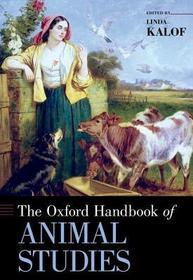
The Oxford Handbook of Animal Studies
Sorozatcím: Oxford Handbooks;
-
10% KEDVEZMÉNY?
- A kedvezmény csak az 'Értesítés a kedvenc témákról' hírlevelünk címzettjeinek rendeléseire érvényes.
- Kiadói listaár GBP 162.50
-
73 368 Ft (69 875 Ft + 5% áfa)
Az ár azért becsült, mert a rendelés pillanatában nem lehet pontosan tudni, hogy a beérkezéskor milyen lesz a forint árfolyama az adott termék eredeti devizájához képest. Ha a forint romlana, kissé többet, ha javulna, kissé kevesebbet kell majd fizetnie.
- Kedvezmény(ek) 10% (kb. 7 336 Ft)
- Kedvezményes ár 66 032 Ft (62 888 Ft + 5% áfa)
Iratkozzon fel most és részesüljön kedvezőbb árainkból!
Feliratkozom
73 368 Ft

Beszerezhetőség
Megrendelésre a kiadó utánnyomja a könyvet. Rendelhető, de a szokásosnál kicsit lassabban érkezik meg.
Why don't you give exact delivery time?
A beszerzés időigényét az eddigi tapasztalatokra alapozva adjuk meg. Azért becsült, mert a terméket külföldről hozzuk be, így a kiadó kiszolgálásának pillanatnyi gyorsaságától is függ. A megadottnál gyorsabb és lassabb szállítás is elképzelhető, de mindent megteszünk, hogy Ön a lehető leghamarabb jusson hozzá a termékhez.
A termék adatai:
- Kiadó OUP USA
- Megjelenés dátuma 2017. április 13.
- ISBN 9780199927142
- Kötéstípus Keménykötés
- Terjedelem640 oldal
- Méret 236x160x43 mm
- Súly 726 g
- Nyelv angol 10
Kategóriák
Rövid leírás:
The Oxford Handbook of Animal Studies tackles the infamous "animal question": how can humans rethink and reconfigure their relationships with other animals? Over the course of five sections and thirty chapters, the contributors investigate issues and concepts central to understanding our current relationship with other animals and the potential for coexistence in an ecological community of living beings.
TöbbHosszú leírás:
Intellectual struggles with the "animal question"-- how humans can rethink and reconfigure their relationships with other animals-- first began to take hold in the 1970s. Over the next forty years, scholars from a wide range of fields would make sweeping reevaluations of the relationship between humans and other animals.
The Oxford Handbook of Animal Studies brings these diverse evaluations together for the first time, paying special attention to the commodification of animals, the degradation of the natural world and a staggering loss of animal habitat and species extinction, and the increasing need for humans to coexist with other animals in urban, rural and natural contexts. Linda Kalof maps these themes into the five major categories that structure this volume: Animals in the Landscape of Law, Politics and Public Policy; Animal Intentionality, Agency and Reflexive Thinking; Animals as Objects in Science, Food, Spectacle and Sport; Animals in Cultural Representations; and Animals in Ecosystems. Written by international scholars with backgrounds in philosophy, law, history, English, art, sociology, geography, archaeology, environmental studies, cultural studies, and animal advocacy, the thirty chapters in this handbook investigate key issues and concepts central to understanding our current relationship with other animals and the potential for coexistence in an ecological community of living beings.
Offering an outlook for healthier collaboration, these varied voices constitute a valuable and timely authority to consider while venturing on an animal studies project -- no matter from which discipline.
Tartalomjegyzék:
Preface
List of Contributors
Introduction, Linda Kalof
Part I. Animals in the Landscape of Law, Politics and Public Policy
1. Animal Rights, Gary Francione and Anna Charlton
2. Animals in Political Theory, Sue Donaldson and Will Kymlicka
3. Animals as Living Property, David Favre
4. The Human-Animal Bond, James Serpell
5. Animal Sheltering, Leslie Irvine
6. Roaming Dogs, Arnold Arluke and Kate Atema
7. Misothery: Contempt for Animals and Nature, Its Origins, Purposes, and Repercussions, James B. Mason
8. Continental Approaches to Animals and Animality, Ralph Acampora
9. Animals as Legal Subjects, Paul Waldau
10. The Struggle for Compassion and Justice through Critical Animal Studies, Carol Gigliotti
11. Interspecies Dialogue and Animal Ethics: The Feminist Care Perspective, Josephine Donovan
Part II. Animal Intentionality, Agency and Reflexive Thinking
12. Cetacean Cognition, Lori Marino
13. History and Animal Agencies, Chris Pearson
14. What Was It Like to Be a Cow? History and Animal Studies, Erica Fudge
15. Animals as Sentient Commodities, Rhoda Wilkie
16. Animal Work, Jocelyne Porcher
17. Animals as Reflexive Thinkers: The Aponoian Paradigm, Mark Rowlands and Susana MonsóNTOCPart III. Animals as Objects in Science, Food, Spectacle and Sport
18. The Ethics of Animal Research - Theory and Practice, Bernard Rollin
19. The Ethics of Food Animal Production, Paul Thompson
20. Animals as Scientific Objects, Mike Michael
21. The Problem with Zoos, Randy Malamud
22. Wolf Hunting and the Ethics of Predator Control, John Vucetich and Michael P. Nelson
Part IV. Animals in Cultural Representations
23. Practice and Ethics of the Use of Animals in Contemporary Art, Joe Zammit-Lucia
24. Animals in Folklore, Boria Sax
Part V. Animals in Ecosystems
25. Archaeozoology, Juliet Clutton-Brock
26. Animals and Ecological Science, Anita Guerrini
27. Staging Privilege, Proximity, and "Extreme Animal Tourism," Jane Desmond
28. Commensal Species, Terry O'Connor
29. Lively Cities: People, Animals, and Urban Ecosystems, Marcus Owens and Jennifer Wolch
30. Animals in Religion, Stephen R. L. Clark
Index

