

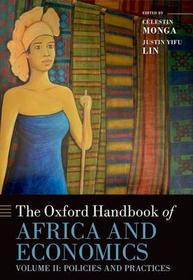
The Oxford Handbook of Africa and Economics
Volume 2: Policies and Practices
Sorozatcím: Oxford Handbooks;
-
10% KEDVEZMÉNY?
- A kedvezmény csak az 'Értesítés a kedvenc témákról' hírlevelünk címzettjeinek rendeléseire érvényes.
- Kiadói listaár GBP 157.50
-
75 245 Ft (71 662 Ft + 5% áfa)
Az ár azért becsült, mert a rendelés pillanatában nem lehet pontosan tudni, hogy a beérkezéskor milyen lesz a forint árfolyama az adott termék eredeti devizájához képest. Ha a forint romlana, kissé többet, ha javulna, kissé kevesebbet kell majd fizetnie.
- Kedvezmény(ek) 10% (cc. 7 525 Ft off)
- Kedvezményes ár 67 721 Ft (64 496 Ft + 5% áfa)
Iratkozzon fel most és részesüljön kedvezőbb árainkból!
Feliratkozom
75 245 Ft

Beszerezhetőség
Megrendelésre a kiadó utánnyomja a könyvet. Rendelhető, de a szokásosnál kicsit lassabban érkezik meg.
Why don't you give exact delivery time?
A beszerzés időigényét az eddigi tapasztalatokra alapozva adjuk meg. Azért becsült, mert a terméket külföldről hozzuk be, így a kiadó kiszolgálásának pillanatnyi gyorsaságától is függ. A megadottnál gyorsabb és lassabb szállítás is elképzelhető, de mindent megteszünk, hogy Ön a lehető leghamarabb jusson hozzá a termékhez.
A termék adatai:
- Kiadó OUP Oxford
- Megjelenés dátuma 2015. július 2.
- ISBN 9780199687107
- Kötéstípus Keménykötés
- Terjedelem992 oldal
- Méret 252x181x58 mm
- Súly 1838 g
- Nyelv angol
- Illusztrációk Figures and Tables 0
Kategóriák
Rövid leírás:
Identifies the central themes, issues, questions, and methods of analysis of economics, and discusses how they have been approached in the African context over time. Reviews and document how the study of African societies has contributed to and shaped major fields of the discipline of economics.
TöbbHosszú leírás:
A popular myth about the travails of Africa holds that the continent's long history of poor economic performance reflects the inability of its leaders and policymakers to fulfill the long list of preconditions to be met before sustained growth can be achieved. These conditions are said to vary from the necessary quantity and quality of physical and human capital to the appropriate institutions and business environments. While intellectually charming and often elegantly formulated, that conventional wisdom is actually contradicted by historical evidence and common sense. It also suggests a form of intellectual mimicry that posits a unique path to prosperity for all countries regardless of their level of development and economic structure.
In fact, the argument underlining that reasoning is tautological, and the policy prescriptions derived from it are fatally teleological: low-income countries are by definition those where such ingredients are missing. None of today's high-income countries started its growth process with the "required " and complete list of growth ingredients. Unless one truly believes that the continent of Africa-and most developing countries-are ruled predominantly if not exclusively by plutocrats with a high propensity for sadomasochism, the conventional view must be re-examined, debated, and questioned.
This volume-the second of the Oxford Handbook of Africa and Economics-aims at reassessing the economic policies and practices observed across the continent since independence. It offers a collection of analyses by some of the leading economists and development thinkers of our time, and reflects a wide range of perspectives and viewpoints-even on the same topic. Africa's emergence as a potential economic powerhouse in the years and decades ahead amply justifies the scope and ambition of the book.
Tartalomjegyzék:
Introduction: Africa's Evolving Policy Frameworks
Part I: The Macroeconomics of Growth and Structural Transformation
African Growth Strategies: The Past, Present and Future
Africa's Quiet Revolution
Monetary Policy Issues in Sub-Saharan Africa
The Future of African Monetary Geography
The CFA Franc: A Biography
Challenges of Central Banking in Africa
Fiscal Policy in Africa
African Debt and Debt Relief
Savings, Capital Flight, and African Development
Regional Integration in Africa
Natural Resources: Utilizing the Precious Boon
Rediscovering Structural Change: Manufacturing, Natural Resources and Industrialization
Innovation Capabilities for Sustainable Development in Africa
Part II: Microeconomic and Sectoral Issues
Land Tenure and Agricultural Intensification in Sub-Saharan Africa
Agriculture, Growth, and Development in Africa: Theory and Practice
Capacity Development for Transformation
Gold Mining and Economic and Social Change in West Africa
The Economic Impacts of New Technologies in Africa
Infrastructure in Africa
Financial Inclusion in Africa : Obstacles and Opportunities
Financial Markets Development in Africa
Islamic Finance in North Africa
Regulatory Reform for Closing Africa's Competitiveness Gap
Part III: Institutional and Social Economics
School Enrolment, Attainment, and Returns to Education in Africa
Mobility, Human Capital, Remittances, and Economic Transformation
Health, Growth, and Development in Africa
The Economics of Malaria
An Empirical Analysis of the Economics of Marriage in Egypt, Morocco, and Tunisia
Economics, Women, and Gender: The African Story
Gender, Economic Growth, and Development in Sub-Saharan Africa
Gender Economics in North Africa
The Economics of the African Media
Part IV: Old and New Development Players
What Do Development NGOs Achieve?
Trade Unions in South Africa
African Development Banks: Lessons for Development Economics
The Political Economy of Aid in North Africa
Aid to Africa: The Changing Context
Remittances to Africa and Economics
Foreign Direct Investment in Africa: Lessons for Economics
International Capital Flows to Africa
The Three Phases/Faces of China in Independent Africa
Aid to Africa: merging Trends and Issues
China-Africa Cooperation in Structural Transformation
Part V: Looking Forward
China's Rise and Structural Transformation in Africa: Ideas and Opportunities
Economics and Policy: Some Lessons from Africa's Experience
The Prospects for an Imminent Demographic Dividend in Africa: The Case for Cautious Optimism
Africa's Demographic Transition and Economic Prospects

