

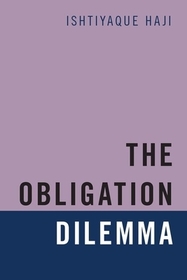
The Obligation Dilemma
-
10% KEDVEZMÉNY?
- A kedvezmény csak az 'Értesítés a kedvenc témákról' hírlevelünk címzettjeinek rendeléseire érvényes.
- Kiadói listaár GBP 72.00
-
32 508 Ft (30 960 Ft + 5% áfa)
Az ár azért becsült, mert a rendelés pillanatában nem lehet pontosan tudni, hogy a beérkezéskor milyen lesz a forint árfolyama az adott termék eredeti devizájához képest. Ha a forint romlana, kissé többet, ha javulna, kissé kevesebbet kell majd fizetnie.
- Kedvezmény(ek) 10% (kb. 3 251 Ft)
- Kedvezményes ár 29 257 Ft (27 864 Ft + 5% áfa)
Iratkozzon fel most és részesüljön kedvezőbb árainkból!
Feliratkozom
32 508 Ft

Beszerezhetőség
Becsült beszerzési idő: A Prosperónál jelenleg nincsen raktáron, de a kiadónál igen. Beszerzés kb. 3-5 hét..
A Prosperónál jelenleg nincsen raktáron.
Why don't you give exact delivery time?
A beszerzés időigényét az eddigi tapasztalatokra alapozva adjuk meg. Azért becsült, mert a terméket külföldről hozzuk be, így a kiadó kiszolgálásának pillanatnyi gyorsaságától is függ. A megadottnál gyorsabb és lassabb szállítás is elképzelhető, de mindent megteszünk, hogy Ön a lehető leghamarabb jusson hozzá a termékhez.
A termék adatai:
- Kiadó OUP USA
- Megjelenés dátuma 2019. október 16.
- ISBN 9780190050856
- Kötéstípus Keménykötés
- Terjedelem320 oldal
- Méret 147x211x30 mm
- Súly 476 g
- Nyelv angol 0
Kategóriák
Rövid leírás:
There are no moral obligations: either it is determined in advance what we will do, or it is not. But any action not in our control cannot be obligatory for us. Hence, regardless of whether our actions are determined to occur, nothing is obligatory. This conclusion has important implications for conceptions of moral responsibility and free will.
TöbbHosszú leírás:
Can you be morally obligated to do something? To renowned philosopher Ishtiyaque Haji, the answer is guardedly no. Regardless of whether determinism is true, he argues, there is a prima facie plausibility that there are no moral obligations. Powerfully and efficiently, Haji develops a conclusion that has major implications for how we conceive issues in moral responsibility and free will. The book develops the obligation dilemma as clearly as possible. The next step will be for further sustained philosophical work to solve it, assuming it can be resolved, inspired by Haji.
In many respects, the obligation dilemma mirrors the well-known responsibility dilemma, where no one is morally responsible for anything. When suitably amended, the strongest recommendations in favor of, or in response to, the responsibility dilemma neither fully support nor undermine the obligation dilemma. Exposing the obligation dilemma's implications for responsibility, and its ramifications for forgiveness (something central to interpersonal relationships), underscores its urgency.
In his exciting and challenging new book, The Obligation Dilemma, Ishtiyaque Haji presents forceful arguments which, if correct, show that moral obligation is incompatible both with determinism and with indeterminism. Determinism plausibly would entail that we lack the kind of freedom of action that, arguably, we must have, if we have any obligations. Indeterminism plausibly would entail that we lack the kind of control over our actions that, arguably, we must have, if we have any obligations. Since our world is either deterministic or indeterministic, Haji's arguments thus seem to show that there are no moral obligations. Must we conclude that everything is permitted? This is a significant challenge to moral philosophy, and to our conception of morality as setting constraints on how we are permitted to act.
Tartalomjegyzék:
Chapter 1. Freedom and Obligation: A Dilemma
Chapter 2. Determinism and Obligation
Chapter 3. Indeterminism and Obligation
Chapter 4. The Extended Luck Problem
Chapter 5. Obligation and Responsibility
Chapter 6. Does Obligation Require Weak or Strong Alternatives?
Chapter 7. Obligation and Forgiveness
Chapter 8. Options and Challenges
Appendix A. The Actual Sequence Proposal
Appendix B. Some Other Responses to the O-Luck Problem

