

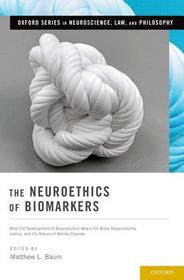
The Neuroethics of Biomarkers
What the Development of Bioprediction Means for Moral Responsibility, Justice, and the Nature of Mental Disorder
Sorozatcím: Oxford Series in Neuroscience, Law, and Philosophy;
-
10% KEDVEZMÉNY?
- A kedvezmény csak az 'Értesítés a kedvenc témákról' hírlevelünk címzettjeinek rendeléseire érvényes.
- Kiadói listaár GBP 77.00
-
34 765 Ft (33 110 Ft + 5% áfa)
Az ár azért becsült, mert a rendelés pillanatában nem lehet pontosan tudni, hogy a beérkezéskor milyen lesz a forint árfolyama az adott termék eredeti devizájához képest. Ha a forint romlana, kissé többet, ha javulna, kissé kevesebbet kell majd fizetnie.
- Kedvezmény(ek) 10% (cc. 3 477 Ft off)
- Kedvezményes ár 31 289 Ft (29 799 Ft + 5% áfa)
Iratkozzon fel most és részesüljön kedvezőbb árainkból!
Feliratkozom
34 765 Ft

Beszerezhetőség
Megrendelésre a kiadó utánnyomja a könyvet. Rendelhető, de a szokásosnál kicsit lassabban érkezik meg.
Why don't you give exact delivery time?
A beszerzés időigényét az eddigi tapasztalatokra alapozva adjuk meg. Azért becsült, mert a terméket külföldről hozzuk be, így a kiadó kiszolgálásának pillanatnyi gyorsaságától is függ. A megadottnál gyorsabb és lassabb szállítás is elképzelhető, de mindent megteszünk, hogy Ön a lehető leghamarabb jusson hozzá a termékhez.
A termék adatai:
- Kiadó OUP USA
- Megjelenés dátuma 2016. április 7.
- ISBN 9780190236267
- Kötéstípus Keménykötés
- Terjedelem224 oldal
- Méret 236x157x20 mm
- Súly 499 g
- Nyelv angol
- Illusztrációk 1 0
Kategóriák
Rövid leírás:
Neuroscientists are mining nucleic acids, fluids, and brain images for biomarkers of risk of brain disorders. This book brings clarity to several debates on the neuroethics of biomarkers by arguing for the abandonment of a categorical concept of disorder (sick vs. well) and the adoption of an explicitly probabilistic one.
TöbbHosszú leírás:
Neuroscientists are mining nucleic acids, blood, saliva, and brain images in hopes of uncovering biomarkers that could help estimate risk of brain disorders like psychosis and dementia; though the science of bioprediction is young, its prospects are unearthing controversy about how bioprediction should enter hospitals, courtrooms, or state houses. While medicine, law, and policy have established protocols for how presence of disorders should change what we owe each other or who we blame, they have no stock answers for the probabilities that bioprediction offers. The Neuroethics of Biomarkers observes, however, that for many disorders, what we really care about is not their presence per se, but certain risks that they carry. The current reliance of moral and legal structures on a categorical concept of disorder (sick verses well), therefore, obscures difficult questions about what types and magnitudes of probabilities matter. Baum argues that progress in the neuroethics of biomarkers requires the rejection of the binary concept of disorder in favor of a probabilistic one based on biological variation with risk of harm, which Baum names a "Probability Dysfunction. " This risk-reorientation clarifies practical ethical issues surrounding the definition of mental disorder in the DSM-5 and the nosology of conditions defined by risk of psychosis and dementia. Baum also challenges the principle that the acceptability of bioprediction should depend primarily on whether it is medically useful by arguing that biomarkers can also be morally useful through enabling moral agency, better assessment of legal responsibility, and fairer distributive justice. The Neuroethics of Biomarkers should be of interest to those within neuroethics, medical ethics, and the philosophy of psychiatry.
Our society is only beginning to come to grips with the profound implications of using biomarkers as imperfect 'crystal balls' for predicting the development of neurological and psychiatric disease. Dr. Baum's book is an essential guide to the scientific foundations of these tools and the difficult ethical questions that they raise about moral responsibility and priority setting
Tartalomjegyzék:
Introduction
Chapter 1: The Biomedical Promise Of Biomarkers
Chapter 2: Bioprediction Of Brain Disorder: Definitions And Scope
PART I: REORIENTATION OF THE CONCEPT OF DISORDER
Chapter 3:"There Is More Light Here." Re-Illuminating The Categories Of Mental
Chapter 4: The Probability Dysfunction
Chapter 5: The Practical Ethics Of Predictive Markers In Diagnosis: Can Risk Banding Address The Ethical Controversy Surrounding "Psychosis Risk Syndrome" And "Preclinical Alzheimer's Disease"?
PART II: BIOPREDICTION AND MORAL RESPONSIBILITY
Chapter 6: Enhanced Responsibility: Foreseeability And New Obligations To Others
Chapter 7: Reduced Responsibility: Distinguishing Conditions In Which Biomarkers Properly Reduce Legal Responsibility
PART III: BIOPREDICTION AND SOCIETY
Chapter 8: Bioprediction And Priority
Conclusion
Appendix I
Appendix II
Appendix III
References
Index

