

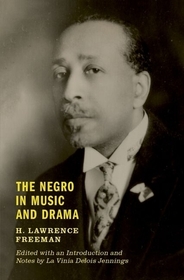
The Negro in Music and Drama
-
10% KEDVEZMÉNY?
- A kedvezmény csak az 'Értesítés a kedvenc témákról' hírlevelünk címzettjeinek rendeléseire érvényes.
- Kiadói listaár GBP 32.99
-
14 894 Ft (14 185 Ft + 5% áfa)
Az ár azért becsült, mert a rendelés pillanatában nem lehet pontosan tudni, hogy a beérkezéskor milyen lesz a forint árfolyama az adott termék eredeti devizájához képest. Ha a forint romlana, kissé többet, ha javulna, kissé kevesebbet kell majd fizetnie.
- Kedvezmény(ek) 10% (cc. 1 489 Ft off)
- Kedvezményes ár 13 405 Ft (12 767 Ft + 5% áfa)
Iratkozzon fel most és részesüljön kedvezőbb árainkból!
Feliratkozom
14 894 Ft

Beszerezhetőség
Még nem jelent meg, de rendelhető. A megjelenéstől számított néhány héten belül megérkezik.
Why don't you give exact delivery time?
A beszerzés időigényét az eddigi tapasztalatokra alapozva adjuk meg. Azért becsült, mert a terméket külföldről hozzuk be, így a kiadó kiszolgálásának pillanatnyi gyorsaságától is függ. A megadottnál gyorsabb és lassabb szállítás is elképzelhető, de mindent megteszünk, hogy Ön a lehető leghamarabb jusson hozzá a termékhez.
A termék adatai:
- Kiadó OUP USA
- Megjelenés dátuma 2026. május 3.
- ISBN 9780197810934
- Kötéstípus Keménykötés
- Terjedelem580 oldal
- Méret 235x156 mm
- Nyelv angol
- Illusztrációk 11 color images 700
Kategóriák
Rövid leírás:
Occupying a seminal position in opera and musical theatre, Harry Lawrence Freeman (1869-1954) stands at the vanguard of black operatic music history. One of the earliest American classical composers to infuse scores with jazz, blues, and spirituals, he inaugurated a black libretto movement that reverberates in musical culture today.
TöbbHosszú leírás:
Harry Lawrence Freeman (1869 -1954) preceded Scott Joplin, Shirley Graham, and William Grant Still in African-American grand opera composition. One of the earliest American composers to infuse his scores with jazz, blues, and spirituals, Freeman wrote libretti steeped in dialect and included non-traditional instruments like the saxophone and banjo in his operatic works. His seven decades as a piano accompanist, composer, librettist, and music director coincided with the national and international rise of black classical and popular music concertizers and opera performers, the latter years of minstrelsy, and the evolution of black vaudeville.
Outside of press coverage, only a dearth of primary contemporary sources exist on the vibrant black musical and theatrical culture of the pre-World War II period, particularly before the 1920s. Freeman's choices of the performing artists and stage works to memorialize in The Negro in Music and Drama provides unprecedented, first-hand perspectives of what an insider with extensive music training and theatre networking thought was important in African-American music and stage culture. His rare and never before published anthology offers a long-needed historiography of his profound influence both on the African-American stage and on music at large.
The volume includes La Vinia Delois Jennings's Introduction to The Negro in Music and Drama and H. Lawrence Freeman. Her extensive annotations throughout the anthology document the operatic composer's influence, from his birth and early years in Cleveland, Ohio, to his final decades as the resident classical music instructor and authority in Harlem at the height of its artistic renaissance.
Tartalomjegyzék:
To come
Több
