

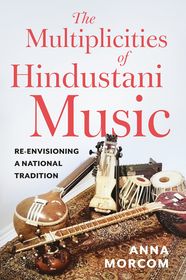
The Multiplicities of Hindustani Music
Re-envisioning a National Tradition
-
10% KEDVEZMÉNY?
- A kedvezmény csak az 'Értesítés a kedvenc témákról' hírlevelünk címzettjeinek rendeléseire érvényes.
- Kiadói listaár GBP 32.99
-
14 894 Ft (14 185 Ft + 5% áfa)
Az ár azért becsült, mert a rendelés pillanatában nem lehet pontosan tudni, hogy a beérkezéskor milyen lesz a forint árfolyama az adott termék eredeti devizájához képest. Ha a forint romlana, kissé többet, ha javulna, kissé kevesebbet kell majd fizetnie.
- Kedvezmény(ek) 10% (cc. 1 489 Ft off)
- Kedvezményes ár 13 405 Ft (12 767 Ft + 5% áfa)
Iratkozzon fel most és részesüljön kedvezőbb árainkból!
Feliratkozom
14 894 Ft

Beszerezhetőség
Becsült beszerzési idő: A Prosperónál jelenleg nincsen raktáron, de a kiadónál igen. Beszerzés kb. 3-5 hét..
A Prosperónál jelenleg nincsen raktáron.
Why don't you give exact delivery time?
A beszerzés időigényét az eddigi tapasztalatokra alapozva adjuk meg. Azért becsült, mert a terméket külföldről hozzuk be, így a kiadó kiszolgálásának pillanatnyi gyorsaságától is függ. A megadottnál gyorsabb és lassabb szállítás is elképzelhető, de mindent megteszünk, hogy Ön a lehető leghamarabb jusson hozzá a termékhez.
A termék adatai:
- Kiadó OUP USA
- Megjelenés dátuma 2026. április 9.
- ISBN 9780197825457
- Kötéstípus Puhakötés
- Terjedelem376 oldal
- Méret 234x158x21 mm
- Súly 544 g
- Nyelv angol
- Illusztrációk 21 b&w illustrations 0
Kategóriák
Rövid leírás:
The Multiplicities of Hindustani Music explores the dynamic social and economic world of North Indian raga-based music over the twentieth century and into the present day. By approaching Hindustani music from beyond geographical and social centers, author Anna Morcom uncovers new dimensions of its history, richness, strengths, contradictions, and challenges. These include the historical existence of Hindustani music as a common as well as elite culture, the central role of Sufi shrines, the establishment of classical music in India's major cities and its draining from small towns, and the world of music schools and other projects to democratize classical music.
TöbbHosszú leírás:
The Multiplicities of Hindustani Music explores the dynamic social and economic world of North Indian raga-based music over the twentieth century and into the present day. By approaching Hindustani music from beyond geographical and social centers, author Anna Morcom challenges the conventional framing of Hindustani music as a singular ---classical--- tradition, tracing its historical entanglements with popular, devotional, and commercial forms. In doing so, she uncovers new dimensions of its history, richness, strengths, contradictions, and challenges, and provides insights into future sustainability.
The Multiplicities of Hindustani Music looks at Hindustani music as historically patronized by elites but existing also as a common culture in fairs and festivals in temples, shrines, and the estates of royalty and landowners. Khyal in particular, today's main classical vocal style, flourished not only as court music but in Sufi shrines as the repertoire of qawwals, and lineages of khyal singers encompassed a myriad of genres, including qawwali. The greatest of them mastered a multiplicity of styles and were known as chaumukhi ---all-round--- artists. From the late nineteenth century, raga-focused Hindustani music was reformed and canonized as ---classical music--- with a nationalist ethos.
Morcom examines the late colonial and postcolonial reform movements that sought to codify and elevate Hindustani music as a national classical form from new perspectives. These efforts, while aiming to democratize access through music schools and institutions, also reinforced urban, middle-class dominance and marginalized regional and non-elite practices. Morcom pinpoints the paradox of reformist agendas that rejected commercialism yet depended on urban capital and networks. Crucially, she foregrounds the role of ---lighter--- forms of Hindustani music-often dismissed as peripheral-in sustaining the broader ecosystem. These genres, with greater national reach and accessibility, have enabled social mobility and educational opportunities, particularly for rural and lower-income students. The Multiplicities of Hindustani Music thus argues for a reconceptualization of the classical tradition as inherently pluralistic, highlighting that its vitality lies not in purity or exclusivity, but in its interdependence with a wider spectrum of musical practices.
Tartalomjegyzék:
Introduction
Following the People: Refracting Hindustani Music through Lineage
Khyal, Qawwals, and the Court of the Saints
Fairs and Festivals: Hindustani Music as Common Culture
Following the Money: The Economic Landscape of Hindustani Classical Music over the Long Twentieth Century
Hindustani Classical Music in Small Towns and Cities: A Parallel History
Music Schools, Mobility, and the (Dis)connected Strata of Hindustani Music
Fixing Problems in the World of Hindustani Classical Music
Making It as a Hindustani Classical Musician Today: Careers, Options, and Boundaries
Conclusion

