

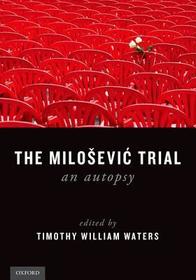
The Milosevic Trial
An Autopsy
-
10% KEDVEZMÉNY?
- A kedvezmény csak az 'Értesítés a kedvenc témákról' hírlevelünk címzettjeinek rendeléseire érvényes.
- Kiadói listaár GBP 93.00
-
41 989 Ft (39 990 Ft + 5% áfa)
Az ár azért becsült, mert a rendelés pillanatában nem lehet pontosan tudni, hogy a beérkezéskor milyen lesz a forint árfolyama az adott termék eredeti devizájához képest. Ha a forint romlana, kissé többet, ha javulna, kissé kevesebbet kell majd fizetnie.
- Kedvezmény(ek) 10% (kb. 4 198 Ft)
- Kedvezményes ár 37 791 Ft (35 991 Ft + 5% áfa)
Iratkozzon fel most és részesüljön kedvezőbb árainkból!
Feliratkozom
41 989 Ft

Beszerezhetőség
Bizonytalan a beszerezhetőség. Érdemes még egyszer keresni szerzővel és címmel. Ha nem talál másik, kapható kiadást, forduljon ügyfélszolgálatunkhoz!
Why don't you give exact delivery time?
A beszerzés időigényét az eddigi tapasztalatokra alapozva adjuk meg. Azért becsült, mert a terméket külföldről hozzuk be, így a kiadó kiszolgálásának pillanatnyi gyorsaságától is függ. A megadottnál gyorsabb és lassabb szállítás is elképzelhető, de mindent megteszünk, hogy Ön a lehető leghamarabb jusson hozzá a termékhez.
A termék adatai:
- Kiadó OUP USA
- Megjelenés dátuma 2015. szeptember 17.
- ISBN 9780190270780
- Kötéstípus Puhakötés
- Terjedelem704 oldal
- Méret 178x254x36 mm
- Súly 1211 g
- Nyelv angol 0
Kategóriák
Rövid leírás:
The international trial of Slobodan Milošević, who presided over the violent collapse of Yugoslavia - was already among the longest war crimes trials when Milošević died in 2006. Yet precisely because it ended without judgment, its significance and legacy are specially contested.
TöbbHosszú leírás:
The Milošević Trial - An Autopsy provides a cross-disciplinary examination of one of the most controversial war crimes trials of the modern era and its contested legacy for the growing fields of international criminal law and post-conflict justice.
The international trial of Slobodan Milošević, who presided over the violent collapse of Yugoslavia - was already among the longest war crimes trials when Milošević died in 2006. Yet precisely because it ended without judgment, its significance and legacy are specially contested. The contributors to this volume, including trial participants, area specialists, and international law scholars bring a variety of perspectives as they examine the meaning of the trial's termination and its implications for post-conflict justice. The book's approach is intensively cross-disciplinary, weighing the implications for law, politics, and society that modern war crimes trials create.
The time for such an examination is fitting, with the imminent closing of the Yugoslav war crimes tribunal and rising debates over its legacy, as well as the 20th anniversary of the outbreak of the Yugoslav conflict. The Milošević Trial - An Autopsy brings thought-provoking insights into the impact of war crimes trials on post-conflict justice.
This volume will prove of interest to scholars in law, political science, and history. It places the Milosevic trial and its impact in a broader context beyond not merely the Yugoslav wars, but also the international resolution of crimes arising from other conflicts." -Jim Chen, Ratio Juris
Tartalomjegyzék:
Topical Index
Forward: A Trial Terminated
A Note on Reading This Book
I. Vital Signs: The Milošević Trial in Its Context
1. The Context, Contested: Histories of Yugoslavia and its Violent Dissolution
2. The Forum: The International Criminal Tribunal for the Former Yugoslavia
3. The Man on Trial: Slobodan Milošević
4. IT-02-54, Prosecutor v. Slobodan Milošević
II. Causes of Death
5. Real Justice, in Time: The Initial Indictment of Milošević
Clint Williamson (Chief Prosecutor for the EU Special Investigative Task Force)
6. Real Justice or Realpolitik? The Delayed Indictment of Milošević
Cherif Bassiouni (DePaul University)
. . .
7. Slow Poison: Joinder and the Death of Milošević
Gideon Boas (Monash University)
8. Joinder, Fairness and the Goals of International Criminal Justice
Frédéric Mégret (McGill University)
. . .
9. Difficulties for the Participants: Indictment Correct, Trial Impossible
Carla Del Ponte (Former Chief Prosecutor, ICTY and ICTR)
10. Outside the Internal Dynamics of the Prosecution
Kelly Dawn Askin (Open Society Justice Initiative)
. . .
11. In the Shadow of Non-Recognition: Milošević and the Self-Represented Accused's Right to Justice
Evelyn Anoya (Special Tribunal for Lebanon)
12. The Legitimacy Paradox of Self-Representation
Yuval Shany (Hebrew University)
III. Reporting the Demise
13. Guilty without a Verdict: Bosniaks' Perceptions of the Milošević Trial
Safia Swimelar (Elon University)
14. The Hague Front in the Homeland War: Narratives of the Milošević Trial in Croatia
Christopher K. Lamont (University of Groningen)
. . .
15. Another Report on the Banality of Evil: The Cultural Politics of the Milošević Trial in Kosovo
Vjollca Krasniqi (University of Prishtina; University of Ljubljana)
16. Conversations with Milošević: Two Meetings, Bloody Hands
Veton Surroi (KOHA Media Group)
. . .
17. Underwhelmed: Kosovar Albanians' Reactions to the Milošević Trial
Frances Trix (Indiana University)
18. Airing Crimes, Marginalizing Victims: Political Expectations and Transitional Justice in Kosovo
Denisa Kostovicova (London School of Economics)
. . .
19. Framing the Trial of the Century: Influences of, and on, International Media
Klaus Bachmann (Warsaw School of Social Sciences and Humanities)
20. The Court and Public Opinion: Negotiating Tensions between Trial Process and Public Interest in Milošević
Judith Armatta (Formerly Coalition for International Justice)
Maps and Photos
IV. Final Examination
21. Dead Man's Tale: Deriving Narrative Authority from the Terminated Milošević Trial
Timothy Waters (Indiana University)
22. Beyond the Theater of International Justice: The Rule 98bis Decision in Milošević
Jens Meierhenrich (London School of Economics)
. . .
23. Can We Salvage a History of Yugoslav Conflicts from the Milošević Trial?
Christian Axboe Nielsen (Aarhus University)
24. Do Historians Need a Verdict?
Florian Bieber (Karl-Franzens Universität Graz)
. . .
25. Body of Evidence: The Prosecution's Construction of Milošević
Marko Prelec (International Crisis Group)
26. Milošević and the Justice of Peace
Alexander K.A. Greenawalt (Pace University)
V. Disposing of the Body
27. The Parting of Ways: Public Reckoning with the Recent Past in Post-Milošević Serbia
Jasna Dragović-Soso (Goldsmiths)
28. Antecedents to a Debate: Conflicts over the Transfer of Milošević
Vesna Pešić (Member of Parliament, Serbia)
. . .
29. The Show and the Trial: The Political Death of Milošević
Florian Bieber (Karl-Franzens Universität Graz)
30. From Politics to Law, to Tedium, and Back
Mark Drumbl (Washington & Lee University)
VI. Reanimation: Designing Trials and Doing Justice after Two Sides of the Same Coin? Judging Milošević and Serbia before the ICTY and ICJ
Yuval Shany (Hebrew University)
32. Ambiguous Choices in the Trials of Milošević's Serbia
Tibor Várady (Central European University; Emory University)
. . .
33. Abdicated Legacy: The Prosecution's Use of Evidence from Milošević
Florence Hartmann (Formerly Office of the Prosecutor, ICTY)
34. The Spider and the System: Milošević and Joint Criminal Enterprise
Harmen van der Wilt (University of Amsterdam)
VII. Biopsy: Legacies of Milošević
Timeline with Chronological Index
Author Biographies and Acknowledgments
Bibliography
Index

