

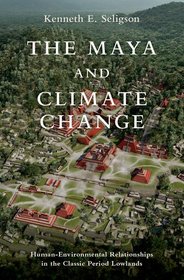
The Maya and Climate Change
Human-Environmental Relationships in the Classic Period Lowlands
Sorozatcím: Interdisciplinary Approaches to Premodern Societies and Environments;
-
10% KEDVEZMÉNY?
- A kedvezmény csak az 'Értesítés a kedvenc témákról' hírlevelünk címzettjeinek rendeléseire érvényes.
- Kiadói listaár GBP 26.99
-
12 185 Ft (11 605 Ft + 5% áfa)
Az ár azért becsült, mert a rendelés pillanatában nem lehet pontosan tudni, hogy a beérkezéskor milyen lesz a forint árfolyama az adott termék eredeti devizájához képest. Ha a forint romlana, kissé többet, ha javulna, kissé kevesebbet kell majd fizetnie.
- Kedvezmény(ek) 10% (kb. 1 218 Ft)
- Kedvezményes ár 10 967 Ft (10 445 Ft + 5% áfa)
Iratkozzon fel most és részesüljön kedvezőbb árainkból!
Feliratkozom
12 185 Ft

Beszerezhetőség
Becsült beszerzési idő: A Prosperónál jelenleg nincsen raktáron, de a kiadónál igen. Beszerzés kb. 3-5 hét..
A Prosperónál jelenleg nincsen raktáron.
Why don't you give exact delivery time?
A beszerzés időigényét az eddigi tapasztalatokra alapozva adjuk meg. Azért becsült, mert a terméket külföldről hozzuk be, így a kiadó kiszolgálásának pillanatnyi gyorsaságától is függ. A megadottnál gyorsabb és lassabb szállítás is elképzelhető, de mindent megteszünk, hogy Ön a lehető leghamarabb jusson hozzá a termékhez.
A termék adatai:
- Kiadó OUP USA
- Megjelenés dátuma 2023. január 20.
- ISBN 9780197652923
- Kötéstípus Keménykötés
- Terjedelem304 oldal
- Méret 164x237x20 mm
- Súly 576 g
- Nyelv angol 256
Kategóriák
Rövid leírás:
One of the most well-known things about the Classic Maya civilization is that it collapsed, which leads to many questions about what happened. Geared toward a general audience, this book argues that Classic Maya civilization did not in fact collapse in the literal sense of the word. Instead, it shifts the focus to the 700-plus years of societal growth and environmental conservation that preceded the transformation of Maya civilization about 1,000 years ago. Drawing on archaeological, environmental, and historical evidence, it explores the many ways that Maya communities addressed the challenges of climate change and other tropical environment stressors.
TöbbHosszú leírás:
The Classic Maya civilization, which thrived between 200-950 CE in eastern Mesoamerica, faced many environmental challenges, including those wrought by climate change. The ability of Maya communities to adapt their resource conservation practices played a crucial role in allowing them to survive for as long as they did. Researchers today understand that the breakdown of Classic Maya society was the result of many long-term processes. Yet the story that continues to grip the public imagination is that the Maya civilization mysteriously "collapsed". The Maya and Climate Change draws on archaeological, environmental, and historical datasets to provide a comprehensive, yet accessible, overview of Classic Maya human-environment relationships, including how communities addressed the challenges of climatic and demographic changes. It works to shift the focus from the Classic Maya "collapse" to the multiple examples of adaptive flexibility that allowed Pre-Colonial Maya communities to thrive in a challenging natural environment for over seven centuries.
Although the Classic Maya civilization did not leave behind much in the way of secret environmental knowledge for us to rediscover, one of the critical lessons that can be learned from studying the Classic Maya is the importance of socio-ecological adaptability--the ability and willingness to change cultural practices to address long-term challenges.
An encyclopedic treatise of ancient Maya environmental archaeology and paleoenvironmental science...I highly recommend The Maya and Climate Change to both scholars and students interested in environmental archaeology and the Maya. As a readable, afordable, short, and comprehensive monograph, this would be a great textbook for a Maya-focused, environmental archaeology course. This valuable contribution to the feld will no doubt become a classic reference on ancient Maya ecology.
Tartalomjegyzék:
Acknowledgments
Chapter 1: Shifting the Focus
Chapter 2: From Camera Lucida to Lidar: A Brief History of Maya Archaeology
Chapter 3: Forests
Chapter 4: Fields
Chapter 5: Water
Chapter 6: Stone
Chapter 7: Collapse and Resilience
Chapter 8: Looking Forward
References

