

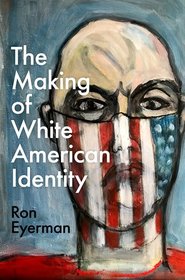
The Making of White American Identity
-
10% KEDVEZMÉNY?
- A kedvezmény csak az 'Értesítés a kedvenc témákról' hírlevelünk címzettjeinek rendeléseire érvényes.
- Kiadói listaár GBP 25.99
-
11 734 Ft (11 175 Ft + 5% áfa)
Az ár azért becsült, mert a rendelés pillanatában nem lehet pontosan tudni, hogy a beérkezéskor milyen lesz a forint árfolyama az adott termék eredeti devizájához képest. Ha a forint romlana, kissé többet, ha javulna, kissé kevesebbet kell majd fizetnie.
- Kedvezmény(ek) 10% (kb. 1 174 Ft)
- Kedvezményes ár 10 560 Ft (10 058 Ft + 5% áfa)
Iratkozzon fel most és részesüljön kedvezőbb árainkból!
Feliratkozom
11 734 Ft

Beszerezhetőség
Becsült beszerzési idő: A Prosperónál jelenleg nincsen raktáron, de a kiadónál igen. Beszerzés kb. 3-5 hét..
A Prosperónál jelenleg nincsen raktáron.
Why don't you give exact delivery time?
A beszerzés időigényét az eddigi tapasztalatokra alapozva adjuk meg. Azért becsült, mert a terméket külföldről hozzuk be, így a kiadó kiszolgálásának pillanatnyi gyorsaságától is függ. A megadottnál gyorsabb és lassabb szállítás is elképzelhető, de mindent megteszünk, hogy Ön a lehető leghamarabb jusson hozzá a termékhez.
A termék adatai:
- Kiadó OUP USA
- Megjelenés dátuma 2022. november 14.
- ISBN 9780197658949
- Kötéstípus Puhakötés
- Terjedelem304 oldal
- Méret 154x236x17 mm
- Súly 445 g
- Nyelv angol 237
Kategóriák
Rövid leírás:
In The Making of White American Identity, Ron Eyerman provides an explanation for how whiteness has become a basis for collective identification and collective action in the United States. Drawing upon his previous work on the formation of African American Identity, as well as cultural trauma theory, collective memory, and social movements, Eyerman reveals how and under what conditions such a collective identification emerges, how collective action around an ideology of whiteness and white superiority happens, and considers the prospects of the ideology of white supremacy as a political force in the United States.
TöbbHosszú leírás:
An account of the emergence and development of white consciousness throughout American history.
In The Making of White American Identity, Ron Eyerman provides an explanation for how whiteness has become a basis for collective identification and collective action in the United States. Drawing upon his previous work on the formation of African American identity, as well as cultural trauma theory, collective memory, and social movements, he reveals how and under what conditions such a collective identification emerges, as well as how the mobilization of collective action around an ideology of whiteness and white superiority. Eyerman explores how the American identity was, and is still being established, through both historical and more recent events, including the Civil War, the Civil Rights movement, the election of a Black president, the Charlottesville confrontation, and the violent conflict at the Capitol on January 6, 2021. He further shows how each event revitalized the trauma narratives stemming from the nation's founding tensions, mobilizing social forces around the idea of white superiority and white consciousness. Tracing the historical contexts and social conditions under which individuals and groups move through this process, the author also looks forward at the prospects of the ideology of white supremacy as a political force in the United States.
Ron Eyerman's account of whiteness is inevitably personal and necessarily informed by theory and history. His focus is not on the whiteness always already present since Europeans arrived, but on whiteness made and remade, especially in relation to cultural traumas like the Civil War. From the colonies through the KKK, race in the media, response to the Obama presidency, confrontation over Confederate statues in Charlottesville and the storming of the Capitol, Eyerman insightfully shows the centrality of whiteness to both meaning making and political mobilization. He concludes where we must begin, with the dangers posed by threatened, injured whiteness today.
Tartalomjegyzék:
Introduction
Chapter One: On Trauma and Trauma Narratives
Chapter Two: White Consciousness from Colonization to the Civil War
Chapter Three: Representing and Organizing Whiteness
Chapter Four: Racializing the Nation: Popular Culture and Whiteness
Chapter Five: Voicing and Visualizing Whiteness
Chapter Six: Whiteness in the Digital Age
Chapter Seven: The Future of Whiteness in the United States
Notes
Index

