

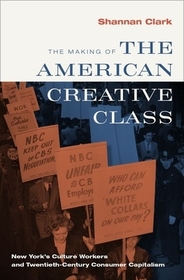
The Making of the American Creative Class
New York's Culture Workers and Twentieth-Century Consumer Capitalism
-
10% KEDVEZMÉNY?
- A kedvezmény csak az 'Értesítés a kedvenc témákról' hírlevelünk címzettjeinek rendeléseire érvényes.
- Kiadói listaár GBP 33.49
-
15 120 Ft (14 400 Ft + 5% áfa)
Az ár azért becsült, mert a rendelés pillanatában nem lehet pontosan tudni, hogy a beérkezéskor milyen lesz a forint árfolyama az adott termék eredeti devizájához képest. Ha a forint romlana, kissé többet, ha javulna, kissé kevesebbet kell majd fizetnie.
- Kedvezmény(ek) 10% (kb. 1 512 Ft)
- Kedvezményes ár 13 608 Ft (12 960 Ft + 5% áfa)
Iratkozzon fel most és részesüljön kedvezőbb árainkból!
Feliratkozom
15 120 Ft

Beszerezhetőség
Becsült beszerzési idő: A Prosperónál jelenleg nincsen raktáron, de a kiadónál igen. Beszerzés kb. 3-5 hét..
A Prosperónál jelenleg nincsen raktáron.
Why don't you give exact delivery time?
A beszerzés időigényét az eddigi tapasztalatokra alapozva adjuk meg. Azért becsült, mert a terméket külföldről hozzuk be, így a kiadó kiszolgálásának pillanatnyi gyorsaságától is függ. A megadottnál gyorsabb és lassabb szállítás is elképzelhető, de mindent megteszünk, hogy Ön a lehető leghamarabb jusson hozzá a termékhez.
A termék adatai:
- Kiadó OUP USA
- Megjelenés dátuma 2021. március 4.
- ISBN 9780199731626
- Kötéstípus Keménykötés
- Terjedelem608 oldal
- Méret 157x239x50 mm
- Súly 998 g
- Nyelv angol
- Illusztrációk 15 halftones 67
Kategóriák
Rövid leírás:
The Making of the American Creative Class narrates the history of workers in New York's publishing, advertising, design, and broadcasting industries and their efforts to improve their working conditions, set against the backdrop of the economic dislocations of twentieth-century capitalism.
TöbbHosszú leírás:
During the middle decades of the twentieth century, the production of America's consumer culture was centralized in midtown Manhattan to an extent unparalleled in the history of the modern United States. Within a few square miles of skyscrapers were the headquarters of networks like NBC and CBS, the editorial offices of book publishers and mass circulation magazines such as Time and Life, numerous influential newspapers, and major advertising agencies on Madison Avenue. Every day tens of thousands of writers, editors, artists, performers, technicians, secretaries, and other white-collar workers made advertisements, produced media content, and enhanced the appearance of goods in order to boost sales. While this center of creativity has often been portrayed as a smoothly running machine, within these offices many white-collar workers challenged the managers and executives who directed their labors.
In this definitive history, The Making of the American Creative Class examines these workers and their industries throughout the twentieth century. As manufacturers and retailers competed to attract consumers' attention, their advertising expenditures financed the growth of enterprises engaged in the production of culture, which in turn provided employment for an increasing number of clerical, technical, professional, and creative workers. The book explores employees' efforts to improve their working conditions by forming unions, experimenting with alternative media and cultural endeavors supported by public, labor, or cooperative patronage, and expanding their opportunities for creative autonomy. As blacklisting and attacks on militant unions left them destroyed or weakened, workers in advertising, design, publishing, and broadcasting in the late twentieth century were constrained in their ability to respond to economic dislocations and to combat discrimination in the culture industries.
At once a portrait of a city and the national culture of consumer capitalism it has produced, The Making of the American Creative Class is an innovative narrative of modern American history that addresses issues of earnings and status still experienced by today's culture workers.
Vast in scope and exhaustively researched...this work is the definitive account of the efforts of the culture industries to fight for better working conditions and create a class identity in mid-twentieth-century New York.
Tartalomjegyzék:
Acknowledgements
Abbreviations
Introduction: The Labor of Culture
Ch. 1 White-Collar Work, the Culture Industries, and the Origins of the Creative Class
Ch. 2 The Emergence of White-Collar Unionism in New York's Culture Industries
Ch. 3 Challenging the Culture of Consumer Capitalism
Ch. 4 Designing Radicalism: The Popular Front, Modernist Aesthetics, and the Problem of Patronage
Ch. 5 New York's White-Collar Unions during the Second World War and Reconversion
Ch. 6 The Cold War in New York's Culture Industries
Ch. 7 Creativity and Consumerism in the Affluent Society
Ch. 8 The Cultural Deindustrialization of New York
Epilogue: New York's Culture Industries in the Twilight of Fordism
Appendix
Notes
Bibliography
Index

