

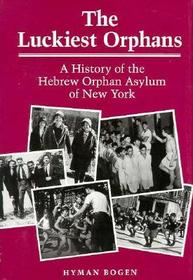
The Luckiest Orphans – A History of the Hebrew Orphan Asylum of New York
A History of the Hebrew Orphan Asylum of New York
-
10% KEDVEZMÉNY?
- A kedvezmény csak az 'Értesítés a kedvenc témákról' hírlevelünk címzettjeinek rendeléseire érvényes.
- Kiadói listaár GBP 39.00
-
18 632 Ft (17 745 Ft + 5% áfa)
Az ár azért becsült, mert a rendelés pillanatában nem lehet pontosan tudni, hogy a beérkezéskor milyen lesz a forint árfolyama az adott termék eredeti devizájához képest. Ha a forint romlana, kissé többet, ha javulna, kissé kevesebbet kell majd fizetnie.
- Kedvezmény(ek) 10% (cc. 1 863 Ft off)
- Kedvezményes ár 16 769 Ft (15 971 Ft + 5% áfa)
Iratkozzon fel most és részesüljön kedvezőbb árainkból!
Feliratkozom
18 632 Ft

Beszerezhetőség
Becsült beszerzési idő: A Prosperónál jelenleg nincsen raktáron, de a kiadónál igen. Beszerzés kb. 3-5 hét..
A Prosperónál jelenleg nincsen raktáron.
Why don't you give exact delivery time?
A beszerzés időigényét az eddigi tapasztalatokra alapozva adjuk meg. Azért becsült, mert a terméket külföldről hozzuk be, így a kiadó kiszolgálásának pillanatnyi gyorsaságától is függ. A megadottnál gyorsabb és lassabb szállítás is elképzelhető, de mindent megteszünk, hogy Ön a lehető leghamarabb jusson hozzá a termékhez.
A termék adatai:
- Kiadás sorszáma 1
- Kiadó MO – University of Illinois Press
- Megjelenés dátuma 1992. június 1.
- Kötetek száma Hardback
- ISBN 9780252018879
- Kötéstípus Keménykötés
- Terjedelem304 oldal
- Méret 229x152x28 mm
- Súly 594 g
- Nyelv angol 0
Kategóriák
Hosszú leírás:
Founded in 1860, the Hebrew Orphan Asylum of New York was the oldest, largest, and best-known Jewish orphanage in the United States until its closing in 1941. This book, the first history of an orphanage ever published, tells the story of the HOA's development from a nineteenth-century institution into a model twentieth-century child-care facility. Because of the humane and benevolent attitude of the New York Jewish community toward its orphans, the harsh authoritarianism and Dickensian conditions typical of contemporary orphanages were gradually replaced there by a nurturing approach that looked after the religious, social, and personal needs of the children. Though primarily an instrument of social control, the HOA was also an expression of Jewish ethnicity. Its history is set in a larger context that includes the life and character of the New York Jewish community, the city's immigrant population, the social and economic conditions of the time, the child-saving efforts of other groups, and the debate over institutional versus foster care. Drawing from HOA archives, published sources, and his personal experience as a resident from 1932 to 1941, Hyman Bogen brings a unique perspective to child-saving efforts in the late nineteenth and early twentieth centuries. His compelling tale portrays daily life for those who lived and worked in such institutions. He illustrates how an enlightened orphanage, rather than crushing the spirit of its young residents, can help children to gain self-esteem and become secure adults. Bogen's tale will be of particular interest to urban and social historians, to city and government officials, and to social workers, as well as to anyone concerned with thegrowing crisis in child-care options.
Több
