

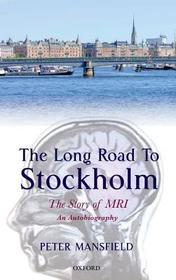
The Long Road to Stockholm
The Story of Magnetic Resonance Imaging - An Autobiography
-
10% KEDVEZMÉNY?
- A kedvezmény csak az 'Értesítés a kedvenc témákról' hírlevelünk címzettjeinek rendeléseire érvényes.
- Kiadói listaár GBP 57.00
-
25 735 Ft (24 510 Ft + 5% áfa)
Az ár azért becsült, mert a rendelés pillanatában nem lehet pontosan tudni, hogy a beérkezéskor milyen lesz a forint árfolyama az adott termék eredeti devizájához képest. Ha a forint romlana, kissé többet, ha javulna, kissé kevesebbet kell majd fizetnie.
- Kedvezmény(ek) 10% (kb. 2 573 Ft)
- Kedvezményes ár 23 162 Ft (22 059 Ft + 5% áfa)
Iratkozzon fel most és részesüljön kedvezőbb árainkból!
Feliratkozom
25 735 Ft

Beszerezhetőség
Megrendelésre a kiadó utánnyomja a könyvet. Rendelhető, de a szokásosnál kicsit lassabban érkezik meg.
Why don't you give exact delivery time?
A beszerzés időigényét az eddigi tapasztalatokra alapozva adjuk meg. Azért becsült, mert a terméket külföldről hozzuk be, így a kiadó kiszolgálásának pillanatnyi gyorsaságától is függ. A megadottnál gyorsabb és lassabb szállítás is elképzelhető, de mindent megteszünk, hogy Ön a lehető leghamarabb jusson hozzá a termékhez.
A termék adatai:
- Kiadó OUP Oxford
- Megjelenés dátuma 2013. január 3.
- ISBN 9780199664542
- Kötéstípus Keménykötés
- Terjedelem252 oldal
- Méret 221x147x27 mm
- Súly 448 g
- Nyelv angol
- Illusztrációk 41 b/w illustrations 0
Kategóriák
Rövid leírás:
In this autobiography, Sir Peter Mansfield describes his life from his early childhood in war time London to his research in Nuclear Magnetic Resonance and the development of Magnetic Resonance Imaging. For his discoveries in MRI, Sir Peter was awarded the 2003 Nobel Prize for Medicine, shared with Paul Lauterbur.
TöbbHosszú leírás:
In this autobiography, Sir Peter Mansfield describes his life from war time childhood that initially sparked his interest in physics to his work in magnetic resonance imaging (MRI) that eventually led to the award of the Nobel Prize in 2003.
Peter Mansfield grew up in London, but was evacuated to Devon during the blitz and following the V1 and V2 attacks on London. At the end of hostilities, he worked briefly in the printing industry before deciding to pursue his real interests in science by joining the Rocket Propulsion Department at Westcott near Aylesbury. Following a period of National Service and his studies at Queen Mary College, University of London, he married and moved to the USA for two years, returning in 1964 as a Lecturer in Physics at the University of Nottingham.
In 1972 he spent a sabbatical period in Heidelberg, and during this period corresponded with his student, Peter Grannell, in Nottingham on the novel idea of magnetic resonance imaging. This led to his first paper on MRI which was presented at the first Specialised Colloque Ampère in 1973. During this period, he demonstrated how the MRI radio signals can be analysed and turned into images of the body. In 2003 the Nobel Prize in Physiology or Medicine was awarded jointly to Sir Peter and Paul Lauterbur for their crucial achievements in the development of MRI.
A remarkable book.
Tartalomjegyzék:
The War Years
Rocket Science
Salad Days at University
Marriage and the American Dream
The Wanderers Return
Alt-Heidelberg, du feine
Krakow and the Lauterbur Epiphany
Hounsfield and EMI
The Golden Years
Brief Encounter with Technicare
Patent affairs at Nottingham
A New Vice Chancellor
Nobel Prize Speculation
Antagonisms to MRI
Beyond the Nobel
The Epilogue

