

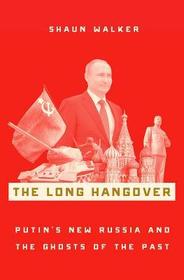
The Long Hangover
Putin's New Russia and the Ghosts of the Past
-
10% KEDVEZMÉNY?
- A kedvezmény csak az 'Értesítés a kedvenc témákról' hírlevelünk címzettjeinek rendeléseire érvényes.
- Kiadói listaár GBP 25.99
-
11 734 Ft (11 175 Ft + 5% áfa)
Az ár azért becsült, mert a rendelés pillanatában nem lehet pontosan tudni, hogy a beérkezéskor milyen lesz a forint árfolyama az adott termék eredeti devizájához képest. Ha a forint romlana, kissé többet, ha javulna, kissé kevesebbet kell majd fizetnie.
- Kedvezmény(ek) 10% (cc. 1 173 Ft off)
- Kedvezményes ár 10 560 Ft (10 058 Ft + 5% áfa)
Iratkozzon fel most és részesüljön kedvezőbb árainkból!
Feliratkozom
11 734 Ft

Beszerezhetőség
Becsült beszerzési idő: A Prosperónál jelenleg nincsen raktáron, de a kiadónál igen. Beszerzés kb. 3-5 hét..
A Prosperónál jelenleg nincsen raktáron.
Why don't you give exact delivery time?
A beszerzés időigényét az eddigi tapasztalatokra alapozva adjuk meg. Azért becsült, mert a terméket külföldről hozzuk be, így a kiadó kiszolgálásának pillanatnyi gyorsaságától is függ. A megadottnál gyorsabb és lassabb szállítás is elképzelhető, de mindent megteszünk, hogy Ön a lehető leghamarabb jusson hozzá a termékhez.
A termék adatai:
- Kiadó OUP USA
- Megjelenés dátuma 2018. február 22.
- ISBN 9780190659240
- Kötéstípus Keménykötés
- Terjedelem288 oldal
- Méret 160x236x30 mm
- Súly 544 g
- Nyelv angol 0
Kategóriák
Rövid leírás:
In The Long Hangover, Shaun Walker provides a deeply reported, bottom-up explanation of Putin's aggressive foreign policy and his support among Russians.
TöbbHosszú leírás:
In The Long Hangover, Shaun Walker provides a deeply reported, bottom-up explanation of Russia's resurgence under Putin. By cleverly exploiting the memory of the Soviet victory over fascism in World War II, Putin's regime has made ordinary Russians feel that their country is great again.
Shaun Walker provides new insight into contemporary Russia and its search for a new identity, telling the story through the country's troubled relationship with its Soviet past. Walker not only explains Vladimir Putin's goals and the government's official manipulations of history, but also focuses on ordinary Russians and their motivations. He charts how Putin raised victory in World War II to the status of a national founding myth in the search for a unifying force to heal a divided country, and shows how dangerous the ramifications of this have been.
The book explores why Russia, unlike Germany, has failed to come to terms with the darkest pages of its past: Stalin's purges, the Gulag, and the war deportations. The narrative roams from the corridors of the Kremlin to the wilds of the Gulags and the trenches of East Ukraine. It puts the annexation of Crimea and the newly assertive Russia in the context of the delayed fallout of the Soviet collapse.
The Long Hangover is a book about a lost generation: the millions of Russians who lost their country and the subsequent attempts to restore to them a sense of purpose. Packed with analysis but told mainly through vibrant reportage, it is a thoughtful exploration of the legacy of the Soviet collapse and how it has affected life in Russia and Putins policies.
I've a soft spot for this stylish gonzo-like first person narrative voice that Walker uses to great effect.
Tartalomjegyzék:
List of Maps
Maps of Soviet Union
Map of Russia
Prologue
Part 1: Curating the Past
Chapter One: A first-tier nation
Chapter Two: The sacred war
Chapter Three: Chechnya: the deal
Chapter Four: Kolyma: the end of the earth
Part 2: Curating the Present
Chapter Five: The Olympic dream
Chapter Six: Ukraine is not dead yet
Chapter Seven: The Crimea gambit
Chapter Eight: The Crimean Tatars
Chapter Nine: Russian Crimea
Part 3: The Past Becomes the Present
Chapter Ten: Donbass: the spiral
Chapter Eleven: War
Part 4: The Past in the Future
Chapter Twelve: After the war
Epilogue
Author's Note
Acknowledgements
Notes
Bibliography

