

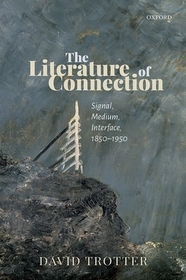
The Literature of Connection
Signal, Medium, Interface, 1850-1950
-
10% KEDVEZMÉNY?
- A kedvezmény csak az 'Értesítés a kedvenc témákról' hírlevelünk címzettjeinek rendeléseire érvényes.
- Kiadói listaár GBP 40.99
-
19 582 Ft (18 650 Ft + 5% áfa)
Az ár azért becsült, mert a rendelés pillanatában nem lehet pontosan tudni, hogy a beérkezéskor milyen lesz a forint árfolyama az adott termék eredeti devizájához képest. Ha a forint romlana, kissé többet, ha javulna, kissé kevesebbet kell majd fizetnie.
- Kedvezmény(ek) 10% (cc. 1 958 Ft off)
- Kedvezményes ár 17 624 Ft (16 785 Ft + 5% áfa)
Iratkozzon fel most és részesüljön kedvezőbb árainkból!
Feliratkozom
19 582 Ft

Beszerezhetőség
Becsült beszerzési idő: A Prosperónál jelenleg nincsen raktáron, de a kiadónál igen. Beszerzés kb. 3-5 hét..
A Prosperónál jelenleg nincsen raktáron.
Why don't you give exact delivery time?
A beszerzés időigényét az eddigi tapasztalatokra alapozva adjuk meg. Azért becsült, mert a terméket külföldről hozzuk be, így a kiadó kiszolgálásának pillanatnyi gyorsaságától is függ. A megadottnál gyorsabb és lassabb szállítás is elképzelhető, de mindent megteszünk, hogy Ön a lehető leghamarabb jusson hozzá a termékhez.
A termék adatai:
- Kiadó OUP Oxford
- Megjelenés dátuma 2020. június 11.
- ISBN 9780198850472
- Kötéstípus Keménykötés
- Terjedelem294 oldal
- Méret 241x164x24 mm
- Súly 622 g
- Nyelv angol
- Illusztrációk 7 Illustrations 19
Kategóriák
Rövid leírás:
This book is about some of the ways in which the world got ready to be connected, long before the advent of electronic digital computing.
TöbbHosszú leírás:
This book is about some of the ways in which the world got ready to be connected, long before the advent of the technologies and the concentrations of capital necessary to implement a global 'network society'. It investigates the prehistory not of the communications 'revolution' brought about by advances in electronic digital computing from 1950 onwards, but of the principle of connectivity which was to provide that revolution with its justification and rallying-cry. Connectivity's core principle is that what matters most in any act of telecommunication, and sometimes all that matters, is the fact of its having happened. During the nineteenth century, the principle gained steadily increasing traction by means not only of formal systems such as the telegraph, but of an array of improvised methods and signalling devices. These methods and devices fulfilled not just an ever more urgent need, but a fundamental recurring desire, for near-instantaneous real-time communication at a distance. Connectivity became an end in itself: a complex, vivid, unpredictable romance woven through the enduring human desire and need for remote intimacy. Its magical enhancements are the stuff of tragedy, comedy, satire, elegy, lyric, melodrama, and plain description; of literature, in short.
The book develops the concepts of signal, medium, and interface to offer, in its first part, an alternative view of writing in Britain from George Eliot and Thomas Hardy to D.H. Lawrence, Hope Mirrlees, and Katherine Mansfield; and, in its second, case-studies of European and African-American fiction, and of interwar British cinema, designed to open the topic up for further enquiry.
[T]his is a fascinating examination of how we communicate with Trotter's humour and the chapters on signalling being the stand-out aspects of this work.
Tartalomjegyzék:
Introduction
Part I: British Literature: Victorian to Modernist
The Telegraphic Principle in Nineteenth-Century Fiction
The Interface as Cultural Form: Conrad's Sea Captains
After Electromagnetism
Starry Sky: Wyndham Lewis and Mina Loy
Giving the Sign: Katherine Mansfield's Stories
Part II: Case-Studies
Kafka's Strindberg
Women Spies
Flying Africans, Black Pilots
Conclusion

