

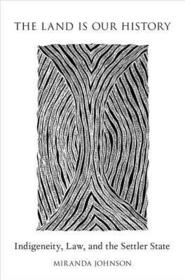
The Land Is Our History
Indigeneity, Law, and the Settler State
-
10% KEDVEZMÉNY?
- A kedvezmény csak az 'Értesítés a kedvenc témákról' hírlevelünk címzettjeinek rendeléseire érvényes.
- Kiadói listaár GBP 37.49
-
16 926 Ft (16 120 Ft + 5% áfa)
Az ár azért becsült, mert a rendelés pillanatában nem lehet pontosan tudni, hogy a beérkezéskor milyen lesz a forint árfolyama az adott termék eredeti devizájához képest. Ha a forint romlana, kissé többet, ha javulna, kissé kevesebbet kell majd fizetnie.
- Kedvezmény(ek) 10% (cc. 1 693 Ft off)
- Kedvezményes ár 15 233 Ft (14 508 Ft + 5% áfa)
Iratkozzon fel most és részesüljön kedvezőbb árainkból!
Feliratkozom
16 926 Ft

Beszerezhetőség
Megrendelésre a kiadó utánnyomja a könyvet. Rendelhető, de a szokásosnál kicsit lassabban érkezik meg.
Why don't you give exact delivery time?
A beszerzés időigényét az eddigi tapasztalatokra alapozva adjuk meg. Azért becsült, mert a terméket külföldről hozzuk be, így a kiadó kiszolgálásának pillanatnyi gyorsaságától is függ. A megadottnál gyorsabb és lassabb szállítás is elképzelhető, de mindent megteszünk, hogy Ön a lehető leghamarabb jusson hozzá a termékhez.
A termék adatai:
- Kiadó OUP USA
- Megjelenés dátuma 2016. november 17.
- ISBN 9780190600068
- Kötéstípus Puhakötés
- Terjedelem248 oldal
- Méret 231x155x15 mm
- Súly 408 g
- Nyelv angol
- Illusztrációk 9 illus. 0
Kategóriák
Rövid leírás:
The Land is Our History chronicles indigenous activism in Australia, Canada, and New Zealand in the late twentieth century and shows how, by taking their claims to court, indigenous peoples opened up a new political space for the negotiation of their rights.
TöbbHosszú leírás:
The Land Is Our History tells the story of indigenous legal activism at a critical political and cultural juncture in Australia, Canada, and New Zealand. In the late 1960s, indigenous activists protested assimilation policies and the usurpation of their lands as a new mining boom took off, radically threatening their collective identities. Often excluded from legal recourse in the past, indigenous leaders took their claims to court with remarkable results. For the first time, their distinctive histories were admitted as evidence of their rights.
Miranda Johnson examines how indigenous peoples advocated for themselves in courts and commissions of inquiry between the early 1970s to the mid-1990s, chronicling an extraordinary and overlooked history in which virtually disenfranchised peoples forced powerful settler democracies to reckon with their demands. Based on extensive archival research and interviews with leading participants, The Land Is Our History brings to the fore complex and rich discussions among activists, lawyers, anthropologists, judges, and others in the context of legal cases in far-flung communities dealing with rights, history, and identity. The effects of these debates were unexpectedly wide-ranging. By asserting that they were the first peoples of the land, indigenous leaders compelled the powerful settler states that surrounded them to negotiate their rights and status. Fracturing national myths and making new stories of origin necessary, indigenous peoples' claims challenged settler societies to rethink their sense of belonging.
One of the most important contributions of Miranda Johnson's The Land Is Our History: Indigeneity, Law, and the Settler State is to invigorate the value of 'comparative history.' ... Johnson's organized study and careful comparisons of similar historical phenomena in specific temporal and geographical spaces identifies significant historical contingencies, similarities, and differences. We discover what is distinctive about these particular series of related historical developments. The book is no less a documentation of the extraordinary achievements of those who struggled against intractable governments, courts, and crude contours of racism and misrecognition to push for redress and recognition of an ongoing dispossession. The book is a major achievement as a detailed study and also a source of reflection on earlier struggles.
Tartalomjegyzék:
Acknowledgments
A Note on Terms
Introduction: A Fragile Truce
Chapter 1: Citizens Plus: New Indigenous Activism in Australia and Canada
Chapter 2: Australia's First, First People
Chapter 3: Frontier Justice in Canada's North
Chapter 4: Commissions of Inquiry and the Idea of a New Social Contract
Chapter 5: Making a "Partnership Between Races:" Maori Activism and the Treaty of Waitangi
Chapter 6: The Pacific Way
Epilogue: Truce Undone
Notes
Bibliography
Index

