

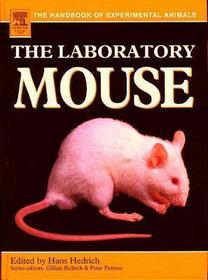
The Laboratory Mouse
Sorozatcím: Handbook of Experimental Animals S.;
-
10% KEDVEZMÉNY?
- A kedvezmény csak az 'Értesítés a kedvenc témákról' hírlevelünk címzettjeinek rendeléseire érvényes.
- Kiadói listaár EUR 235.00
-
91 791 Ft (87 420 Ft + 5% áfa)
Az ár azért becsült, mert a rendelés pillanatában nem lehet pontosan tudni, hogy a beérkezéskor milyen lesz a forint árfolyama az adott termék eredeti devizájához képest. Ha a forint romlana, kissé többet, ha javulna, kissé kevesebbet kell majd fizetnie.
- Kedvezmény(ek) 10% (cc. 9 179 Ft off)
- Kedvezményes ár 82 612 Ft (78 678 Ft + 5% áfa)
Iratkozzon fel most és részesüljön kedvezőbb árainkból!
Feliratkozom
91 791 Ft

Beszerezhetőség
A kiadónál véglegesen elfogyott, nem rendelhető. Érdemes újra keresni a címmel, hátha van újabb kiadás.
Why don't you give exact delivery time?
A beszerzés időigényét az eddigi tapasztalatokra alapozva adjuk meg. Azért becsült, mert a terméket külföldről hozzuk be, így a kiadó kiszolgálásának pillanatnyi gyorsaságától is függ. A megadottnál gyorsabb és lassabb szállítás is elképzelhető, de mindent megteszünk, hogy Ön a lehető leghamarabb jusson hozzá a termékhez.
A termék adatai:
- Kiadó Elsevier Science
- Megjelenés dátuma 2004. augusztus 21.
- ISBN 9780123364258
- Kötéstípus Keménykötés
- Terjedelem632 oldal
- Méret 269x200 mm
- Súly 2232 g
- Nyelv angol 0
Kategóriák
Hosszú leírás:
Among animals used in research, teaching and testing, mice are now widely recognized as the most important model for human diseases and disorders. They comprise the majority of all experimental mammals and tend to be the model of choice used for research into many diseases/disorders including cancer, heart disease, asthma, Alzheimer's, Down syndrome, deafness, osteoporosis, obesity, diabetes and even mental health research. Additionally the laboratory mouse continues to play a widely publicized vital role in the human genome project.One of the most time-consuming activities in research laboratories is looking up information specific to the species or strain of animal being used. This book, part of the highly successful Handbook of Experimental Animals series, allows the user quick access to any point of interest on the mouse as an experimental model.
TöbbTartalomjegyzék:
History, Development and Genetics of the Mouse as a Laboratory Model
Origin of the Laboratory Mouse and Related
Historical Foundations
Strain, Stock and Mutants
Mouse Genomics
Generation of Mouse Mutants by Sequence Information Driven and Random Mutagenesis
The Mouse as an Animal Model for Human Diseases
The Mouse in Preclinical Safety Studies
Anatomy and Developmental Biology
Gross Anatomy
Normative Histology of Organs
Imaging
Introduction to Early Mouse Development
Pathophysiology (including non-infectious diseases)
Skin and Adnexes of the Laboratory Mouse
Cardiovascular System
Respiratory Tract
Gastrointestinal System and Metabolism
Inbred Mouse Models for Autoimmune Disease
Hematology of the Mouse
The Social Behaviour of Mice and its Sensory Control
Neuroendocrine - Immune Network in Stress
Circadian Rhythms of the Mouse
Gerontology
Diversity of Spontaneous Neoplasms in Commonly Used Inbred Strains and Stock of Laboratory Mice
Infectious Agents and Diseases
Viral Infections
Animal Husbandry and Production
Housing and Maintenance
Gnotobiology and Breeding Techniques
Assisted Reproduction and Cryopreservation
Health Monitoring
Nutrition of Laboratory Mice
Procedures
Legal Regulations for the Protection of Animals Used for Scientific Experiments
Necropsy Methods
Handling and Restraint
Routes of Administration
Collection of Body Fluids
Anaesthesia, Analgesia and Euthanasia

