

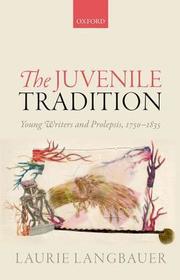
The Juvenile Tradition
Young Writers and Prolepsis, 1750-1835
-
10% KEDVEZMÉNY?
- A kedvezmény csak az 'Értesítés a kedvenc témákról' hírlevelünk címzettjeinek rendeléseire érvényes.
- Kiadói listaár GBP 107.50
-
51 358 Ft (48 912 Ft + 5% áfa)
Az ár azért becsült, mert a rendelés pillanatában nem lehet pontosan tudni, hogy a beérkezéskor milyen lesz a forint árfolyama az adott termék eredeti devizájához képest. Ha a forint romlana, kissé többet, ha javulna, kissé kevesebbet kell majd fizetnie.
- Kedvezmény(ek) 10% (cc. 5 136 Ft off)
- Kedvezményes ár 46 222 Ft (44 021 Ft + 5% áfa)
Iratkozzon fel most és részesüljön kedvezőbb árainkból!
Feliratkozom
51 358 Ft

Beszerezhetőség
Megrendelésre a kiadó utánnyomja a könyvet. Rendelhető, de a szokásosnál kicsit lassabban érkezik meg.
Why don't you give exact delivery time?
A beszerzés időigényét az eddigi tapasztalatokra alapozva adjuk meg. Azért becsült, mert a terméket külföldről hozzuk be, így a kiadó kiszolgálásának pillanatnyi gyorsaságától is függ. A megadottnál gyorsabb és lassabb szállítás is elképzelhető, de mindent megteszünk, hogy Ön a lehető leghamarabb jusson hozzá a termékhez.
A termék adatai:
- Kiadó OUP Oxford
- Megjelenés dátuma 2016. március 24.
- ISBN 9780198739203
- Kötéstípus Keménykötés
- Terjedelem328 oldal
- Méret 240x171x22 mm
- Súly 634 g
- Nyelv angol 0
Kategóriák
Rövid leírás:
The Juvenile Tradition recovers the late-eighteenth and early-nineteenth-century juvenile tradition. Drawing on the history of childhood and child studies, along with reception study and audience history to recasts literary history.
TöbbHosszú leírás:
A juvenile tradition of young writers flourished in Britain between 1750-1835. Canonical Romantic poets as well as now-unknown youthful writers published as teenagers. These teenage writers reflected on their literary juvenilia by using the trope of prolepsis to assert their writing as a literary tradition. Precocious writing, child prodigies, and early genius had been topics of interest since the eighteenth century. Child authors--girl poets and boy poets, schoolboy writers and undergraduate writers, juvenile authors of all kinds--found new publication opportunities because of major shifts in the periodical press, publishing, and education. School magazines and popular juvenile magazines that awarded prizes to child writers all made youthful authorship more visible. Some historians estimate that minors (children and teens) comprised over half the population at the beginning of the nineteenth century. Modern interest in Romanticism, and the self-taught and women writers' traditions, has occluded the tradition of juvenile writers. This first full-length study to recover the late-eighteenth and early-nineteenth-century juvenile tradition draws on the history of childhood and child studies, along with reception study and audience history. It considers the literary juvenilia of Thomas Chatterton, Henry Kirke White, Robert Southey, Leigh Hunt, Jane Austen, and Felicia Hemans (then Felicia Dorothea Browne)-along with the childhood writing of Byron, Mary Shelley, Percy Shelley, and John Keats-and a score of other young poets- "infant bards "-no longer familiar today. Recovering juvenility recasts literary history. Adolescent writers, acting proleptically, ignored the assumptions of childhood development and the disparagement of supposedly immature writing.
The temporal turn in Romanticism is particularly arresting in Laurie Langbauer's The Juvenile Tradition: Young Writers and Prolepsis, 1750-1835, which offers a revelatory reading of juvenilia.
Tartalomjegyzék:
Introduction
Backgrounds and Traditions
"The Darlynge of Futuritie ": Thomas Chatterton and the Technologies of Juvenile Prolepsis
Prolepsis and the Tradition of Juvenile Writing: Henry Kirke White and Robert Southey
Leigh Hunt and Education: "School-Terms and a Juvenile Time of Life "
The Romance of Youth: Jane Austen, Prophecy, and "the Natural Sequel of an Unnatural Beginning "
Conclusion: What Next? Felicia Hemans and the Changing Meaning of Juvenile Writing

