

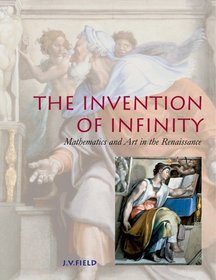
The Invention of Infinity
Mathematics and Art in the Renaissance
-
10% KEDVEZMÉNY?
- A kedvezmény csak az 'Értesítés a kedvenc témákról' hírlevelünk címzettjeinek rendeléseire érvényes.
- Kiadói listaár GBP 102.50
-
46 278 Ft (44 075 Ft + 5% áfa)
Az ár azért becsült, mert a rendelés pillanatában nem lehet pontosan tudni, hogy a beérkezéskor milyen lesz a forint árfolyama az adott termék eredeti devizájához képest. Ha a forint romlana, kissé többet, ha javulna, kissé kevesebbet kell majd fizetnie.
- Kedvezmény(ek) 10% (cc. 4 628 Ft off)
- Kedvezményes ár 41 651 Ft (39 668 Ft + 5% áfa)
Iratkozzon fel most és részesüljön kedvezőbb árainkból!
Feliratkozom
46 278 Ft

Beszerezhetőség
Megrendelésre a kiadó utánnyomja a könyvet. Rendelhető, de a szokásosnál kicsit lassabban érkezik meg.
Why don't you give exact delivery time?
A beszerzés időigényét az eddigi tapasztalatokra alapozva adjuk meg. Azért becsült, mert a terméket külföldről hozzuk be, így a kiadó kiszolgálásának pillanatnyi gyorsaságától is függ. A megadottnál gyorsabb és lassabb szállítás is elképzelhető, de mindent megteszünk, hogy Ön a lehető leghamarabb jusson hozzá a termékhez.
A termék adatai:
- Kiadó OUP Oxford
- Megjelenés dátuma 1997. április 24.
- ISBN 9780198523949
- Kötéstípus Keménykötés
- Terjedelem262 oldal
- Méret 253x197x23 mm
- Súly 702 g
- Nyelv angol
- Illusztrációk numerous halftones and line figures 0
Kategóriák
Rövid leírás:
This book tells (for the first time) the story of how the `practical' mathematics of Renaissance artists influenced the development of `proper' mathematics. The text is clear, lively, and scholarly, and is accompanied by beautiful colour and black and white illustrations. It will appeal to anyone with an interest in science or art.
TöbbHosszú leírás:
Renaissance craftsmen, such as painters, were educated in `practical mathematics'. This book tells us the fascintating story of how the artisan tradition made important contributions not only to art but also to `proper' mathematics. Beautiful works of art and famous theorems are linked together in a way that leads to a clearer understanding and greater enjoyment of both.
Covering roughly the period from 1300 to 1650, the author shows how, during this time, a new form of geometry - projective geometry - emerged in the context of the artists' mathematics of perspective. Stories of taking measurements while balanced on scaffolding are interspersed with delightful scholarly analyses of the mathematics of great works of art. The text is beautifully illustrated throughout with both photographs and drawings.
The Invention of Infinity gives the reader great insight into the practice of mathematics in history. As such it is instructive to anyone attempting to understand old texts. As an example of interdisciplinary work, this book is excellent. Fields study is particularly helpful in that it demonstrates the possibility of sympathetically approaching what are traditionally rather different disciplines.
Tartalomjegyzék:
Medieval mathematics and optics and the Renaissance style in art
Building, drawing and 'artificial perspective'
Through the wall: Masaccio's Trinity fresco
Piero della Francesca's mathematics
Piero della Francesca's perspective treatise
Practitioners and patricians
The Professionals move in
Beyond the Ancients
Fragmented perspective
Appendix 1 The abacists' favourite scalene triangle: 13, 14, 15
Bibliography

