

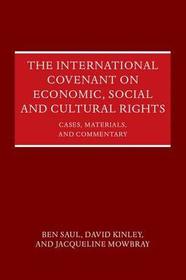
The International Covenant on Economic, Social and Cultural Rights
Commentary, Cases, and Materials
-
10% KEDVEZMÉNY?
- A kedvezmény csak az 'Értesítés a kedvenc témákról' hírlevelünk címzettjeinek rendeléseire érvényes.
- Kiadói listaár GBP 320.00
-
152 880 Ft (145 600 Ft + 5% áfa)
Az ár azért becsült, mert a rendelés pillanatában nem lehet pontosan tudni, hogy a beérkezéskor milyen lesz a forint árfolyama az adott termék eredeti devizájához képest. Ha a forint romlana, kissé többet, ha javulna, kissé kevesebbet kell majd fizetnie.
- Kedvezmény(ek) 10% (cc. 15 288 Ft off)
- Kedvezményes ár 137 592 Ft (131 040 Ft + 5% áfa)
Iratkozzon fel most és részesüljön kedvezőbb árainkból!
Feliratkozom
152 880 Ft

Beszerezhetőség
Megrendelésre a kiadó utánnyomja a könyvet. Rendelhető, de a szokásosnál kicsit lassabban érkezik meg.
Why don't you give exact delivery time?
A beszerzés időigényét az eddigi tapasztalatokra alapozva adjuk meg. Azért becsült, mert a terméket külföldről hozzuk be, így a kiadó kiszolgálásának pillanatnyi gyorsaságától is függ. A megadottnál gyorsabb és lassabb szállítás is elképzelhető, de mindent megteszünk, hogy Ön a lehető leghamarabb jusson hozzá a termékhez.
A termék adatai:
- Kiadó OUP Oxford
- Megjelenés dátuma 2014. március 6.
- ISBN 9780199640300
- Kötéstípus Keménykötés
- Terjedelem1358 oldal
- Méret 249x177x60 mm
- Súly 1856 g
- Nyelv angol 0
Kategóriák
Rövid leírás:
The International Covenant on Economic, Social and Cultural Rights is one of the most important human rights treaties in international law. This comprehensive collection of primary materials and analytical commentary is ideal reading for scholars, students, and practitioners working on issues of economic, cultural, and social rights.
TöbbHosszú leírás:
Economic, social and cultural rights are finally coming of age. This book brings together all essential documents, materials, and case law relating to the International Covenant on Economic, Social and Cultural Rights (ICESCR) - one of the most important human rights instruments in international law - and its Optional Protocol. This book presents extracts from primary materials alongside critical commentary and analysis, placing the documents in their wider context and situating economic, social, and cultural rights within the broader human rights framework.
There is increasing interest internationally, regionally, and in domestic legal systems in the protection of economic, social, and cultural rights. The Optional Protocol of 2008 allows for individual communications to be made to the UN Committee on Economic, Social and Cultural Rights after its entry into force in 2013. At the regional level, socio-economic rights are well embedded in human rights systems in Europe, Africa and the Americas. At the national level, constitutions and courts have increasingly regarded socio-economic rights as justiciable, narrowing the traditional divide with civil and political rights.
This book contextualises these developments in the context of the ICESCR. It provides detailed analysis of the ICESCR structured around its articles, drawing on national as well as international case law and materials, and containing all of the key primary materials in its extensive appendices. This book is indispensible for the judiciary, human rights practitioners, government legal advisers and agencies, national human rights institutions, international organisations, regional human rights bodies, NGOs and human rights activists, academics, and students alike.
This book undoubtedly makes a profound contribution to the project of developing a coherent, systemic and persuasive jurisprudence on ESCR. At 1,360 pages long, the book at first appears intimidating. However, it is well written and easy to dip in and out of, making it easily accessible both to scholars and students of international human rights for whom it should become a standard resource.
Tartalomjegyzék:
Introduction
Article 1: The right of self-determination
Article 25: The right to freely utilize natural resources
Article 2(1): The principle of progressive realisation
Article 2(2): Non-discrimination
Article 2(3): Developing state exception
Article 3: Equality
Article 4: General limitations clause
Article 5: Prohibition of abuse of rights
Article 24: No prejudice to the United Nations
Article 6: The right to work
Article 7: Just and favourable conditions of work
Article 8: Trade union-related rights
Article 9: The right to social security
Article 10: Rights of families, mothers and children
Article 11: The right to an adequate standard of living
Article 12: The right to health
Article 13: The right to education
Article 14: Primary education
Article 15: Cultural Rights

