

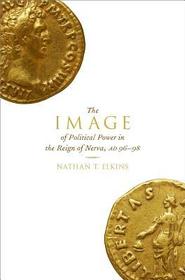
The Image of Political Power in the Reign of Nerva, AD 96-98
-
10% KEDVEZMÉNY?
- A kedvezmény csak az 'Értesítés a kedvenc témákról' hírlevelünk címzettjeinek rendeléseire érvényes.
- Kiadói listaár GBP 105.00
-
47 407 Ft (45 150 Ft + 5% áfa)
Az ár azért becsült, mert a rendelés pillanatában nem lehet pontosan tudni, hogy a beérkezéskor milyen lesz a forint árfolyama az adott termék eredeti devizájához képest. Ha a forint romlana, kissé többet, ha javulna, kissé kevesebbet kell majd fizetnie.
- Kedvezmény(ek) 10% (kb. 4 740 Ft)
- Kedvezményes ár 42 667 Ft (40 635 Ft + 5% áfa)
Iratkozzon fel most és részesüljön kedvezőbb árainkból!
Feliratkozom
47 407 Ft

Beszerezhetőség
Megrendelésre a kiadó utánnyomja a könyvet. Rendelhető, de a szokásosnál kicsit lassabban érkezik meg.
Why don't you give exact delivery time?
A beszerzés időigényét az eddigi tapasztalatokra alapozva adjuk meg. Azért becsült, mert a terméket külföldről hozzuk be, így a kiadó kiszolgálásának pillanatnyi gyorsaságától is függ. A megadottnál gyorsabb és lassabb szállítás is elképzelhető, de mindent megteszünk, hogy Ön a lehető leghamarabb jusson hozzá a termékhez.
A termék adatai:
- Kiadó OUP USA
- Megjelenés dátuma 2017. augusztus 31.
- ISBN 9780190648039
- Kötéstípus Keménykötés
- Terjedelem224 oldal
- Méret 152x239x17 mm
- Súly 476 g
- Nyelv angol
- Illusztrációk 91 illus. 10
Kategóriák
Rövid leírás:
This book examines Nerva's imperial coin iconography in concert with contemporary laudatory texts that praise the emperor. As such, this study has important implications for the agents behind the selection and formulation of such images in the late first and early second century.
TöbbHosszú leírás:
At age 65, Nerva assumed the role of emperor of Rome; just sixteen months later, his reign ended with his death. Nerva's short reign robbed his regime of the opportunity for the emperor's imperial image to be defined in building or monumental art, leaving seemingly little for the art historian or archaeologist to consider. In view of this paucity, studies of Nerva primarily focus on the historical circumstances governing his reign with respect to the few relevant literary sources. The Image of Political Power in the Reign of Nerva, AD 96-98, by contrast, takes the entire imperial coinage program issued by the mint of Rome to examine the "self-representation," and, by extension, the policies and ideals of Nerva's regime. The brevity of Nerva's reign and the problems of retrospection caused by privileging posthumous literary sources make coinage one of the only ways of reconstructing anything of his image and ideology as it was disseminated and developed at the end of the first century during the emperors lifetime. The iconography of this coinage, and the popularity and spread of different iconographic types -- as determined by study of hoards and finds, and as targeted towards different ancient constituencies -- offers a more positive take on a little-studied emperor. Across three chapters, Elkins traces the different reverse types and how they would have resonated with their intended audiences, concluding with an examination of the parallels between text and coin iconography with previous and subsequent emperors. The Image of Political Power in the Reign of Nerva, AD 96-98 thus offers significant new perspectives on the agents behind the selection and formulation of iconography in the late first and early second century, showing how coinage can act as a visual panegyric similar to contemporary laudatory texts by tapping into how the inner circle of Nerva's regime wished the emperor to be seen.
E., an associate professor of art history (Greek and Roman) at Baylor University, argues in this fascinating and attractively produced book that a significant clue to answering the above question, which he largely does in Nerva's favour, lies in the study of the coinage issued during his reign. As a numismatist E show boundless enthusiasm and prodigious learning.
Tartalomjegyzék:
List of Abbreviations
Preface
Introduction: The Power of Images in the Reign of Nerva
Chapter 1. Nerva as Supreme Military Commander
Chapter 2. Nerva, The Senate and People of Rome, and Italy
Chapter 3. Nerva and the Roman Empire
Chapter 4. Conclusion: The Visualization of Rhetoric
Appendix 1. The Typological Makeup of Nerva's Imperial Coin Emissions
Appendix 2. Nerva's Coin Types and Their Dates of Production
Appendix 3. The Relative Frequencies of Denarius Types by Emission
Appendix 4. Identifiable Base-Metal Coins and Their Regional Distribution (Hoards and Excavations)
Bibliography
Index

