

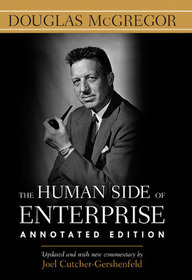
The Human Side of Enterprise, Annotated Edition
Sorozatcím: BUSINESS BOOKS;
-
10% KEDVEZMÉNY?
- A kedvezmény csak az 'Értesítés a kedvenc témákról' hírlevelünk címzettjeinek rendeléseire érvényes.
- Kiadói listaár GBP 37.99
-
17 152 Ft (16 335 Ft + 5% áfa)
Az ár azért becsült, mert a rendelés pillanatában nem lehet pontosan tudni, hogy a beérkezéskor milyen lesz a forint árfolyama az adott termék eredeti devizájához képest. Ha a forint romlana, kissé többet, ha javulna, kissé kevesebbet kell majd fizetnie.
- Kedvezmény(ek) 10% (cc. 1 715 Ft off)
- Kedvezményes ár 15 437 Ft (14 702 Ft + 5% áfa)
Iratkozzon fel most és részesüljön kedvezőbb árainkból!
Feliratkozom
17 152 Ft

Beszerezhetőség
A kiadónál véglegesen elfogyott, nem rendelhető. Érdemes újra keresni a címmel, hátha van újabb kiadás.
Why don't you give exact delivery time?
A beszerzés időigényét az eddigi tapasztalatokra alapozva adjuk meg. Azért becsült, mert a terméket külföldről hozzuk be, így a kiadó kiszolgálásának pillanatnyi gyorsaságától is függ. A megadottnál gyorsabb és lassabb szállítás is elképzelhető, de mindent megteszünk, hogy Ön a lehető leghamarabb jusson hozzá a termékhez.
A termék adatai:
- Kiadó McGraw Hill
- Megjelenés dátuma 2006. február 16.
- ISBN 9780071462228
- Kötéstípus Keménykötés
- Terjedelem480 oldal
- Méret 233x162x40 mm
- Súly 812 g
- Nyelv angol 0
Kategóriák
Rövid leírás:
McGregor?s enduring principles?Brought to life for the next generation of managers.
?Today, there is indeed growing evidence to suggest that we are in the early or middle stages of a second industrial divide, which has been variously characterized as involving an information revolution, increased interconnection across global markets, the rise of flexible specialization in production and service operations, and a transformation toward knowledge-driven work in all sectors of the economy.
McGregor understood, anticipated, and helped point the way toward what may well emerge as a future model of work, organizations and society that is rooted in core assumptions driving participative, interdependent, authentic, inventive and productive relationships. However, the alternative, an economic ?race to the bottom? based on increasingly individualistic, control-oriented and competitive assumptions, is also a very real possibility. As we venture forth, McGregor's insights about the 'human side of enterprise' continue to be a beacon. We must continue to ask, as he did: 'What are your assumptions (implicit as well as explicit) about the most effective way to manage people?'?--From the Introduction by Joel Cutcher-Gershenfeld
TöbbHosszú leírás:
?What are your assumptions (implicit as well as explicit) about the most effective way to manage people??
So began Douglas McGregor in this 1960 management classic. It was a seemingly simple question he asked, yet it led to a fundamental revolution in management. Today, with the rise of the global economy, the information revolution, and the growth of knowledge-driven work, McGregor's simple but provocative question continues to resonate-perhaps more powerfully than ever before.
Heralded as one of the most important pieces of management literature ever written, a touchstone for scholars and a handbook for practitioners, The Human Side of Enterprise continues to receive the highest accolades nearly half a century after its initial publication. Influencing such major management gurus such as Peter Drucker and Warren Bennis, McGregor's revolutionary Theory Y-which contends that individuals are self-motivated and self-directed-and Theory X-in which employees must be commanded and controlled-has been widely taught in business schools, industrial relations schools, psychology departments, and professional development seminars for over four decades.
In this special annotated edition of the worldwide management classic, Joel Cutcher-Gershenfeld, Senior Research Scientist in MIT's Sloan School of Management and Engineering Systems Division, shows us how today's leaders have successfully incorporated McGregor's methods into modern management styles and practices. The added quotes and commentary bring the content right into today's debates and business models.
Now more than ever, the timeless wisdom of Douglas McGregor can light the path towards a management style that nurtures leadership capability, creates effective teams, ensures internal alignment, achieves high performance, and cultivates an authentic, value-driven workplace--lessons we all need to learn as we make our way in this brave new world of the 21st century.
?What are your assumptions (implicit as well as explicit) about the most effective way to manage people??
So began Douglas McGregor in this 1960 management classic. It was a seemingly simple question he asked, yet it led to a fundamental revolution in management. Today, with the rise of the global economy, the information revolution, and the growth of knowledge-driven work, McGregor's simple but provocative question continues to resonate-perhaps more powerfully than ever before.
Heralded as one of the most important pieces of management literature ever written, a touchstone for scholars and a handbook for practitioners, The Human Side of Enterprise continues to receive the highest accolades nearly half a century after its initial publication. Influencing such major management gurus such as Peter Drucker and Warren Bennis, McGregor's revolutionary Theory Y-which contends that individuals are self-motivated and self-directed-and Theory X-in which employees must be commanded and controlled-has been widely taught in business schools, industrial relations schools, psychology departments, and professional development seminars for over four decades.
In this special annotated edition of the worldwide management classic, Joel Cutcher-Gershenfeld, Senior Research Scientist in MIT's Sloan School of Management and Engineering Systems Division, shows us how today's leaders have successfully incorporated McGregor's methods into modern management styles and practices. The added quotes and commentary bring the content right into today's debates and business models.
Now more than ever, the timeless wisdom of Douglas McGregor can light the path towards a management style that nurtures leadership capability, creates effective teams, ensures internal alignment, achieves high performance, and cultivates an authentic, value-driven workplace--lessons we all need to learn as we make our way in this brave new world of the 21st century.
TöbbTartalomjegyzék:
McGregor?s enduring principles?Brought to life for the next generation of managers.
?Today, there is indeed growing evidence to suggest that we are in the early or middle stages of a second industrial divide, which has been variously characterized as involving an information revolution, increased interconnection across global markets, the rise of flexible specialization in production and service operations, and a transformation toward knowledge-driven work in all sectors of the economy.
McGregor understood, anticipated, and helped point the way toward what may well emerge as a future model of work, organizations and society that is rooted in core assumptions driving participative, interdependent, authentic, inventive and productive relationships. However, the alternative, an economic ?race to the bottom? based on increasingly individualistic, control-oriented and competitive assumptions, is also a very real possibility. As we venture forth, McGregor's insights about the 'human side of enterprise' continue to be a beacon. We must continue to ask, as he did: 'What are your assumptions (implicit as well as explicit) about the most effective way to manage people?'?--From the Introduction by Joel Cutcher-Gershenfeld
Több
