

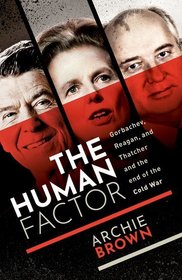
The Human Factor
Gorbachev, Reagan, and Thatcher, and the End of the Cold War
-
10% KEDVEZMÉNY?
- A kedvezmény csak az 'Értesítés a kedvenc témákról' hírlevelünk címzettjeinek rendeléseire érvényes.
- Kiadói listaár GBP 32.49
-
15 522 Ft (14 782 Ft + 5% áfa)
Az ár azért becsült, mert a rendelés pillanatában nem lehet pontosan tudni, hogy a beérkezéskor milyen lesz a forint árfolyama az adott termék eredeti devizájához képest. Ha a forint romlana, kissé többet, ha javulna, kissé kevesebbet kell majd fizetnie.
- Kedvezmény(ek) 10% (cc. 1 552 Ft off)
- Kedvezményes ár 13 969 Ft (13 304 Ft + 5% áfa)
Iratkozzon fel most és részesüljön kedvezőbb árainkból!
Feliratkozom
15 522 Ft

Beszerezhetőség
Becsült beszerzési idő: A Prosperónál jelenleg nincsen raktáron, de a kiadónál igen. Beszerzés kb. 3-5 hét..
A Prosperónál jelenleg nincsen raktáron.
Why don't you give exact delivery time?
A beszerzés időigényét az eddigi tapasztalatokra alapozva adjuk meg. Azért becsült, mert a terméket külföldről hozzuk be, így a kiadó kiszolgálásának pillanatnyi gyorsaságától is függ. A megadottnál gyorsabb és lassabb szállítás is elképzelhető, de mindent megteszünk, hogy Ön a lehető leghamarabb jusson hozzá a termékhez.
A termék adatai:
- Kiadó OUP Oxford
- Megjelenés dátuma 2020. március 24.
- ISBN 9780198748700
- Kötéstípus Keménykötés
- Terjedelem516 oldal
- Méret 238x159x45 mm
- Súly 762 g
- Nyelv angol
- Illusztrációk 23 black and white illustrations 6
Kategóriák
Rövid leírás:
The Human Factor tells the dramatic story about the part played by political leaders - particularly the three very different personalities of Gorbachev, Reagan and Thatcher - in ending the standoff that threatened the future of all humanity
TöbbHosszú leírás:
In this penetrating analysis of the role of political leadership in the Cold War's ending, Archie Brown shows why the popular view that Western economic and military strength left the Soviet Union with no alternative but to admit defeat is wrong. To understand the significance of the parts played by Mikhail Gorbachev, Ronald Reagan and Margaret Thatcher in East-West relations in the second half of the 1980s, Brown addresses several specific questions: What were the values and assumptions of these leaders, and how did their perceptions evolve? What were the major influences on them? To what extent were they reflecting the views of their own political establishment or challenging them? How important for ending the East-West standoff were their interrelations? Would any of the realistically alternative leaders of their countries at that time have pursued approximately the same policies?
The Cold War got colder in the early 1980s and the relationship between the two military superpowers, the USA and the Soviet Union, each of whom had the capacity to annihilate the other, was tense. By the end of the decade, East-West relations had been utterly transformed, with most of the dividing lines -including the division of Europe- removed. Engagement between Gorbachev and Reagan was a crucial part of that process of change. More surprising was Thatcher's role. Regarded by Reagan as his ideological and political soulmate, she formed also a strong and supportive relationship with Gorbachev (beginning three months before he came to power). Promoting Gorbachev in Washington as a man to do business with, she became, in the words of her foreign policy adviser Sir Percy Cradock, an agent of influence in both directions.
The Human Factor is in many respects the culmination of Archie Brown's long and distinguished career as a scholar and writer. It is full of a lifetime's achievement of wisdom and thought.
Tartalomjegyzék:
Introduction
PART 1
The Cold War and its Dangers
The Making of Mikhail Gorbachev
Gorbachev's Widening Horizons
The Rise of Ronald Reagan
Reagan's First Term
Margaret Thatcher: The Moulding of the 'Iron Lady'
Thatcher and the Turn to Engagement with Communist Europe
PART 2
Breaking the ice (1985)
Nuclear Fallout: Chernobyl and Reykjavik (1986
Building trust (1987)
The End of the Ideological Divide (1988)
The End of the Cold War (1989)
Why the Cold War Ended When it Did
Unintended Consequences (1990)
Final Year - of the USSR and of Gorbachev's Power (1991)
Political Leadership and the End of the Cold War: Concluding Reflections
Notes
Index

