

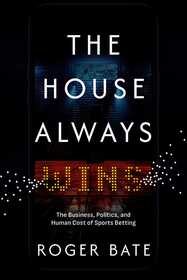
The House Always Wins
The Business, Politics, and Human Cost of Sports Betting
-
20% KEDVEZMÉNY?
- Kiadói listaár GBP 15.99
-
7 219 Ft (6 875 Ft + 5% áfa)
Az ár azért becsült, mert a rendelés pillanatában nem lehet pontosan tudni, hogy a beérkezéskor milyen lesz a forint árfolyama az adott termék eredeti devizájához képest. Ha a forint romlana, kissé többet, ha javulna, kissé kevesebbet kell majd fizetnie.
- Kedvezmény(ek) 20% (kb. 1 444 Ft)
- Kedvezményes ár 5 775 Ft (5 500 Ft + 5% áfa)
- A kedvezmény érvényes eddig: 2026. október 31.
5 775 Ft

Beszerezhetőség
Még nem jelent meg, de rendelhető. A megjelenéstől számított néhány héten belül megérkezik.
Why don't you give exact delivery time?
A beszerzés időigényét az eddigi tapasztalatokra alapozva adjuk meg. Azért becsült, mert a terméket külföldről hozzuk be, így a kiadó kiszolgálásának pillanatnyi gyorsaságától is függ. A megadottnál gyorsabb és lassabb szállítás is elképzelhető, de mindent megteszünk, hogy Ön a lehető leghamarabb jusson hozzá a termékhez.
A termék adatai:
- Kiadó Post Hill Press
- Megjelenés dátuma 2026. szeptember 10.
- Kötetek száma Trade Paperback
- ISBN 9798895652886
- Kötéstípus Puhakötés
- Terjedelem312 oldal
- Méret 209x139x22 mm
- Nyelv angol 700
Kategóriák
Rövid leírás:
An investigative narrative revealing how smartphones, deregulation, and pandemic isolation turned America’s pastime into its newest addiction.
TöbbHosszú leírás:
An investigative narrative revealing how smartphones, deregulation, and pandemic isolation turned America’s pastime into its newest addiction.
The House Always Wins traces the rise of legal sports betting from a fringe hobby to a $120-billion-a-year industry, reshaping how Americans watch, wager, and lose. Economist and health policy analyst Roger Bate explores how pandemic isolation, relentless digital marketing, and permissive state policy created a perfect storm of opportunity and risk. Bate draws on original surveys, field interviews, and international case studies to reveal how betting moved from racetracks to smartphones—and how a culture built on self-control began to mistake speed for freedom.
From suburban bars to billion-dollar platforms like DraftKings and FanDuel, The House Always Wins uncovers the moral and economic contradictions of a market built on human weakness and where over 95 percent of participants lose, some catastrophically. Bate argues that the challenge isn’t whether people should gamble, but whether a democracy can manage risk at the speed of an app. Combining investigative reportage with humane insight, this book exposes the hidden arithmetic behind America’s newest public-health crisis.

