

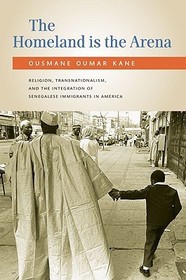
The Homeland Is the Arena
Religion and Senegalese Immigrants in America
-
10% KEDVEZMÉNY?
- A kedvezmény csak az 'Értesítés a kedvenc témákról' hírlevelünk címzettjeinek rendeléseire érvényes.
- Kiadói listaár GBP 54.00
-
24 381 Ft (23 220 Ft + 5% áfa)
Az ár azért becsült, mert a rendelés pillanatában nem lehet pontosan tudni, hogy a beérkezéskor milyen lesz a forint árfolyama az adott termék eredeti devizájához képest. Ha a forint romlana, kissé többet, ha javulna, kissé kevesebbet kell majd fizetnie.
- Kedvezmény(ek) 10% (kb. 2 438 Ft)
- Kedvezményes ár 21 943 Ft (20 898 Ft + 5% áfa)
Iratkozzon fel most és részesüljön kedvezőbb árainkból!
Feliratkozom
24 381 Ft

Beszerezhetőség
Megrendelésre a kiadó utánnyomja a könyvet. Rendelhető, de a szokásosnál kicsit lassabban érkezik meg.
Why don't you give exact delivery time?
A beszerzés időigényét az eddigi tapasztalatokra alapozva adjuk meg. Azért becsült, mert a terméket külföldről hozzuk be, így a kiadó kiszolgálásának pillanatnyi gyorsaságától is függ. A megadottnál gyorsabb és lassabb szállítás is elképzelhető, de mindent megteszünk, hogy Ön a lehető leghamarabb jusson hozzá a termékhez.
A termék adatai:
- Kiadó OUP USA
- Megjelenés dátuma 2011. május 12.
- ISBN 9780199732319
- Kötéstípus Puhakötés
- Terjedelem336 oldal
- Méret 231x152x22 mm
- Súly 454 g
- Nyelv angol 0
Kategóriák
Rövid leírás:
Addresses an historically neglected aspect of international migration, analyzing the role played by transnational religion in the adaptation of Senegalese immigrants in America in the late twentieth century.
TöbbHosszú leírás:
As Senegal prepares to celebrate fifty years of independence from French colonial rule, academic and policy circles are engaged in a vigorous debate about its experience in nation building. An important aspect of this debate is the impact of globalization on Senegal, particularly the massive labor migration that began directly after independence. From Tokyo to Melbourne, from Turin to Buenos Aires, from to Paris to New York, 300,000 Senegalese immigrants are simultaneously negotiating their integration into their host society and seriously impacting the development of their homeland.
This book addresses the modes of organization of transnational societies in the globalized context, and specifically the role of religion in the experience of migrant communities in Western societies. Abundant literature is available on immigrants from Latin America and Asia, but very little on Africans, especially those from French speaking countries in the United States. Ousmane Kane offers a case study of the growing Senegalese community in New York City. By pulling together numerous aspects (religious, ethnic, occupational, gender, generational, socio-economic, and political) of the experience of the Senegalese migrant community into an integrated analysis, linking discussion of both the homeland and host community, this book breaks new ground in the debate about postcolonial Senegal, Muslim globalization and diaspora studies in the United States. A leading scholar of African Islam, Ousmane Kane has also conducted extensive research in North America, Europe and Africa, which allows him to provide an insightful historical ethnography of the Senegalese transnational experience.
This book is enjoyable...a much-needed addition to limited published work in this field.
Tartalomjegyzék:
Foreword
Orthography
Abbreviations
Glossary
PROLOGUE
Part I
Religion, State, and Society in Modern Senegal
Sufis, Society, and the State
PART II
Integrating American Society
Senegalese Enclaves in New York City
The Formation and Transformation of Sufi Societies
Relations to Other Immigrant Associations
Part III
Building connections with Senegal
The Transnational Spiritual Economy
Gender and Generational Relations
Immigration or Death
Epilogue "Good Muslims" , "Good Blacks"
References

