

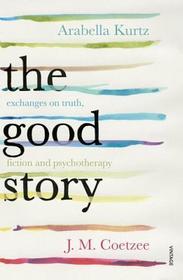
The Good Story
Exchanges on Truth, Fiction and Psychotherapy
-
20% KEDVEZMÉNY?
- Kiadói listaár GBP 12.99
-
6 205 Ft (5 910 Ft + 5% áfa)
Az ár azért becsült, mert a rendelés pillanatában nem lehet pontosan tudni, hogy a beérkezéskor milyen lesz a forint árfolyama az adott termék eredeti devizájához képest. Ha a forint romlana, kissé többet, ha javulna, kissé kevesebbet kell majd fizetnie.
- Kedvezmény(ek) 20% (cc. 1 241 Ft off)
- Kedvezményes ár 4 964 Ft (4 728 Ft + 5% áfa)
- A kedvezmény érvényes eddig: 2026. május 31.
4 964 Ft

Beszerezhetőség
Bizonytalan a beszerezhetőség. Érdemes még egyszer keresni szerzővel és címmel. Ha nem talál másik, kapható kiadást, forduljon ügyfélszolgálatunkhoz!
Why don't you give exact delivery time?
A beszerzés időigényét az eddigi tapasztalatokra alapozva adjuk meg. Azért becsült, mert a terméket külföldről hozzuk be, így a kiadó kiszolgálásának pillanatnyi gyorsaságától is függ. A megadottnál gyorsabb és lassabb szállítás is elképzelhető, de mindent megteszünk, hogy Ön a lehető leghamarabb jusson hozzá a termékhez.
A termék adatai:
- Kiadó Vintage
- Megjelenés dátuma 2016. május 24.
- Kötetek száma B-format paperback
- ISBN 9780099598220
- Kötéstípus Puhakötés
- Terjedelem208 oldal
- Méret 198x129x13 mm
- Súly 153 g
- Nyelv angol 0
Kategóriák
Rövid leírás:
Arabella Kurtz and J.M. Coetzee consider psychotherapy from different perspectives. But at the heart of both their approaches is a concern with stories. This fascinating book asks what it is that makes good story, both in literature and in life, and questions the value of psychotherapy, the possibility of objective truth in narrative and the way that our stories change us.
TöbbHosszú leírás:
The Good Story is an exchange between a writer with a longstanding interest in moral psychology and a psychotherapist with a training in literary studies. J. M. Coetzee and Arabella Kurtz consider psychotherapy and its wider social context from different perspectives, but at the heart of both their approaches is a concern with stories.
Working alone, the writer is in sole charge of the story he or she tells. The therapist, on the other hand, collaborates with the patient in telling the story of their life. What kind of truth do the stories created by patient and therapist aim to uncover: objective truth or the shifting and subjective truth of memories explored and re-experienced in the safety of the therapeutic relationship?
Drawing on great writers like Cervantes and Dostoevsky and on psychoanalysts like Freud and Melanie Klein, the authors offer illuminating insights into the stories we tell of our lives.

