

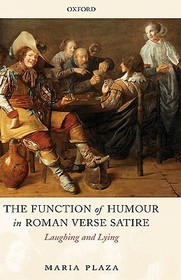
The Function of Humour in Roman Verse Satire
Laughing and Lying
-
10% KEDVEZMÉNY?
- A kedvezmény csak az 'Értesítés a kedvenc témákról' hírlevelünk címzettjeinek rendeléseire érvényes.
- Kiadói listaár GBP 42.99
-
19 409 Ft (18 485 Ft + 5% áfa)
Az ár azért becsült, mert a rendelés pillanatában nem lehet pontosan tudni, hogy a beérkezéskor milyen lesz a forint árfolyama az adott termék eredeti devizájához képest. Ha a forint romlana, kissé többet, ha javulna, kissé kevesebbet kell majd fizetnie.
- Kedvezmény(ek) 10% (cc. 1 941 Ft off)
- Kedvezményes ár 17 468 Ft (16 637 Ft + 5% áfa)
Iratkozzon fel most és részesüljön kedvezőbb árainkból!
Feliratkozom
19 409 Ft

Beszerezhetőség
Megrendelésre a kiadó utánnyomja a könyvet. Rendelhető, de a szokásosnál kicsit lassabban érkezik meg.
Why don't you give exact delivery time?
A beszerzés időigényét az eddigi tapasztalatokra alapozva adjuk meg. Azért becsült, mert a terméket külföldről hozzuk be, így a kiadó kiszolgálásának pillanatnyi gyorsaságától is függ. A megadottnál gyorsabb és lassabb szállítás is elképzelhető, de mindent megteszünk, hogy Ön a lehető leghamarabb jusson hozzá a termékhez.
A termék adatai:
- Kiadó OUP Oxford
- Megjelenés dátuma 2007. december 27.
- ISBN 9780199237937
- Kötéstípus Puhakötés
- Terjedelem380 oldal
- Méret 216x138x21 mm
- Súly 481 g
- Nyelv angol 0
Kategóriák
Rövid leírás:
Maria Plaza argues that behind the moralizing facade of Roman satire the reader may find more sinister motives, such as fear, envy, and sexual sensationalism. In this study she uses an analysis of humour to investigate the complex nature of this genre.
TöbbHosszú leírás:
Maria Plaza sets out to analyse the function of humour in the Roman satirists Horace, Persius, and Juvenal. Her starting point is that satire is driven by two motives, which are to a certain extent opposed: to display humour, and to promote a serious moral message. She argues that, while the Roman satirist needs humour for his work's aesthetic merit, his proposed message suffers from the ambivalence that humour brings with it. Her analysis shows that this paradox is not only socio-ideological but also aesthetic, forming the ground for the curious, hybrid nature of Roman satire.
TöbbTartalomjegyzék:
Introduction
Object-oriented humour
Humour directed at the persona
Non-aligned humour
Epilogue: The genre devours itself

