

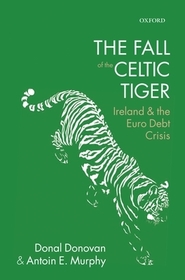
The Fall of the Celtic Tiger
Ireland and the Euro Debt Crisis
-
10% KEDVEZMÉNY?
- A kedvezmény csak az 'Értesítés a kedvenc témákról' hírlevelünk címzettjeinek rendeléseire érvényes.
- Kiadói listaár GBP 84.00
-
37 926 Ft (36 120 Ft + 5% áfa)
Az ár azért becsült, mert a rendelés pillanatában nem lehet pontosan tudni, hogy a beérkezéskor milyen lesz a forint árfolyama az adott termék eredeti devizájához képest. Ha a forint romlana, kissé többet, ha javulna, kissé kevesebbet kell majd fizetnie.
- Kedvezmény(ek) 10% (kb. 3 793 Ft)
- Kedvezményes ár 34 133 Ft (32 508 Ft + 5% áfa)
Iratkozzon fel most és részesüljön kedvezőbb árainkból!
Feliratkozom
37 926 Ft

Beszerezhetőség
Megrendelésre a kiadó utánnyomja a könyvet. Rendelhető, de a szokásosnál kicsit lassabban érkezik meg.
Why don't you give exact delivery time?
A beszerzés időigényét az eddigi tapasztalatokra alapozva adjuk meg. Azért becsült, mert a terméket külföldről hozzuk be, így a kiadó kiszolgálásának pillanatnyi gyorsaságától is függ. A megadottnál gyorsabb és lassabb szállítás is elképzelhető, de mindent megteszünk, hogy Ön a lehető leghamarabb jusson hozzá a termékhez.
A termék adatai:
- Kiadó OUP Oxford
- Megjelenés dátuma 2013. június 6.
- ISBN 9780199663958
- Kötéstípus Keménykötés
- Terjedelem340 oldal
- Méret 236x162x26 mm
- Súly 676 g
- Nyelv angol 0
Kategóriák
Rövid leírás:
Examines how the Celtic Tiger, an economy that was hailed as one of the most successful in history, fell into a macroeconomic abyss necessitating an unheard of bail-out. It covers property market bubbles, regulatory incompetency, and disastrous economic policies. A highly readable account of the unprecedented near collapse of the Irish economy.
TöbbHosszú leírás:
By 2000, Ireland had achieved a remarkable macroeconomic performance: 10% economic growth annually, a budget surplus, and a very low debt to GDP ratio. Emigration had disappeared and there was significant immigration from Eastern Europe. Yet, by November 2010, output had collapsed to an extent unprecedented among post war industrial countries, the budget deficit was out of control, and the debt to GDP ratio had soared to around 100%. In an unprecedented development, Ireland was forced to apply for an emergency bail-out package from the Troika (European Commission, European Central Bank, and the International Monetary Fund).
This book examines how the Celtic Tiger, a high growth performing economy, fell into a macroeconomic abyss. It is a story that shows how the Irish economy moved from a property market crisis to a banking crisis and fiscal crisis, and how these three crises led to a fourth crisis, the massive financial crisis of 2010. Against the backdrop of the newly created Eurozone, the book demonstrates how a housing boom was transformed into a property market bubble through excessive credit creation. Accompanying the market bubble, buoyant property related taxes enabled a profligate government to over spend and under tax. Few, either in Ireland or Europe, recognised the danger signals because the prevailing economic ideology suggested that financial markets could self-regulate.
The book analyses the roles of banks, builders, developers, regulators (the EU, the ECB, the Central Bank of Ireland, and the Irish Financial Regulator), politicians, economists, the media, and a property driven populace during the various stages of the downfall of the Celtic Tiger. It pays particular attention to the decisions to provide a highly controversial comprehensive guarantee for the covered Irish banks in 2008, and the subsequent events that left the government with no alternative but to request the 2010 bail out. Throughout the book, attention is devoted to the allocation of responsibilities for the unfolding crises. First, who or what was responsible for what happened and in what sense? Second, could specific actions have been taken at various stages to prevent the final recourse to the bail out? Finally, the book addresses the future of the Celtic Tiger. It discusses the impact of measures to help resolve the current Euro debt crisis as well as the underlying lessons to be learned from this traumatic period in Ireland's economic and financial history.
This book is the best so far on the Irish financial crisis of 2008
Tartalomjegyzék:
Preface
Introduction
Part I: Background
The Rise of the Celtic Tiger
Part II: The Lure of Free Markets
Ideology and Financial Innovation
Asset Bubbles and Financial Crises
Part III: The Build up to the Irish Crisis
The Banks and the Property Bubble
The Failure of Irish and European Regulation
The Makings of the Fiscal Crisis
The Climate of Public Opinion: Politicians, Economists, and the Media
Part IV: The Crash
The Storm Clouds Gather
The Bank Guarantee of End: September 2008
From the Guarantee to the Bail Out
Part V: After the Crash
What of the Future?
Conclusions

