

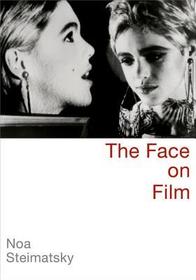
The Face on Film
-
10% KEDVEZMÉNY?
- A kedvezmény csak az 'Értesítés a kedvenc témákról' hírlevelünk címzettjeinek rendeléseire érvényes.
- Kiadói listaár GBP 125.00
-
56 437 Ft (53 750 Ft + 5% áfa)
Az ár azért becsült, mert a rendelés pillanatában nem lehet pontosan tudni, hogy a beérkezéskor milyen lesz a forint árfolyama az adott termék eredeti devizájához képest. Ha a forint romlana, kissé többet, ha javulna, kissé kevesebbet kell majd fizetnie.
- Kedvezmény(ek) 10% (cc. 5 644 Ft off)
- Kedvezményes ár 50 794 Ft (48 375 Ft + 5% áfa)
Iratkozzon fel most és részesüljön kedvezőbb árainkból!
Feliratkozom
56 437 Ft

Beszerezhetőség
Megrendelésre a kiadó utánnyomja a könyvet. Rendelhető, de a szokásosnál kicsit lassabban érkezik meg.
Why don't you give exact delivery time?
A beszerzés időigényét az eddigi tapasztalatokra alapozva adjuk meg. Azért becsült, mert a terméket külföldről hozzuk be, így a kiadó kiszolgálásának pillanatnyi gyorsaságától is függ. A megadottnál gyorsabb és lassabb szállítás is elképzelhető, de mindent megteszünk, hogy Ön a lehető leghamarabb jusson hozzá a termékhez.
A termék adatai:
- Kiadó OUP USA
- Megjelenés dátuma 2017. május 18.
- ISBN 9780199863143
- Kötéstípus Keménykötés
- Terjedelem290 oldal
- Méret 257x178x17 mm
- Súly 771 g
- Nyelv angol
- Illusztrációk 193 screenshots 0
Kategóriák
Rövid leírás:
The human face is a privileged arena of expressivity; yet, this book suggests, cinema's most radical encounters with the face give rise to ambiguity, illegibility--an equivocation between image and language. Braiding theoretical and aesthetic considerations with close analysis of films, Steimatsky interrogates the convergence of archaic powers and modern anxieties in our experience of the face on film.
TöbbHosszú leírás:
The human face was said to have been rediscovered with the advent of motion pictures, in which it was often viewed as expressive locus, as figure, and even as essence of the cinema. But how has this modern, technological, mass-circulating medium revealed the face in ways that are also distinct from any other? How has it altered our perception of this quintessential incarnation of the person? The archaic powers of masks and icons, the fashioning of the individual in the humanist portrait, the modernist anxieties of fragmentation and de-figuration--these are among the cultural precedents informing our experience in the movie theatre. Yet the moving, time-based image also offers radical new confrontations with the face: Dreyer's Passion of Joan of Arc, Donen's Funny Face, Hitchcock's The Wrong Man, Bresson's Au hazard, Balthazar, Antonioni's Screen Test, Warhol's filmic portraits of celebrity and anonymity. Such intense encounters, examined in this book, manifest a desire for transparency and plenitude, but--especially in post-classical cinema--also betray a profound ambiguity that haunts the human countenance, confronting interiority as opacity, treading the gap between image and language. The spectacular impact of the cinematic face is uncannily intertwined with a reticence, an ineffability; but is it not for this very reason that--like faces in the world--it still enthralls us?
The Face on Film is a stunning success, and easily among the very best cinema books of the past decade.
Tartalomjegyzék:
Table of Contents
Acknowledgements
Preface: Face Moving Image
A Dispositif
An Ur-Image
The Face Against the Image
Itineraries
Chapter One: We Had Faces, Then
Expressivity in the 1920s
Joan of Arc, Inevitably
The Face and its Voices
Glamour/Anti-Glamour
Chapter Two: Roland Barthes Looks at the Stars
Towards “Visages et Figures,” and circa 1953
Excursus on the Face in Language
Into the Movie Theater
Ultra-Face
Excursus on the Mask
From Cult to Charm: Funny Face
Chapter Three: Face-to-Face (with The Wrong Man)
What Godard Saw
What the Clerk Saw
Excursus on Anthropometrics
Not a Mirror, Not a Lamp
Chapter Four: Pass/Fail: Screen Test, Apparatus, Subject
The Antonioni Screen Test
Excursus on the Portrait
Sitting for the Portrait is the Portrait
Outer and Inner Space, and the Pathos of Time
Fail Better
Chapter Five: In Reticence (Bresson)
The Epidermal and the Written
The Image Against the Face
Not an Open Book, but a Door Ajar
Postface: The Two-Shot

