

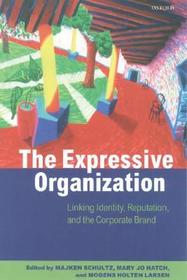
The Expressive Organization
Linking Identity, Reputation, and the Corporate Brand
-
10% KEDVEZMÉNY?
- A kedvezmény csak az 'Értesítés a kedvenc témákról' hírlevelünk címzettjeinek rendeléseire érvényes.
- Kiadói listaár GBP 55.00
-
24 832 Ft (23 650 Ft + 5% áfa)
Az ár azért becsült, mert a rendelés pillanatában nem lehet pontosan tudni, hogy a beérkezéskor milyen lesz a forint árfolyama az adott termék eredeti devizájához képest. Ha a forint romlana, kissé többet, ha javulna, kissé kevesebbet kell majd fizetnie.
- Kedvezmény(ek) 10% (cc. 2 483 Ft off)
- Kedvezményes ár 22 349 Ft (21 285 Ft + 5% áfa)
Iratkozzon fel most és részesüljön kedvezőbb árainkból!
Feliratkozom
24 832 Ft

Beszerezhetőség
Megrendelésre a kiadó utánnyomja a könyvet. Rendelhető, de a szokásosnál kicsit lassabban érkezik meg.
Why don't you give exact delivery time?
A beszerzés időigényét az eddigi tapasztalatokra alapozva adjuk meg. Azért becsült, mert a terméket külföldről hozzuk be, így a kiadó kiszolgálásának pillanatnyi gyorsaságától is függ. A megadottnál gyorsabb és lassabb szállítás is elképzelhető, de mindent megteszünk, hogy Ön a lehető leghamarabb jusson hozzá a termékhez.
A termék adatai:
- Kiadó OUP Oxford
- Megjelenés dátuma 2000. augusztus 17.
- ISBN 9780198297796
- Kötéstípus Puhakötés
- Terjedelem320 oldal
- Méret 234x156x17 mm
- Súly 467 g
- Nyelv angol
- Illusztrációk numerous figures and tables 0
Kategóriák
Rövid leírás:
This book challenges current beliefs about organizational identity, reputation, and branding. A highly-talented and diverse team of contributors reveals a wealth of new ideas for discovering the answers to questions troubling contemporary organizations. How does an organization create a strong reputation? What are the implications of corporate branding on organizational structures and processes? How do organizations discover their identities? This multi-disciplinary text will have broad appeal for both students and practitioners alike.
TöbbHosszú leírás:
This book challenges current beliefs about organizational identity, reputation, and branding. It contains a wealth of new ideas for finding the elusive answers to questions troubling contemporary organizations. How does an organization create a strong reputation? What are the implications of corporate branding on organizational structures and processes? How do organizations discover their identities?
These are some of the vexing problems addressed in this book by a diverse international team of contributors. According to the authors, the future lies with 'the expressive organization'. Such organizations not only understand their distinct identity and their brands, but are also able to express these externally and internally. In order to thrive in an era of transparency and customer choice, the authors argue, organizations will have to be expressive.
challenges current beliefs about organizational identity, reputation, and branding
Tartalomjegyzék:
Chapter 1: Introduction: Why the Expressive Organization?
Part I: Rethinking Identity
Chapter 2: Scaling the Tower of Babel: Relational Differences between Identity, Image, and Culture in Organizations
Chapter 3: Organizational Identity as Moral Philosophy: Competitive Implications for Diversified Corporations
Part II: The Symbolic Marketplace
Chapter 4: How Brands are Taking over the Corporation
Chapter 5: Markets and Meanings: Re-imagining Organizational Life
Part III: Reputation and Strategy
Chapter 6: The Road to Transparency: Reputation Management at Royal Dutch/Shell
Chapter 7: Distorted Images and Reputation Repair
Part IV: Organizations as Brands
Chapter 8: Building and Managing Corporate Brand Equity
Chapter 9: Building the Unique Organization Value Proposition
Part V: The Value of Storytelling
Chapter 10: Corporate Communication Orchestrated by a Sustainable Corporate Story
Chapter 11: Planning and Communicating Using Stories
Chapter 12: Managing the Corporate Story
Chapter 13: Valuing Expressive Organizations: Intellectual Capital and the Visualization of Value Creation
Part VI: Communicating Organizations
Chapter 13: Valuing Expressive Organizations: Intellectual Capital and the Visualization of Value Creation
Chapter 14: The Communication Advantage: A Constituency-Focused Approach to Formulating and Implementing Strategy
Chapter 15: Self-Absorption and Self-Seduction in the Corporate Identity Game
Chapter 16: Identity Lost or Identity Found? Celebration and Lamentation over the Postmodern View of Identity in Social Sciences and Fiction

