

-
10% KEDVEZMÉNY?
- A kedvezmény csak az 'Értesítés a kedvenc témákról' hírlevelünk címzettjeinek rendeléseire érvényes.
- Kiadói listaár GBP 102.50
-
46 278 Ft (44 075 Ft + 5% áfa)
Az ár azért becsült, mert a rendelés pillanatában nem lehet pontosan tudni, hogy a beérkezéskor milyen lesz a forint árfolyama az adott termék eredeti devizájához képest. Ha a forint romlana, kissé többet, ha javulna, kissé kevesebbet kell majd fizetnie.
- Kedvezmény(ek) 10% (kb. 4 627 Ft)
- Kedvezményes ár 41 651 Ft (39 668 Ft + 5% áfa)
Iratkozzon fel most és részesüljön kedvezőbb árainkból!
Feliratkozom
46 278 Ft

Beszerezhetőség
Megrendelésre a kiadó utánnyomja a könyvet. Rendelhető, de a szokásosnál kicsit lassabban érkezik meg.
Why don't you give exact delivery time?
A beszerzés időigényét az eddigi tapasztalatokra alapozva adjuk meg. Azért becsült, mert a terméket külföldről hozzuk be, így a kiadó kiszolgálásának pillanatnyi gyorsaságától is függ. A megadottnál gyorsabb és lassabb szállítás is elképzelhető, de mindent megteszünk, hogy Ön a lehető leghamarabb jusson hozzá a termékhez.
A termék adatai:
- Kiadó OUP USA
- Megjelenés dátuma 2022. november 21.
- ISBN 9780190854409
- Kötéstípus Keménykötés
- Terjedelem522 oldal
- Méret 235x156x32 mm
- Súly 857 g
- Nyelv angol 239
Kategóriák
Rövid leírás:
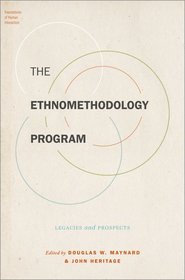
Since Harold Garfinkel's Studies in Ethnomethodology was first published over 50 years ago, there has been a substantial amount of ethnomethodological (EM) research in many different areas from Conversation Analysis to legal studies. This book covers the wide range of EM influences, with chapters from experts in these theoretical and empirical fields. In doing so, it not only draws attention to past accomplishments in EM research, but also suggests how these accomplishments set the table for future endeavors in the human sciences.
TöbbHosszú leírás:
It's been more than fifty years since Harold Garfinkel created the field of ethnomethodology--a discipline that offers a new way of understanding how people make sense of their everyday world. Since his book Studies in Ethnomethodology published in 1967, there has been a substantial--although often subterranean--growth in ethnomethodological (EM) work. Studies in and appreciation of ethnomethodological work continue to grow, but the breadth and penetration of his insights and inspiration for ongoing research have yet to secure their full measure of recognition.
This volume celebrates Harold Garfinkel's enormous contributions to sociology and conversation analysis, exploring how ethnomethodology emerged, the empirical consequences of Garfinkel's work, and the significant contemporary work that has resulted from it. Douglas W. Maynard and John Heritage bring together experts from a wide range of theoretical and empirical areas to create the first comprehensive collection of work on EM that encompasses its role in "studies of work," in Conversation Analysis, and in other subdisciplines. Chapters highlight ethnomethodology's distinctive forms of ethnographic inquiry and its influences on a host of substantive domains including legal environments, science and technology, workplace and organizational inquiries, survey research, social problems and deviance, and disability and atypical interaction. The book explains how EM especially helped to set the agenda for gender studies, while also developing insights for inquiries into racial and ethnic features of everyday life and experience.
Still, there is much of what Garfinkel called "unfinished business," which means that ethnomethodological inquiries are continuing to intensify and develop. Harold Garfinkel and Ethnomethodology ddresses this unfinished business: not only drawing attention to past accomplishments in the field, but also suggesting how these accomplishments set the stage for future endeavors that will benefit from EM-inspired approaches to social organization and interaction.
Tartalomjegyzék:
Chapter One: Introduction: Garfinkel and the Ethnomethodology Movement
John Heritage and Douglas W. Maynard
SECTION ONE: ANTECEDENTS AND THEORY
Chapter Two: A Comparison of Decisions Made on Four 'Pre-Theoretical' Problems by Talcott Parsons and Alfred Schuetz
Harold Garfinkel
Chapter Three: Harold Garfinkel's Focus on Racism, Inequality and Social Justice: The Early Years 1939-1952
Anne W. Rawls
Chapter Four: Garfinkel's Studies of Work
Michael E. Lynch
SECTION 2: EMPIRICAL IMPACT
Chapter Five: Ways of Working: An Introduction to the Study of Naturally Organized Ordinary Activities
Harold Garfinkel
Chapter Six: Rules and Their Enforcement "For Another First Time": Policing the Sidewalk
Geoffrey Raymond, Lillian Jungleib, Don Zimmerman, and Nikki Jones
Chapter Seven: The Co-Operative, Transformative Organization of Human Action and Knowledge
Charles Goodwin
Chapter Eight: Sex and the Sociological Dope: Garfinkel's Intervention into the Emerging Disciplines of Sex/Gender
Kristen Schilt
Chapter Nine: Garfinkel, Social Problems, and Deviance: Reflections on the Values of Ethnomethodology
Darin Weinberg
Chapter Ten: Ethnomethodology and Conversation Analysis: Mutual Influences
Steven Clayman, John Heritage, and Douglas W. Maynard
SECTION 3: GROWTH POINTS
Chapter Eleven: The Situated and Methodic Production of Accountable Action: The Challenges of Multimodality
Lorenza Mondada
Chapter Twelve: Recovering the Work of a Discovering Science with a Video Camera in Hand: The Electronically Probed/Visually Discovered Spectrum
Philippe Sormani
Chapter Thirteen: Research with Numbers
Michael Mair, Christian Greiffenhagen, and Wes Sharrock
Chapter Fourteen: The Sherlock Experiment
Eric Livingston and John Heritage
Chapter Fifteen: Technology in Action
Christian Heath and Paul Luff
Chapter Sixteen: Occam's Razor and the Challenges of Generalization in Ethnomethodology
Iddo Tavory
Chapter Seventeen: Ethnomethodology and Atypical Interaction: The Case of Autism
Douglas W. Maynard and Jason J. Turowetz
Index

