

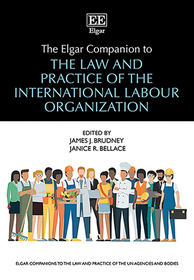
The Elgar Companion to the Law and Practice of the International Labour Organization
Sorozatcím: Elgar Companions to the Law and Practice of the UN Agencies and Bodies series;
-
10% KEDVEZMÉNY?
- A kedvezmény csak az 'Értesítés a kedvenc témákról' hírlevelünk címzettjeinek rendeléseire érvényes.
- Kiadói listaár GBP 220.00
-
105 105 Ft (100 100 Ft + 5% áfa)
Az ár azért becsült, mert a rendelés pillanatában nem lehet pontosan tudni, hogy a beérkezéskor milyen lesz a forint árfolyama az adott termék eredeti devizájához képest. Ha a forint romlana, kissé többet, ha javulna, kissé kevesebbet kell majd fizetnie.
- Kedvezmény(ek) 10% (cc. 10 511 Ft off)
- Kedvezményes ár 94 595 Ft (90 090 Ft + 5% áfa)
Iratkozzon fel most és részesüljön kedvezőbb árainkból!
Feliratkozom
105 105 Ft

Beszerezhetőség
Még nem jelent meg, de rendelhető. A megjelenéstől számított néhány héten belül megérkezik.
Why don't you give exact delivery time?
A beszerzés időigényét az eddigi tapasztalatokra alapozva adjuk meg. Azért becsült, mert a terméket külföldről hozzuk be, így a kiadó kiszolgálásának pillanatnyi gyorsaságától is függ. A megadottnál gyorsabb és lassabb szállítás is elképzelhető, de mindent megteszünk, hogy Ön a lehető leghamarabb jusson hozzá a termékhez.
A termék adatai:
- Kiadó Edward Elgar Publishing
- Megjelenés dátuma 2026. április 28.
- ISBN 9781035320004
- Kötéstípus Keménykötés
- Terjedelem464 oldal
- Méret 244x169 mm
- Súly 666 g
- Nyelv angol 700
Kategóriák
Rövid leírás:
This comprehensive book analyzes the laws and practices of the International Labour Organization (ILO), addressing the distinctive role of tripartism within the ILO governance structure since 1919, and analyzing the organization’s contributions to the protection and promotion of workers’ rights on a global scale.
TöbbHosszú leírás:
This comprehensive book analyzes the laws and practices of the International Labour Organization (ILO), addressing the distinctive role of tripartism within the ILO governance structure since 1919, and analyzing the organization’s contributions to the protection and promotion of workers’ rights on a global scale.
Contributors explore a breadth of issues crucial to the ILO’s objective of achieving decent work in collaboration with governments, workers, and employers. Topics covered include application of the ILO’s ‘fundamental principles’ covering freedom of association, equality, safety and health, and the prevention of forced labour and child labour. In addition, the book addresses provision of social security benefits, the development of effective employment policies, the implementation of functional labour inspection, and the recognition of indigenous peoples’ voices. Chapters also present a granular analysis of the ILO supervisory system, outlining the value and limits of the organization’s soft power. The Companion envisions the ILO’s future, highlighting the obstacles that prevent secure worker rights and protections in both the informal and digital economies, as well as the impact of ILO conventions on trade agreements.
The Elgar Companion to the Law and Practice of the International Labour Organization is an essential resource for legal scholars and students, particularly those interested in labour and human rights. Practitioners working within labour unions, NGOs, and other human rights fields will also find the book’s theoretical and practical insights to be highly relevant.
‘This impressive scholarly work underscores the indispensable role of the ILO in advancing social justice and work-related standards for more than a century of global change. Through rigorous analysis and historical depth, it shows why the ILO remains a vital, stabilizing institution, one whose mission is more important today than ever.’
Tartalomjegyzék:
Contents
Preface ix
1 Introduction: The ILO in law and practice 1
James J. Brudney and Janice R. Bellace
PART I EVOLUTION ACROSS FOUR ERAS
2 Built to last: the ILO 1919–1945 15
Janice R. Bellace
3 The post-war era: the ILO role in human rights protection and economic governance 31
Tonia Novitz
4 Between yesterday and tomorrow: the ILO in the ‘global’ decades of the 1960s and 1970s 47
Jill M. Jensen
5 How does the ILO govern? From the 1998 Declaration to the present 61
Ingrid Landau
PART II THE STRUCTURE OF THE ILO
6 Overview of ILO standards and the supervisory system 80
Lee Swepston
7 The authoritative role of the ILO Committee of Experts 96
Jordi Agustí-Panareda and Karen Curtis
8 The CAS and its role through the decades 113
Deborah Greenfield
9 The transformative promise of the ILO standards system on workers’ lives 131
Corinne Vargha and Beatriz Vacotto
10 ILO relations with other international organizations 148
Anne Trebilcock
PART III FUNDAMENTAL RIGHTS
11 Forced labour then and now: the enduring power of ILO standards 166
Aurélie Hauchѐre Vuong and Alix Nasri
12 The ILO and the elimination of child labour 184
Kamala Sankaran
13 Freedom of association 200
Bernd Waas
14 Equality and non-discrimination 217
Shauna Olney and Rosemary Owens
15 A safe and healthy working environment 238
Erica Martin
PART IV ACHIEVING DECENT WORK
16 The right to social security at the core of decent work and social justice 256
Maya Stern Plaza, Luisa Carmona Llano, Kroum Markov and Christina Behrendt
17 The ILO’s contribution to the goal of full employment 275
Gerry Rodgers
18 Decent work for indigenous peoples: preserving an ancestral perspective 292
Lelio Bentes Corrêa
19 Labour inspection and the ILO: challenges and opportunities 309
James J. Brudney
20 Incorporating ILO standards in domestic legislation and jurisprudence 327
Xavier Beaudonnet and Valérie Van Goethem
PART V LOOKING TO THE FUTURE
21 Applying ILO conventions to the informal economy: a developing world context 347
Evance Kalula and Elmarie Fourie
22 The platform and digital economy: opportunities presented to the ILO 366
Mathias Wouters
23 References to ILO instruments in trade law: a path toward coherence? 383
Franz Christian Ebert
24 A long view of the ILO’s normative agenda: deciphering ILO standards policy 401
Lisa Tortell and Tomi Kohiyama
25 The limits of ILO power 417
Kari Tapiola

