

The Economic Impacts of Natural Disasters
-
10% KEDVEZMÉNY?
- A kedvezmény csak az 'Értesítés a kedvenc témákról' hírlevelünk címzettjeinek rendeléseire érvényes.
- Kiadói listaár GBP 63.00
-
28 444 Ft (27 090 Ft + 5% áfa)
Az ár azért becsült, mert a rendelés pillanatában nem lehet pontosan tudni, hogy a beérkezéskor milyen lesz a forint árfolyama az adott termék eredeti devizájához képest. Ha a forint romlana, kissé többet, ha javulna, kissé kevesebbet kell majd fizetnie.
- Kedvezmény(ek) 10% (kb. 2 844 Ft)
- Kedvezményes ár 25 600 Ft (24 381 Ft + 5% áfa)
Iratkozzon fel most és részesüljön kedvezőbb árainkból!
Feliratkozom
28 444 Ft

Beszerezhetőség
Megrendelésre a kiadó utánnyomja a könyvet. Rendelhető, de a szokásosnál kicsit lassabban érkezik meg.
Why don't you give exact delivery time?
A beszerzés időigényét az eddigi tapasztalatokra alapozva adjuk meg. Azért becsült, mert a terméket külföldről hozzuk be, így a kiadó kiszolgálásának pillanatnyi gyorsaságától is függ. A megadottnál gyorsabb és lassabb szállítás is elképzelhető, de mindent megteszünk, hogy Ön a lehető leghamarabb jusson hozzá a termékhez.
A termék adatai:
- Kiadó OUP USA
- Megjelenés dátuma 2013. május 23.
- ISBN 9780199841936
- Kötéstípus Keménykötés
- Terjedelem344 oldal
- Méret 163x236x25 mm
- Súly 612 g
- Nyelv angol
- Illusztrációk 4 b/w halftones; 61 b/w line 0
Kategóriák
Rövid leírás:
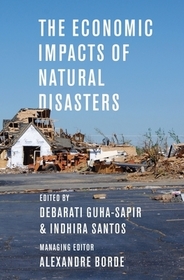
The Economic Impacts of Natural Disasters focuses on concerns of poverty and vulnerability amongst natural disaster zones. Written by a collection of scholars in disaster management and sustainable development, the report provides an overview of the general trends in natural disasters and their effects by focusing on a critical analysis of different methodologies used to assess the economic impact of natural disasters.
TöbbHosszú leírás:
Since the turn of the millennium, more than one million people have been killed and 2.3 billion others have been directly affected by natural disasters around the world. In cases like the 2010 Haiti earthquake or the 2004 Indian Ocean tsunami, these disasters have time and time again wrecked large populations and national infrastructures. While recognizing that improved rescue, evacuation, and disease control are crucial to reducing the effects of natural disasters, in the final analysis, poverty remains the main risk factor determining the long-term impact of natural hazards. Furthermore, natural disasters have themselves a tremendous impact on the poorest of the poor, who are often ill-prepared to deal with natural hazards and for whom a hurricane, an earthquake, or a drought can mean a permanent submersion in poverty.
The Economic Impacts of Natural Disasters focuses on these concerns for poverty and vulnerability. Written by a collection of esteemed scholars in disaster management and sustainable development, the report provides an overview of the general trends in natural disasters and their effects by focusing on a critical analysis of different methodologies used to assess the economic impact of natural disasters. Economic Impacts presents six national case studies (Bangladesh, Vietnam, India, Nicaragua, Japan and the Netherlands) and shows how household surveys and country-level macroeconomic data can analyze and quantify the economic impact of disasters. The researchers within Economic Impacts have created path-breaking work and have opened new avenues for thinking and debate to push forward the frontiers of knowledge on economics of natural disasters.
"A great report and an important addition to the literature about the economics of disasters and the cost-effectiveness of prevention, mitigation and adaption, including a good number of interesting and relevant applications from developed and devloping countries."--Javier E. Baez, Independent Evaluation Group, The World Bank
excellent volume ... Highly recommended.
Tartalomjegyzék:
Foreword : Margareta Wahlstrom, Assistant Secretary General, United Nations
Introduction
Chapter 1: The Frequency and Impact of Natural Disasters. Hoyois et al.
Chapter 2: The Inter-Linkages between Natural Disasters and Economic Development. Ajay Chhibber and Rachid Laajaj.
Chapter 3: The Impacts of Natural Disasters and the Economic Benefits of Preventing them: Methods and Applications. Ståle Navrud and Kristin Magnussen.
Chapter 4: Cost-Benefit Analysis of Disaster Risk Management and Climate Adaptation: the Case of Bangladesh. Reinhard Mechler and Nabiul Islam.
Chapter 5: Challenges Ahead: Risk Management and Cost-Benefit Analysis in a Changing Climate. Stéphane Hallegatte.
Chapter 6: Natural Disasters and the Insurance Industry. Angelika Wirtz.
Chapter 7: Natural Disaster Mitigation Policies. Ricardo Zapata-Marti.
Chapter 8: Natural Disasters in Vietnam: a Synthesis from a Socio-economic Perspective. Tran Huu Tuan and Bui Dung The.
Chapter 9: Natural Disaster Mitigation in West Bengal. Debesh Chakraborty et al.
Chapter 10: How do Households Manage the Effects of Natural Disasters? The Role of Inter-household Transfers in Nicaragua. Indhira Santos.
Chapter 11: The Economic Impact of Earthquakes on Households: Evidence from Japan. Yasuyuki Sawada.
Chapter 12: Urban and Non-agricultural Impacts of Flooding and their Assessments: the Case of Bangladesh. K.M. Nabiul Islam.
Chapter 13: The Economics of Flood Disaster Management in the Netherlands. Roy Brouwer and Marije Schaafsma.
Conclusion

