

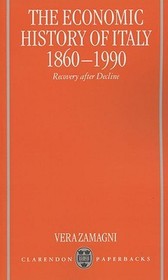
The Economic History of Italy 1860-1990
-
10% KEDVEZMÉNY?
- A kedvezmény csak az 'Értesítés a kedvenc témákról' hírlevelünk címzettjeinek rendeléseire érvényes.
- Kiadói listaár GBP 49.99
-
23 882 Ft (22 745 Ft + 5% áfa)
Az ár azért becsült, mert a rendelés pillanatában nem lehet pontosan tudni, hogy a beérkezéskor milyen lesz a forint árfolyama az adott termék eredeti devizájához képest. Ha a forint romlana, kissé többet, ha javulna, kissé kevesebbet kell majd fizetnie.
- Kedvezmény(ek) 10% (cc. 2 388 Ft off)
- Kedvezményes ár 21 494 Ft (20 471 Ft + 5% áfa)
Iratkozzon fel most és részesüljön kedvezőbb árainkból!
Feliratkozom
23 882 Ft

Beszerezhetőség
Megrendelésre a kiadó utánnyomja a könyvet. Rendelhető, de a szokásosnál kicsit lassabban érkezik meg.
Why don't you give exact delivery time?
A beszerzés időigényét az eddigi tapasztalatokra alapozva adjuk meg. Azért becsült, mert a terméket külföldről hozzuk be, így a kiadó kiszolgálásának pillanatnyi gyorsaságától is függ. A megadottnál gyorsabb és lassabb szállítás is elképzelhető, de mindent megteszünk, hogy Ön a lehető leghamarabb jusson hozzá a termékhez.
A termék adatai:
- Kiadó Clarendon Press
- Megjelenés dátuma 1997. július 31.
- ISBN 9780198292890
- Kötéstípus Puhakötés
- Terjedelem428 oldal
- Méret 234x157x24 mm
- Súly 704 g
- Nyelv angol
- Illusztrációk line figures, tables 0
Kategóriák
Rövid leírás:
Vera Zamagni presents a full account of the economic and social history of Italy since unification, with an introduction covering the previous period since the Middle Ages. The book gives a quantitative and interpretative treatment of topics ranging through agriculture, industry, trade, banking, public intervention, the standard of living, and education.
TöbbHosszú leírás:
The Economic History of Italy 1860-1990 gives a scholarly and authoritative account of Italy's progress from a rural economy to an industrialized nation, covering in detail agriculture, trade, banking, public intervention, the standard of living, and education. It provides an interpretative account of the economic history of Italy since unification and offers an extensive resource of quantitative data.
Professor Zamagni argues that Italy only effectively became an industrialized nation after the Second World War, with the south still being clearly behind the rest of the country. Her argument makes use of both macroeconomic approaches, in looking at the growth of income, investment, consumption, trade, and the role of the state, and microeconomic approaches, drawing conclusions from the history of individual banks and corporations. Italy's movement from peripheral status in Europe to a central position as a prosperous country was achieved through a remarkable flexibility in adapting new technology and new institutions.
`Stefano Zamagni, 51, is considered a world expert on economics and recently even became a consultant to the anti-Mafia agency of the Italian government. Considered one of Italy's most brilliant economists.'

