

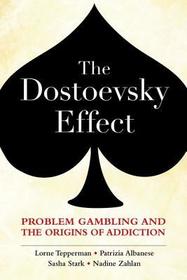
The Dostoevsky Effect: Problem Gambling and the Origins of Addiction
-
10% KEDVEZMÉNY?
- A kedvezmény csak az 'Értesítés a kedvenc témákról' hírlevelünk címzettjeinek rendeléseire érvényes.
- Kiadói listaár GBP 35.00
-
15 802 Ft (15 050 Ft + 5% áfa)
Az ár azért becsült, mert a rendelés pillanatában nem lehet pontosan tudni, hogy a beérkezéskor milyen lesz a forint árfolyama az adott termék eredeti devizájához képest. Ha a forint romlana, kissé többet, ha javulna, kissé kevesebbet kell majd fizetnie.
- Kedvezmény(ek) 10% (kb. 1 580 Ft)
- Kedvezményes ár 14 222 Ft (13 545 Ft + 5% áfa)
Iratkozzon fel most és részesüljön kedvezőbb árainkból!
Feliratkozom
15 802 Ft

Beszerezhetőség
A kiadónál véglegesen elfogyott, nem rendelhető. Érdemes újra keresni a címmel, hátha van újabb kiadás.
Why don't you give exact delivery time?
A beszerzés időigényét az eddigi tapasztalatokra alapozva adjuk meg. Azért becsült, mert a terméket külföldről hozzuk be, így a kiadó kiszolgálásának pillanatnyi gyorsaságától is függ. A megadottnál gyorsabb és lassabb szállítás is elképzelhető, de mindent megteszünk, hogy Ön a lehető leghamarabb jusson hozzá a termékhez.
A termék adatai:
- Kiadó OUP Canada
- Megjelenés dátuma 2013. március 14.
- ISBN 9780195449129
- Kötéstípus Keménykötés
- Terjedelem348 oldal
- Méret 230x156x30 mm
- Súly 588 g
- Nyelv angol
- Illusztrációk 2 b/w line drawings 0
Kategóriák
Rövid leírás:
A decade of Dostoevsky's adult life was consumed by gambling, yet the reason behind his startling dependency has remained largely unknown. In comparing Dostoevsky's life with the experience of modern-day gamblers, documented through in-depth interviews and written biographical accounts, a team of leading sociologists have uncovered the Dostoevsky Effect. This model proposes that social factors-especially childhood trauma and a poor ability to deal with adult
stress-are often the cause of gambling addiction rather than, as some have argued, an inherited predisposition to wager.
Hosszú leírás:
When writing his novella The Gambler in 1866, Fyodor Dostoevsky remained true to the old adage "write what you know." Critically acclaimed for its insight into the mind of a gambling addict, the book offers a fascinating glimpse into Dostoevsky's personal struggle with gambling. The manuscript, in fact, was written to pay off a debt he owed to his publisher.
A decade of Dostoevsky's adult life was consumed by gambling, yet the reason behind his startling dependency has remained largely unknown. In comparing Dostoevsky's life with the experience of modern-day gamblers, documented through in-depth interviews and written biographical accounts, a team of leading sociologists have uncovered the Dostoevsky Effect. This model proposes that social factors-especially childhood trauma and a poor ability to deal with adult stress-are often the cause of
gambling addiction rather than, as some have argued, an inherited predisposition to wager.
The Dostoevsky Effect offers new insight into Dostoevsky's life and work, and using contemporary field research draws surprising connections to today's gamblers, blurring the often elusive line between fact and fiction.
Tartalomjegyzék:
Acknowledgements
Part I. Gambling in the Life of Dostoevsky
1. An Introduction to Dostoevsky's Life
2. Historical Context: Gambling in Nineteenth-Century Russia
3. What Do Dostoevsky's Novels Reflect?
4. Traditional Explanations of Dostoevsky's Gambling
Part II. The Dostoevsky Process Today
5. Childhood Stress
6. Adulthood Stress
7. Maladaptive Coping
8. How Gambling Makes Life Worse
Part III. Non-Dostoevskian Processes
9. Opportunity and Acceptability
10. Learning at Home and in the Community
11. How Do Non-Problem Gambling Families Compare?
Part IV. Conclusions and Implications
12. The Gambler, Then and Now
13. Lessons from and for Dostoevsky
14. Implications for Children and Social Policy
Appendix 1: A Theoretical Framework
Appendix 2: How We Did This Study
Notes
References
Index

