

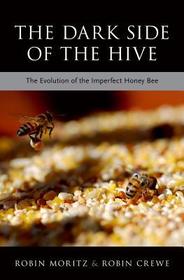
The Dark Side of the Hive
The Evolution of the Imperfect Honeybee
-
10% KEDVEZMÉNY?
- A kedvezmény csak az 'Értesítés a kedvenc témákról' hírlevelünk címzettjeinek rendeléseire érvényes.
- Kiadói listaár GBP 92.00
-
41 538 Ft (39 560 Ft + 5% áfa)
Az ár azért becsült, mert a rendelés pillanatában nem lehet pontosan tudni, hogy a beérkezéskor milyen lesz a forint árfolyama az adott termék eredeti devizájához képest. Ha a forint romlana, kissé többet, ha javulna, kissé kevesebbet kell majd fizetnie.
- Kedvezmény(ek) 10% (cc. 4 154 Ft off)
- Kedvezményes ár 37 384 Ft (35 604 Ft + 5% áfa)
Iratkozzon fel most és részesüljön kedvezőbb árainkból!
Feliratkozom
41 538 Ft

Beszerezhetőség
Megrendelésre a kiadó utánnyomja a könyvet. Rendelhető, de a szokásosnál kicsit lassabban érkezik meg.
Why don't you give exact delivery time?
A beszerzés időigényét az eddigi tapasztalatokra alapozva adjuk meg. Azért becsült, mert a terméket külföldről hozzuk be, így a kiadó kiszolgálásának pillanatnyi gyorsaságától is függ. A megadottnál gyorsabb és lassabb szállítás is elképzelhető, de mindent megteszünk, hogy Ön a lehető leghamarabb jusson hozzá a termékhez.
A termék adatai:
- Kiadó OUP USA
- Megjelenés dátuma 2018. november 29.
- ISBN 9780190872281
- Kötéstípus Keménykötés
- Terjedelem208 oldal
- Méret 160x236x20 mm
- Súly 544 g
- Nyelv angol
- Illusztrációk 64 0
Kategóriák
Rövid leírás:
Honey bees have been described as exceptionally clever, well-organized, mutualistic, collaborative, busy, efficient--in short a perfect society. In The Dark Side of the Hive, authors Robin Moritz and Robin Crewe write about the life history of the honey bee, Apis mellifera, focusing on the "dark side of the hive" including cheating, robbery, worker inefficiency, and unfair reproduction strategies.
TöbbHosszú leírás:
Honey bees have been described as exceptionally clever, well-organized, mutualistic, collaborative, busy, efficient--in short a perfect society. While the colony is indeed a marvel of harmonious, efficient organization, it also has a considerable dark side. Authors Robin Moritz and Robin Crewe write about the life history of the honey bee, Apis mellifera, highlighting conflict rather than harmony, failure rather than success, from the perspective of the individual worker in the colony. When one looks carefully, the honey bee colony is far from being perfect. As with any complex social system, honeybee societies are prone to error, robbery, cheating, and social parasitism. Nevertheless, the hive gets by remarkably well in spite of many seemingly odd biological features.
The perfection that is perceived to exist in the honeybee's social organization is the function of a focus on the colony as a whole rather than exploring the idiosyncrasies of its individual members. The Dark Side of the Hive thus focuses on the role of the individual rather than that of the collective. Moritz and Crewe dissect the various careers that individual male and female honey bees can take and their role in colony organization. Competition between individuals using both physical and chemical force drives colonial organization. This book deals with individual mistakes, maladaptations and evolutionary dead-ends that are also part of the bees' life. The story told about these dark sides of the colony spans the full range of biological disciplines ranging from genomics to systems biology.
The authors had me hooked...There has been quite a bit of research into the dark and imperfect side of honey bees, but never before brought together into a single volume
Tartalomjegyzék:
Preface
Chapter 1: Introduction
Chapter 2: Out of the Dark
Chapter 3: A Difficult Diet
Chapter 4: The Chemistry of Social Regulation
Chapter 5: The Reproductive Machine
Chapter 6: The Worker Bee in a Variety of Guises
Chapter 7: Diseases, Pests and Parasites
Chapter 8: The Idiosyncrasies of Sex and Reproduction
Chapter 9: Apiculture and Long Suffering Bees
Chapter 10: Dark Sides of Honey Bee Science
Chapter 11: A Silver Lining for the Future of Bees?
References

