

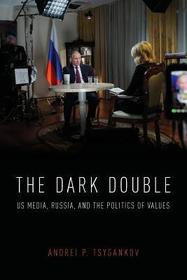
The Dark Double
US Media, Russia, and the Politics of Values
-
10% KEDVEZMÉNY?
- A kedvezmény csak az 'Értesítés a kedvenc témákról' hírlevelünk címzettjeinek rendeléseire érvényes.
- Kiadói listaár GBP 22.49
-
10 744 Ft (10 232 Ft + 5% áfa)
Az ár azért becsült, mert a rendelés pillanatában nem lehet pontosan tudni, hogy a beérkezéskor milyen lesz a forint árfolyama az adott termék eredeti devizájához képest. Ha a forint romlana, kissé többet, ha javulna, kissé kevesebbet kell majd fizetnie.
- Kedvezmény(ek) 10% (cc. 1 074 Ft off)
- Kedvezményes ár 9 669 Ft (9 209 Ft + 5% áfa)
Iratkozzon fel most és részesüljön kedvezőbb árainkból!
Feliratkozom
10 744 Ft

Beszerezhetőség
Megrendelésre a kiadó utánnyomja a könyvet. Rendelhető, de a szokásosnál kicsit lassabban érkezik meg.
Why don't you give exact delivery time?
A beszerzés időigényét az eddigi tapasztalatokra alapozva adjuk meg. Azért becsült, mert a terméket külföldről hozzuk be, így a kiadó kiszolgálásának pillanatnyi gyorsaságától is függ. A megadottnál gyorsabb és lassabb szállítás is elképzelhető, de mindent megteszünk, hogy Ön a lehető leghamarabb jusson hozzá a termékhez.
A termék adatai:
- Kiadó OUP USA
- Megjelenés dátuma 2019. április 4.
- ISBN 9780190919344
- Kötéstípus Puhakötés
- Terjedelem184 oldal
- Méret 140x206x12 mm
- Súly 204 g
- Nyelv angol
- Illusztrációk 3 black and white line drawings 0
Kategóriák
Rövid leírás:
In Dark Double, Andrei P. Tsygankov focuses on the driving power of values and media, in addition to political and economic interests, in structuring US-Russia relations. By analyzing mainstream US newspapers and other media sources, Tsygankov identifies five media narratives involving Russia since the Cold War's ends and shows how Americans' negative views toward Russia draw from a deep wellspring of suspicion and are further enhanced by a biased media that regularly exploits such negativity, Russia's centralization of power and anti-American attitudes.
TöbbHosszú leírás:
Although many observers argue that US-Russia relations are a simple reflection of elites' political and economic preferences in both countries, these preferences tend to arise from pre-existing belief systems that are deeply rooted in the public and accentuated by mass media. In Dark Double, Andrei P. Tsygankov focuses on the driving power of values and media, in addition to political and economic interests, in structuring US-Russia relations. By analyzing mainstream US newspapers and other media sources, Tsygankov identifies five media narratives involving Russia since the Cold War's end and studies them through a framework of three inter-related factors: historic and cultural differences between the two countries, inter-state competition, and polarizing domestic politics. He shows how Americans' negative views toward Russia draw from a deep wellspring of suspicion and are further enhanced by a biased media that regularly exploits such negativity, Russia's centralization of power and anti-American attitudes. Given the intensity of our current impasse with Russia, Dark Double represents an important intervention that forces us to think about the sources of conflict in a new way.
Andrei Tsygankov is a prolific analyst of Russian foreign policy. Here, he turns his attention to the role of U.S. media and its coverage of issues relating to Russia ... He takes a constructivist approach, focusing on values and identities, rather than interests, seeking to demonstrate how the relationship between these two former Cold War adversaries is shaped, by examining U.S. news print media coverage of Russia.
Tartalomjegyzék:
Preface
List of Figures and Tables
1. Values and Media in US-Russia Relations
2. Fears of Russia, Suppressed and Revealed
3. American "Universal" Values and Russia
4. Russia Fights Back
5. Russophobia in the Age of Donald Trump
6. Conclusion
Bibliography

