

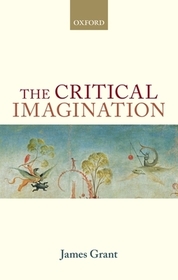
The Critical Imagination
Sorozatcím: Oxford Philosophical Monographs;
-
10% KEDVEZMÉNY?
- A kedvezmény csak az 'Értesítés a kedvenc témákról' hírlevelünk címzettjeinek rendeléseire érvényes.
- Kiadói listaár GBP 71.00
-
33 920 Ft (32 305 Ft + 5% áfa)
Az ár azért becsült, mert a rendelés pillanatában nem lehet pontosan tudni, hogy a beérkezéskor milyen lesz a forint árfolyama az adott termék eredeti devizájához képest. Ha a forint romlana, kissé többet, ha javulna, kissé kevesebbet kell majd fizetnie.
- Kedvezmény(ek) 10% (cc. 3 392 Ft off)
- Kedvezményes ár 30 528 Ft (29 075 Ft + 5% áfa)
Iratkozzon fel most és részesüljön kedvezőbb árainkból!
Feliratkozom
33 920 Ft

Beszerezhetőség
Megrendelésre a kiadó utánnyomja a könyvet. Rendelhető, de a szokásosnál kicsit lassabban érkezik meg.
Why don't you give exact delivery time?
A beszerzés időigényét az eddigi tapasztalatokra alapozva adjuk meg. Azért becsült, mert a terméket külföldről hozzuk be, így a kiadó kiszolgálásának pillanatnyi gyorsaságától is függ. A megadottnál gyorsabb és lassabb szállítás is elképzelhető, de mindent megteszünk, hogy Ön a lehető leghamarabb jusson hozzá a termékhez.
A termék adatai:
- Kiadó OUP Oxford
- Megjelenés dátuma 2013. április 11.
- ISBN 9780199661794
- Kötéstípus Keménykötés
- Terjedelem206 oldal
- Méret 227x157x16 mm
- Súly 418 g
- Nyelv angol 0
Kategóriák
Rövid leírás:
The Critical Imagination explores metaphor, imaginativeness, and criticism of the arts. James Grant critically examines the idea that art is rewarding because it involves responding imaginatively to a work. He explains the role imaginativeness plays in criticism, and goes on to examine why imaginative metaphors are so common in art criticism.
TöbbHosszú leírás:
The Critical Imagination is a study of metaphor, imaginativeness, and criticism of the arts. Since the eighteenth century, many philosophers have argued that appreciating art is rewarding because it involves responding imaginatively to a work. Literary works can be interpreted in many ways; architecture can be seen as stately, meditative, or forbidding; and sensitive descriptions of art are often colourful metaphors: music can 'shimmer', prose can be 'perfumed', and a painter's colouring can be 'effervescent'. Engaging with art, like creating it, seems to offer great scope for imagination. Hume, Kant, Oscar Wilde, Roger Scruton, and others have defended variations on this attractive idea. In this book, James Grant critically examines it.
The first half explains the role imaginativeness plays in criticism. To do this, Grant answers three questions that are of interest in their own right. First, what are the aims of criticism? Is the point of criticizing a work to evaluate it, to explain it, to modify our response to it, or something else? Second, what is it to appreciate art? Third, what is imaginativeness? He gives new answers to all three questions, and uses them to explain the role of imaginativeness in criticism.
The book's second half focuses on metaphor. Why are some metaphors so effective? How do we understand metaphors? Are some thoughts expressible only in metaphor? Grant's answers to these questions go against much current thinking in the philosophy of language. He uses these answers to explain why imaginative metaphors are so common in art criticism. The result is a rigorous and original theory of metaphor, criticism, imaginativeness, and their interrelations.
[A] very helpful resource for anyone seriously interested in art appreciation or the figurative use of language. Besides providing some of the blueprints for a fuller theory of metaphor, The Critical Imagination contains numerous small conceptual revelations capable of informing and enriching a readers encounters with art critisism. George Hull, The Philosophical Quarterly
Tartalomjegyzék:
Introduction
The Aims of Criticism
Criticism and Appreciation
Criticism and Imagination
Metaphor and Likeness
The Dispensability of Metaphor
Metaphor and Criticism
Conclusion
Bibliography

