

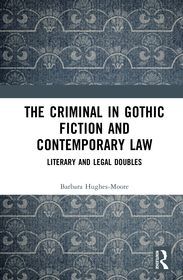
The Criminal in Gothic Fiction and Contemporary Law
Literary and Legal Doubles
-
10% KEDVEZMÉNY?
- Kiadói listaár GBP 155.00
-
69 982 Ft (66 650 Ft + 5% áfa)
Az ár azért becsült, mert a rendelés pillanatában nem lehet pontosan tudni, hogy a beérkezéskor milyen lesz a forint árfolyama az adott termék eredeti devizájához képest. Ha a forint romlana, kissé többet, ha javulna, kissé kevesebbet kell majd fizetnie.
- Kedvezmény(ek) 10% (cc. 6 998 Ft off)
- Kedvezményes ár 62 984 Ft (59 985 Ft + 5% áfa)
62 984 Ft

Beszerezhetőség
Még nem jelent meg, de rendelhető. A megjelenéstől számított néhány héten belül megérkezik.
Why don't you give exact delivery time?
A beszerzés időigényét az eddigi tapasztalatokra alapozva adjuk meg. Azért becsült, mert a terméket külföldről hozzuk be, így a kiadó kiszolgálásának pillanatnyi gyorsaságától is függ. A megadottnál gyorsabb és lassabb szállítás is elképzelhető, de mindent megteszünk, hogy Ön a lehető leghamarabb jusson hozzá a termékhez.
A termék adatai:
- Kiadás sorszáma 1
- Kiadó Routledge
- Megjelenés dátuma 2026. június 26.
- ISBN 9781032260273
- Kötéstípus Keménykötés
- Terjedelem236 oldal
- Méret 234x156 mm
- Súly 453 g
- Nyelv angol
- Illusztrációk 8 Illustrations, black & white; 8 Halftones, black & white 700
Kategóriák
Rövid leírás:
This book transports prevailing criminal legal problems back to their Gothic origins at the close of the nineteenth century.
TöbbHosszú leírás:
This book transports prevailing criminal legal problems back to their Gothic origins at the close of the nineteenth century.
The Victorian fin-de-siècle was an age of both innovation and repression; a time when industry and empire alike worked to categorise, commodify, and control. It was a time in which law, literature, and the sciences were enmeshed in the gritty business of unpeeling the connections between minds and bodies, impulses and actions. The era spun concepts and spurred conversations which remain at the forefront of discussions around who we are and who we could be, right through to this very moment. Centring its analysis around three iconic novels from the era – Wilde’s The Picture of Dorian Gray, Stevenson’s Strange Case of Dr Jekyll and Mr Hyde, and Stoker’s Dracula, this book considers how these immortal novels live on in our cultural imagination, and provide vivid materials that can be used to more deeply understand how current criminal legal problems have mutated and evolved. Like the characters in such Gothic novels, the law creates and is haunted by its own doubles: the reasonable person, the compelled confessor, the career criminal. As well as producing interdisciplinary readings of literary and legal texts, this book develops a new typology of literary doubles intended to assist scholars engaging with themes of responsibility and legal fault. Itself an elusive figure of paradox and contradiction, the literary double is our ideal guide through the law’s Gothic hinterland.
This original and compelling study will appeal to scholars and students of law and literature, criminal law, legal history, and those intrigued by the things that go bump in the night.
“This book is both a wonderful examination of Gothic fiction and an insightful example of how to learn about law "through" literature. It is also well written and convincingly argued. Hughes-Moore has made an important contribution to interdisciplinary scholarship on law.” Austin Sarat, William Nelson Cromwell Professor of Jurisprudence and Political Science, Amherst College.
“This book is a wonderfully insightful, informative, and engaging read. It is also utterly inspiring in the way in which it so convincingly marries Gothic Literature and Law, encouraging new ways of thinking. It uniquely and rigorously draws parallels between the two. Highly recommended to readers/researchers of either discipline or both. This book will have a very broad appeal.” Dr Lucy Gough, playwright / research fellow, Aberystwyth University.
“This important and timely monograph offers a rigorous cultural legal excavation of the origins of the mind in the criminal law. Focussing on the Victorian fin-de-sciele this monograph strikingly examines the Gothic underpinnings of foundational legal concepts such as ‘self’, ‘guilt’ and ‘intent’. The Criminal in Gothic Fiction and Contemporary Law introduces the gothic double as its central concern which it uses to highlight historical anxieties around mens rea and showcases the important instabilities that it continues to produce in the present. This monograph offers a captivating blend of theory, historical insight and literary understanding. It is an essential read for anyone interested in the origins of the criminal law, legal history and law and literature.” Professor Mitchell Travis, University of Leeds.
"Barbara Hughes-Moore seamlessly merges fantastical gothic literature with the real-world law entwined within. As a long-time admirer of her field, I was effortlessly educated by her passionate and knowledgeable insights. This highly recommended read, ideal for anyone interested in law or the gothic, will not disappoint." Timothy Howe, Senior Manager Youth & Community, Torch Theatre.
“Like the Gothic novelists at the heart of this important study of the mental element of crime within law and society, Barbara Hughes-Moore has produced a work which is as rigorously crafted as it is wonderfully playful. A truly significant ripping yarn!” Ben Pontin, Professor of Law, Cardiff University.
TöbbTartalomjegyzék:
1. Introduction: The Fin-de-Siècle’s Divided Self
2. Doubles, Doppelgängers and other Dangerous Things: (Re)Creating the Gothic Criminal
3. Character and Oscar Wilde’s The Picture of Dorian Gray
4. Recklessness and Robert Louis Stevenson’s The Strange Case of Dr Jekyll and Mr Hyde
5. Confessions and Bram Stoker’s Dracula
6. Conclusion: Towards a Synthesis of Self
Több
